
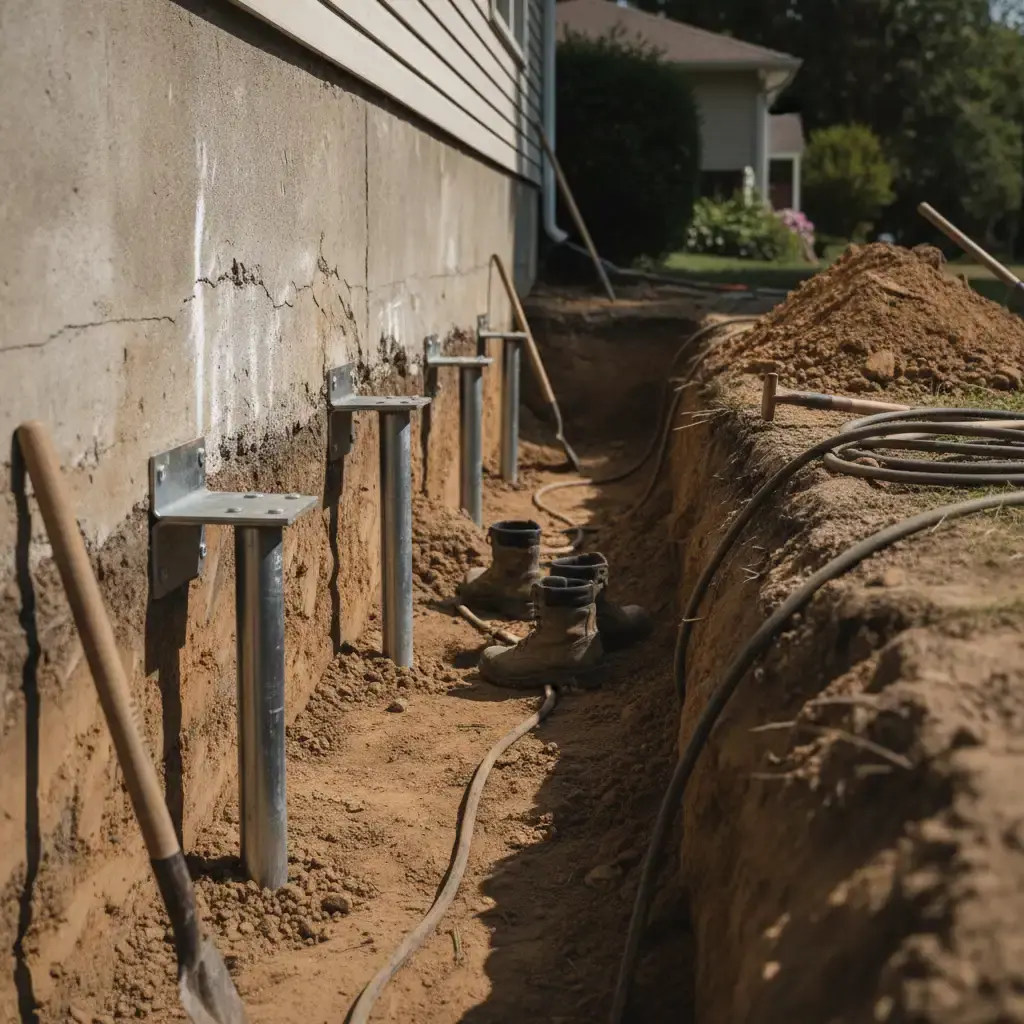
Structural Foundation Repair in Cedar Park, TX
Fast, Reliable Structural Foundation Repair in Cedar Park, TX — Licensed & Insured
Need structural foundation repair in Cedar Park, TX? Round Rock Foundation Repair Group fixes slab, pier & beam, and commercial foundations. Call (512) 220-3502.
Structural foundation repair is the process of diagnosing, stabilizing, and restoring a building’s foundational system to its original load-bearing integrity. In Cedar Park, TX, where expansive clay-rich soils known locally as the Austin Chalk and Taylor Black Clay formation shift dramatically with seasonal rainfall and prolonged drought cycles, foundations face unique and persistent stress that demands professional intervention.
Round Rock Foundation Repair Group brings specialized expertise to homeowners and business owners throughout the Cedar Park area. Our technicians understand the specific soil composition, drainage patterns, and construction eras that define properties across neighborhoods like Anderson Mill, Avery Ranch, and the rapidly developing corridors along US-183A. Whether your home is a 1980s ranch-style build or a recently constructed two-story in a newer master-planned community, our structural repair solutions are engineered for Cedar Park’s distinct ground conditions.
Call us today at (512) 220-3502 to schedule a comprehensive foundation inspection.
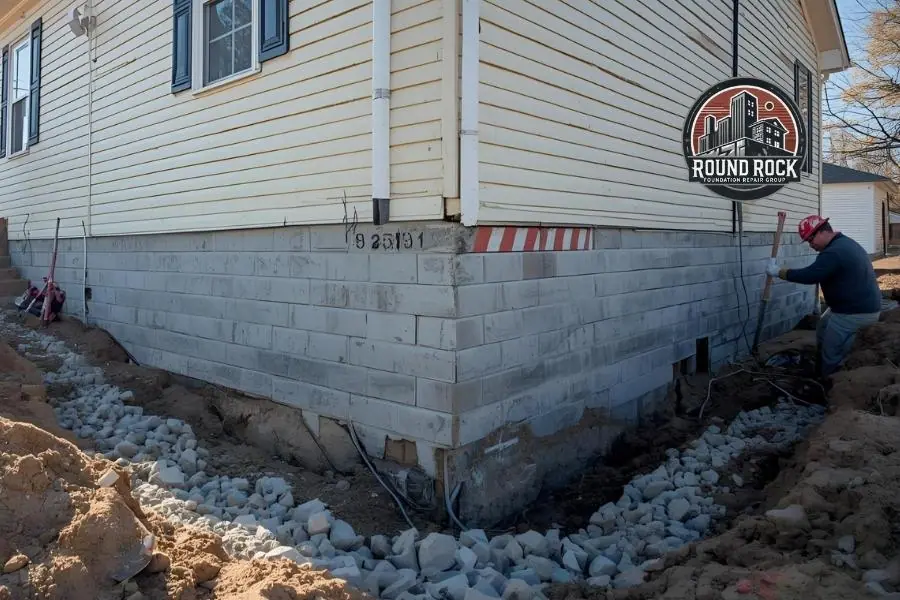
Understanding Structural Foundation Repair
Structural foundation repair encompasses a broad range of engineering interventions designed to address settlement, heaving, cracking, and lateral movement in a building’s base structure. Unlike cosmetic patching—which masks surface cracks without addressing root causes—true structural repair involves stabilizing the soil beneath a foundation, restoring the foundation to a level plane, and preventing future movement through proven mechanical or chemical means.
Foundations in Central Texas are predominantly constructed as post-tensioned concrete slabs, pier-and-beam assemblies, or conventional reinforced concrete slabs. Post-tensioned slabs, which became the dominant residential construction method in the greater Austin area beginning in the 1980s, contain steel cables tensioned after the concrete cures. These slabs are engineered specifically to flex with expansive soils—but they still reach their design limits when soil movement becomes extreme.
Read moreShow less
Historically, Central Texas builders moved toward slab-on-grade construction as the region experienced rapid population growth following the technology industry boom of the 1990s and 2000s. Cedar Park’s housing stock largely reflects this era. Subdivisions platted and built between 1995 and 2015 represent the highest concentration of slab foundations now entering a critical maintenance window, typically 15 to 30 years after original construction, when initial soil settlement and long-term moisture variance begin to compound.
Pier-and-beam foundations, more common in homes built before 1970 and in certain custom builds near the Lake Travis watershed, face distinct challenges including wood rot, inadequate ventilation in crawl spaces, and beam deterioration. Commercial properties in Cedar Park’s growing business districts along Bell Boulevard and Whitestone Boulevard often feature thicker slab construction with deeper reinforcement, yet they remain susceptible to differential settlement when underlying fill soils are improperly compacted during original site preparation.
Understanding which foundation type your Cedar Park property has—and how local soil and climate interact with it—is the essential first step in any effective structural repair program.
Why Structural Foundation Repair Is Needed in Cedar Park, TX
Cedar Park’s geographic position in Williamson County places it squarely within one of the most geologically challenging zones for residential construction in the entire United States. The primary culprit is the expansive clay soil that underlies most of the city—specifically the Houston Black and Austin Clay series identified by the USDA Natural Resources Conservation Service in Williamson County soil surveys. These clay soils exhibit a plasticity index often exceeding 40, meaning they expand significantly when wet and contract sharply when dry.
The numbers tell the story clearly: Central Texas expansive clay soils can swell vertically by as much as 4 to 6 inches during wet periods and shrink by a comparable margin during drought. This cyclical movement—sometimes referred to as the “shrink-swell cycle”—applies uneven upward and downward pressure to foundation slabs, creating differential movement that leads to cracking, tilting, and structural compromise over time.
Read moreShow less
Cedar Park and the broader greater Austin region experienced an exceptional drought period from 2010 through 2014, with 2011 recorded as the single driest year in Texas history since record-keeping began. During that drought, soil moisture levels across Williamson County dropped to historically low levels, causing widespread foundation movement across neighborhoods including Avery Ranch, Cat Hollow, and the Brushy Creek area communities. Many Cedar Park homeowners first became aware of foundation issues during that period as interior doors stopped latching, tile floors cracked, and visible gaps appeared at wall-ceiling junctions.
Compounding the drought-driven damage, Cedar Park experienced significant flooding events during the May 2015 Central Texas floods—sometimes called the “Memorial Day Floods”—and again during the October 2018 flooding associated with heavy rainfall across Williamson County. Rapid soil saturation following drought conditions is particularly damaging because parched clay absorbs water unevenly and quickly, creating localized heaving beneath portions of foundations while adjacent areas remain dry.
Cedar Park’s rapid growth has also introduced construction-related factors. Areas developed on the eastern side of the city near Tech Ridge and Pflugerville borders sometimes sit on fill soil imported during land grading, which settles at different rates than native soil. Neighborhoods along the US-183A toll corridor have seen significant commercial and residential development on previously undeveloped land, some of which contains limestone outcroppings that create uneven bearing conditions beneath slabs.
Tree root intrusion is another Cedar Park-specific concern. The city’s mature live oak and cedar elm canopy—particularly prominent in older neighborhoods like Anderson Mill and Great Hills along the Austin border—can extend root systems 30 to 50 feet from the trunk, drawing moisture from soil beneath foundations and accelerating dry-season shrinkage in localized zones. Homeowners in these tree-dense neighborhoods frequently experience asymmetric foundation settlement on the side of the home nearest mature trees.
Free, no-obligation estimates
Talk to Round Rock Foundation Repair Group
Tell us what you need and we’ll take it from there.
Signs You Need Structural Foundation Repair
Interior Warning Signs
- Diagonal cracks running from the corners of door frames or window frames, often at 45-degree angles
- Doors and windows that stick, won’t fully close, or have developed visible gaps at their frames
- Cracks in drywall, particularly those wider than 1/8 inch or that reappear after patching
- Sloping or uneven floors detectable when rolling a marble or using a level
- Separation between walls and ceilings or between walls and floors
- Cracks in ceramic tile floors, especially running continuously across multiple tiles
Exterior Warning Signs
- Stair-step cracking in brick veneer mortar joints along exterior walls
- Visible gaps between the slab edge and soil or between the slab and any exterior masonry
- Chimneys leaning away from the main structure
- Cracks in the concrete slab visible at the perimeter or in the garage floor
Urgency Indicators
Seek immediate professional evaluation if you observe cracks wider than 1/4 inch, any horizontal cracking in masonry walls, doors or windows that have become impossible to open or close, or visible bowing in walls. These symptoms suggest active and potentially accelerating structural movement requiring prompt attention.
Our process
Our Structural Foundation Repair Process in Cedar Park
- 01
Comprehensive Foundation Inspection (Day 1 – 2 to 3 Hours)
Our process begins with a thorough on-site inspection using digital floor-level mapping tools, crack measurement gauges, and moisture probes. We document the foundation type, measure elevation differentials across the slab, photograph all visible damage, and a
- 02
Soil and Site Assessment (Day 1–3)
We evaluate the soil conditions around your Cedar Park property, referencing Williamson County soil surveys and, when necessary, performing soil probe tests to determine moisture depth and clay content. This step informs our repair method selection and pier de
- 03
Custom Repair Plan and Proposal (Within 48–72 Hours of Inspection)
Based on our findings, we develop a written repair plan specifying the method, number and placement of piers or supports, drainage recommendations, and an itemized cost estimate. We review this plan with you in detail and answer all questions before any work b
- 04
Site Preparation and Permits (3–7 Days)
We obtain any required permits through the City of Cedar Park Building and Development Services Department and prepare the site, which may include landscaping protection, utility marking, and equipment staging.
- 05
Foundation Stabilization and Repair (1–5 Days Depending on Scope)
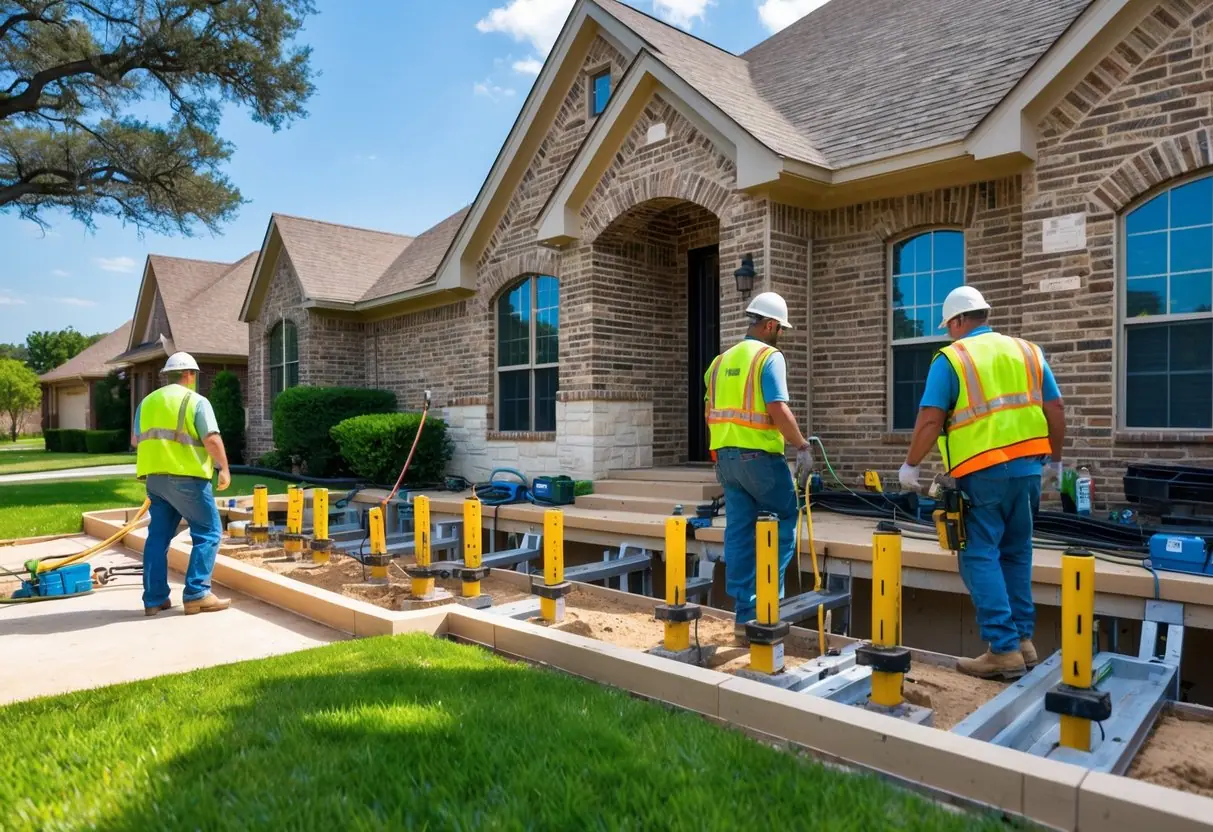
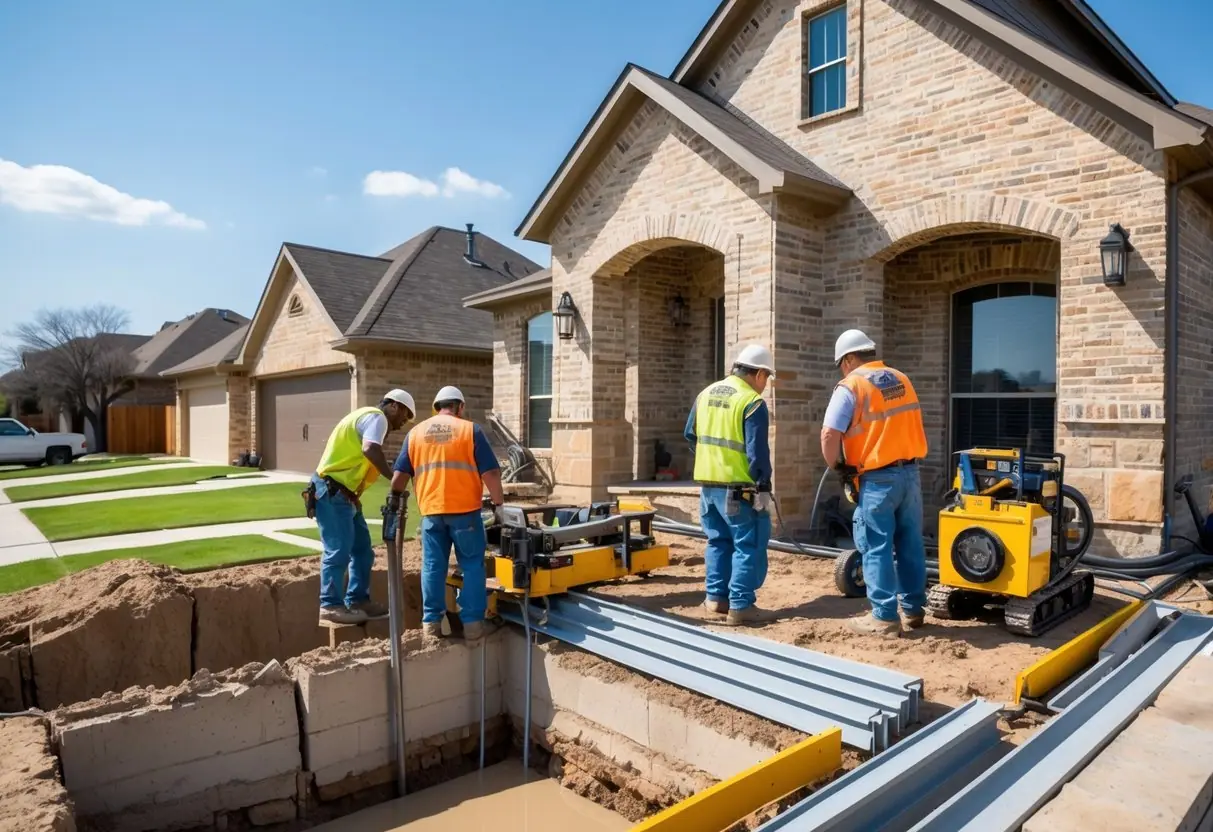
Our crew installs the specified repair system—whether hydraulic piering, pressed concrete piers, or helical piers—following engineering specifications. We work methodically around the foundation perimeter to achieve uniform lift and stabilization without over-
- 06
Slab Lifting and Leveling (Concurrent with or Following Stabilization)
Where applicable, we use controlled hydraulic pressure to raise settled portions of the slab back toward their original elevation, targeting measurements within industry-standard tolerances.
- 07
Drainage and Moisture Management Recommendations (Final Day)
Before closing out the project, we provide written drainage correction and moisture management recommendations specific to your Cedar Park property’s topography and soil conditions. Proper post-repair moisture maintenance is critical to long-term performance i
Foundation Repair Methods and Approaches
Hydraulic Push Pier Systems
Push piers are steel pipe segments driven hydraulically through unstable soil until they reach load-bearing bedrock or dense soil strata. In Cedar Park, the Austin Chalk limestone formation typically provides a reliable bearing layer at depths ranging from 12 to 30 feet depending on location. Push piers are best suited for heavier structures experiencing significant settlement and are commonly used in residential applications throughout the Avery Ranch and Sendero Springs communities.
Helical Pier Systems
Helical piers are screw-shaped steel shafts rotated into the soil to predetermined torque values correlated to load capacity. They are particularly effective in lighter structures, additions, porches, and commercial projects where access is limited. Helical piers are also preferred when working near the expansive-soil zones common in the Brushy Creek and Cat Hollow areas.
Pressed Concrete Pier Systems
Cylindrical concrete piers are hydraulically pressed into the ground using the structure’s own weight as resistance. This cost-effective method is well-suited for Cedar Park homes built on consistent native clay soils where bedrock is within 15 to 20 feet of the surface.
Slab Pier Interior Systems
For interior settlement in the center of a slab—common in larger Cedar Park homes where the middle of the foundation sags between perimeter supports—interior piers are installed through small access holes cut in the slab floor, then patched after installation.
Crawl Space Repair and Beam Restoration
For pier-and-beam homes, we repair or replace deteriorated wood beams, install adjustable steel support columns, and address moisture and ventilation issues in the crawl space. Learn more about our crawl space repair services
Structural Foundation Repair Cost in Cedar Park, TX
Foundation repair costs in Cedar Park vary considerably based on the severity of damage, the repair method required, the number of piers or supports needed, and site-specific access conditions. The following ranges reflect current market pricing for the greater Cedar Park and Williamson County area:
- Foundation Inspection: Most professional inspections range from $0 (free estimates) to $350 for detailed engineering-grade assessments with written reports.
- Pressed Concrete Pier Installation: Typically $250 to $400 per pier. An average Cedar Park home may require 8 to 20 piers, placing total project costs between $2,000 and $8,000 for straightforward perimeter repairs.
- Steel Push Pier or Helical Pier Systems: Range from $400 to $800 per pier installed. Projects requiring 10 to 20 piers commonly run $5,000 to $15,000 or more.
- Full Structural Foundation Repair (Complex Cases): Severe differential settlement, interior pier requirements, or commercial-scale projects can range from $15,000 to $30,000 or higher.
- Crawl Space Beam Repair: Typically $3,000 to $10,000 depending on the extent of wood deterioration and number of supports required.
Read moreShow less
Cedar Park-specific pricing factors include soil access difficulty in heavily landscaped properties, the added complexity of repairing post-tensioned slabs (which require special handling near cable locations), and permit fees assessed by the City of Cedar Park. We provide detailed, line-item written estimates so you understand exactly what you are paying for before any work begins. Learn more about foundation repair costs
Cedar Park Neighborhoods We Serve
Avery Ranch
Built primarily between 2000 and 2012, Avery Ranch homes feature post-tensioned slab foundations that experienced notable stress during the 2011 drought. The neighborhood’s proximity to the Brushy Creek greenbelt means tree root influence and slope drainage are ongoing concerns for homeowners.
Anderson Mill
Straddling the Cedar Park and Austin border, Anderson Mill’s housing stock dates largely to the 1980s. These older slabs—many conventionally reinforced rather than post-tensioned—have had decades of exposure to shrink-swell cycling and are frequently candidates for perimeter pier installation and interior leveling.
Brushy Creek and Cat Hollow
These communities sit on some of the deepest clay soil profiles in the Cedar Park area. Homes here consistently show the highest rates of differential settlement, and drainage management is a critical companion to any foundation repair project undertaken in these subdivisions.
Sendero Springs
A newer community with homes built from the mid-2000s onward, Sendero Springs properties occasionally sit on graded fill soil near the community’s topographic edges, creating variable bearing conditions that require thorough soil assessment before repair planning.
We also serve Georgetown, Round Rock, Pflugerville, Austin, Tech Ridge, Jollyville, Paloma Lake, Wells Branch, Teravista, La Frontera, Great Hills, Mayfield Ranch, Forest Creek, and Behrens Ranch. View all service areas
Foundation Maintenance Tips for Cedar Park Homeowners
- Maintain Consistent Soil Moisture Year-Round: In Cedar Park’s climate, install a soaker hose system around your foundation perimeter and run it during dry periods to prevent clay soil from shrinking away from the slab edge. Aim to keep soil consistently moist but not saturated—particularly critical during Central Texas summer months when temperatures regularly exceed 100°F.
- Correct Negative Drainage Grades: Ensure the soil grade around your home slopes away from the foundation at a minimum of 6 inches over the first 10 feet. Cedar Park’s clay soils pool water readily, and standing water against the foundation accelerates heaving.
- Maintain Gutters and Downspouts: Direct all roof runoff at least 5 to 10 feet away from the foundation using properly extended downspout leaders. Clogged gutters are a leading cause of localized over-saturation in Cedar Park neighborhoods.
- Monitor Trees Near the Foundation: Keep large live oaks and cedar elms at least 20 feet from the foundation where possible, or install root barriers to redirect root growth away from the slab.
- Inspect Plumbing Annually: Slab leaks are a significant cause of localized soil saturation and heaving in Cedar Park homes. Annual plumbing checks can identify slow leaks before they cause foundation damage.
- Document and Monitor Cracks: Use pencil marks with dates to track whether existing cracks are growing. A crack that grows more than 1/16 inch over three months warrants professional evaluation.
- Schedule Periodic Professional Inspections: We recommend a professional foundation inspection every three to five years for Cedar Park homes, and annually if your property has a history of movement.
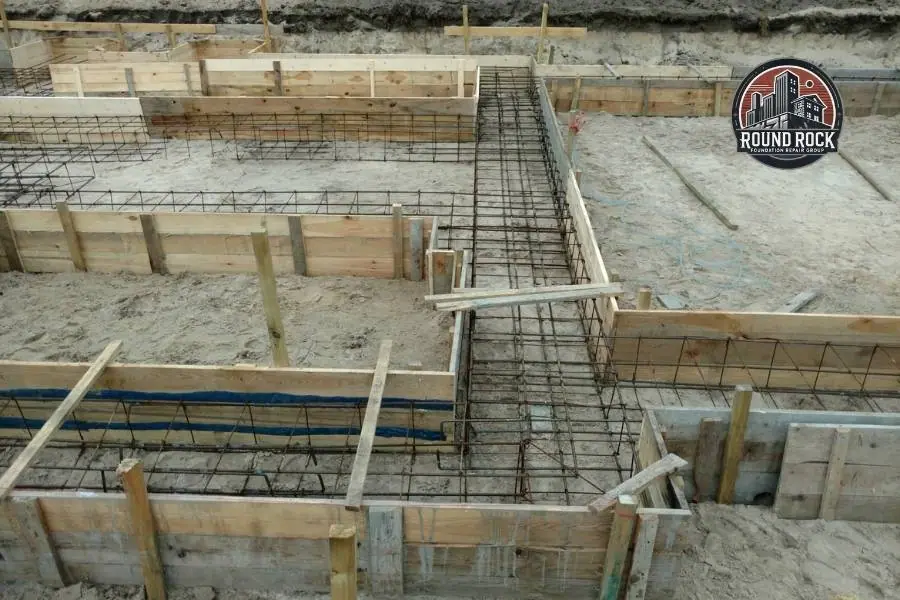
Why Choose Round Rock Foundation Repair Group
Round Rock Foundation Repair Group is a locally rooted foundation repair company serving Cedar Park and the surrounding communities of Williamson and Travis counties. Our technicians live and work in this region—we understand the specific soil conditions, seasonal climate patterns, and construction characteristics that make Central Texas foundation repair unique.
We specialize exclusively in foundation-related services, which means every member of our team is focused on one discipline rather than spreading expertise thin across multiple trades. Our work covers the full spectrum of foundation needs: structural repair, foundation restoration, concrete foundation repair, foundation patching, commercial foundation repair, crawl space repair, and comprehensive foundation inspections.
Read moreShow less
We provide transparent, written estimates before any work begins, and we take the time to explain your options clearly so you can make informed decisions. Our goal is not simply to complete a repair—it is to deliver a solution that performs for the long term under Cedar Park’s demanding soil and climate conditions.
Contact us today at (512) 220-3502 or visit our contact page to request your inspection.
FAQ
Frequently Asked Questions About Structural Foundation Repair in Cedar Park, TX
How much does structural foundation repair cost in Cedar Park, TX?
Costs vary by method and scope. Basic perimeter pier repairs for Cedar Park homes typically run $2,000 to $8,000 using pressed concrete piers. Steel pier systems for more severe settlement range from $5,000 to $15,000 or more. Complex structural projects or commercial repairs can exceed $20,000. We provide free, no-obligation on-site estimates so you receive an accurate quote for your specific property.
How long does foundation repair take in Cedar Park?
Most residential foundation repairs in Cedar Park are completed within one to three days of work after permits are obtained. The full timeline from initial inspection to project completion is typically one to three weeks, depending on permit processing time through the City of Cedar Park and scheduling availability.
Will my homeowner’s insurance cover foundation repair in Cedar Park?
Most standard homeowner’s insurance policies in Texas do not cover foundation damage caused by soil movement, which is classified as a gradual earth movement exclusion. However, if foundation damage is caused by a covered peril such as a plumbing slab leak, a portion of repairs may be covered. We recommend reviewing your policy and consulting with your insurance agent. We can provide documentation to support your claim where applicable.
What makes Cedar Park foundations more vulnerable than other Texas cities?
Cedar Park’s combination of expansive Houston Black and Austin Clay series soils, extreme drought-to-flood weather cycles, rapid residential development on variable terrain, and a large concentration of aging post-tensioned slabs built during the 1995–2015 growth boom creates above-average foundation risk. The 2011 drought—the worst in Texas recorded history— caused widespread damage across Cedar Park neighborhoods that many homeowners are still addressing today.
How do I know if I need structural repair or just cosmetic patching?
Cosmetic patching addresses surface crack appearance only and does not stop ongoing movement. If your cracks are wider than 1/8 inch, are actively growing, are accompanied by door or window binding, or show diagonal patterns at frame corners, you likely have structural movement requiring repair. A professional inspection is the only reliable way to distinguish between cosmetic issues and structural ones.
Can foundation repair be done in the summer heat in Cedar Park?
Yes. Foundation repair is performed year-round in Cedar Park. However, the dry summer months (June through September) are when soil shrinkage is most pronounced, which can make it easier to identify the full scope of settlement. We take measures to protect our crews and work efficiently during high-temperature periods common to the Cedar Park area.
Do you offer commercial foundation repair in Cedar Park?
Yes. We provide commercial foundation repair services for retail properties, office buildings, warehouses, and mixed-use developments throughout Cedar Park’s growing Bell Boulevard and Whitestone Boulevard commercial corridors, as well as properties in the US-183A business district. Learn more about commercial foundation repair
What happens if I don’t repair my foundation?
Unaddressed foundation movement is progressive. What begins as minor cracking and sticking doors can advance to significant structural damage, compromised wall framing, broken plumbing lines within the slab, and in severe cases, structural failure of load-bearing walls. Early intervention is almost always less costly than delayed repair, and it protects your home’s resale value in the competitive Cedar Park real estate market.
Get Expert Structural Foundation Repair in Cedar Park, TX Today
Don’t let foundation problems grow into costly structural failures. Round Rock Foundation Repair Group is ready to help Cedar Park homeowners and business owners with honest assessments, proven repair methods, and experienced local crews who understand the demands of Williamson County’s challenging soil and climate conditions.
Call us now at (512) 220-3502 to schedule your inspection, or visit our contact page to submit a request online. We serve Cedar Park and all surrounding communities including Round Rock, Georgetown, Austin, Pflugerville, Brushy Creek, and more.
Your foundation is your home’s most critical structural element—protect it with the region’s dedicated foundation repair specialists.
Get in touch
Find foundation repair help near you
Request a free estimate online or give us a call — our team will follow up quickly.
- Call us(512) 220-3502
- Visit1 Chisholm Trail Rd suite 450 room j, Round Rock, TX 78681
- HoursMon-Sat: 7:00 am – 7:00 pm