Pier and Beam Foundation Repair in Cedar Park, TX
Fast, Reliable Pier and Beam Foundation Repair in Cedar Park, TX — Licensed & Insured
Need pier and beam foundation repair in Cedar Park, TX? Round Rock Foundation Repair Group fixes settled piers, rotted beams & crawl space damage. Call (512) 220-3502.
- Licensed & Insured
- Locally Owned & Operated
- Free Inspection & Estimate
Request Your
Free EstimatePier and beam foundation repair is a specialized structural service that addresses damage, settling, and deterioration in raised foundations built on a network of wooden beams, concrete piers, and support posts. Unlike slab foundations, pier and beam systems create a crawl space beneath the home, making them both repairable and vulnerable to a unique set of environmental stressors common throughout Cedar Park and the greater Williamson County area.
Cedar Park’s expansive clay soils, dramatic seasonal moisture swings, and rapid residential growth have placed thousands of pier and beam homes under significant structural stress. Round Rock Foundation Repair Group brings focused expertise in diagnosing and correcting these issues for homeowners and commercial property owners across Cedar Park, TX. From older ranch-style homes near Buttercup Creek to newer construction in Whitestone Estates, our team delivers lasting structural solutions tailored to local soil conditions and building traditions.
Call us today at (512) 220-3502 to schedule your foundation inspection.
Understanding Pier and Beam Foundation Repair
Pier and beam foundations — sometimes called post and beam foundations — were the dominant construction method throughout Central Texas from the late 1800s through the mid-20th century. Rather than pouring a continuous concrete slab directly on the ground, builders elevated homes on a series of concrete or steel piers driven into load-bearing soil, connected by horizontal wooden beams that support the floor system above. The resulting crawl space, typically 18 to 36 inches in height, allowed access to plumbing, electrical systems, and HVAC components without breaking through a concrete floor.
In Cedar Park, this foundation type remains prevalent in neighborhoods developed before the 1980s, as well as in custom homes and rural properties where builders preferred the flexibility of adjustable support systems. Homes along the older sections of Bell Boulevard, properties near Lake Travis tributaries, and ranch-style houses throughout the 78613 and 78641 zip codes frequently feature pier and beam construction.
Over time, pier and beam foundations require repair for several interconnected reasons. Wooden beams and sill plates absorb moisture from the soil and crawl space humidity, leading to rot, fungal growth, and structural softening. Concrete or block piers can crack under differential settlement when soil shifts unevenly beneath the home. Steel adjustable piers can corrode in humid crawl space environments. The cumulative effect is a foundation that no longer provides uniform, level support to the floor system above.
Pier and beam foundation repair is the process of restoring that uniform support. Depending on the severity and type of damage, repair may involve shimming or replacing deteriorated beams, installing new concrete or steel piers, sistering damaged joists, improving crawl space drainage and ventilation, or performing a full foundation restoration using modern helical or pressed concrete pier systems. Because the foundation is accessible from the crawl space, many repairs can be completed without excavating the yard or disturbing interior finishes — a significant advantage over slab foundation repair in Cedar Park.
Understanding the difference between routine maintenance and structural repair is critical. A single soft spot in a floor may indicate a localized beam issue, while sloping floors across multiple rooms or sticking doors throughout the home typically signal deeper pier settlement requiring immediate professional attention. Schedule a professional foundation inspection to determine the exact scope of work needed before any repairs begin.
Why Pier and Beam Foundation Repair Is Needed in Cedar Park, TX
Cedar Park sits within the Eastern Edwards Plateau transition zone, where the limestone uplands of the Hill Country give way to the deep, dark clay soils of the Blackland Prairie. This geological boundary runs roughly along the US-183 and TX-45 corridors, and many Cedar Park neighborhoods straddle the transition. The result is a patchwork of soil conditions — some lots underlain by expansive Houston Black clay, others by thinner soils over limestone bedrock — that creates highly unpredictable foundation behavior.
The Houston Black clay soil prevalent across much of Cedar Park is classified as a Vertisol, meaning it expands dramatically when wet and contracts with equal force when dry. Soil engineers measure this behavior using a Potential Vertical Rise (PVR) index; many Cedar Park lots register PVR values between 4 and 8 inches, meaning the soil surface can move vertically by that amount across a single season. For a pier and beam foundation, this translates into repeated uplift and drop cycles that loosen pier connections, crack beam seats, and eventually cause differential settlement across the structure.
Rainfall patterns in Cedar Park intensify these soil dynamics. The area receives an annual average of approximately 34 inches of rain, but that precipitation is distributed unevenly. Extended droughts — such as the severe drought of 2011, which saw Williamson County record its driest 12-month period in over 100 years — cause deep soil shrinkage that drops pier and beam foundations several inches below their original elevations. When subsequent rain events arrive, rapid re-expansion can push piers upward asymmetrically, creating the classic “dome and valley” floor pattern seen in many older Cedar Park homes.
Specific neighborhoods illustrate these challenges clearly. Homes in Buttercup Creek, developed primarily in the late 1970s and 1980s, sit on heavily expansive clay and frequently show signs of beam deterioration combined with pier settlement. The Ranch at Brushy Creek area, where lot grading often channels stormwater toward home perimeters, sees elevated crawl space moisture leading to accelerated wood rot. Homes near Brushy Creek itself, which experienced significant flooding during the May 2015 Memorial Day floods and again during the October 2015 Halloween floods, often suffered direct crawl space water intrusion that damaged both wooden structural components and vapor barriers.
Cedar Park’s population growth — the city grew from approximately 26,000 residents in 2000 to over 80,000 by 2020 — has also introduced foundation stress through infrastructure changes. New road construction, utility trenching, and adjacent development alter subsurface drainage patterns, sometimes directing more moisture toward existing pier and beam homes than was originally present when they were built. The rapid development along Whitestone Boulevard, Ronald Reagan Boulevard, and the 1890 Ranch corridor has changed the local hydrology in ways that older foundations were never designed to accommodate.
Additionally, Cedar Park’s position in USDA Hardiness Zone 8b means that while hard freezes are infrequent, they do occur. During Winter Storm Uri in February 2021, Cedar Park recorded temperatures as low as 3°F. Frozen soil can shift piers and crack deteriorated beams in ways that manifest as foundation problems weeks after the freeze event, making post-winter inspections especially important for pier and beam homeowners throughout the area.
Signs You Need Pier and Beam Foundation Repair in Cedar Park
Interior Warning Signs
- Floors that feel soft, springy, or bounce underfoot — particularly in kitchens, hallways, or rooms over the center of the crawl space
- Visible floor slopes greater than 1 inch per 8 feet, detectable by placing a level or rolling a ball across the room
- Gaps between hardwood flooring planks that open and close seasonally with Cedar Park’s wet and dry cycles
- Interior doors that stick, drag, or no longer latch properly — particularly during summer dry spells or after winter storms
- Cracks in drywall running diagonally from door and window corners, indicating racking stress in the wall framing above
Exterior Warning Signs
- Visible gaps between the exterior siding or brick veneer and the foundation beam or skirting
- Sagging or uneven roofline when viewed from the street, particularly at ridge or eave lines
- Separation between porch or deck structures and the main home
Crawl Space Warning Signs
- Visible wood rot, dark staining, or fungal growth on beams, sill plates, or floor joists
- Cracked, tilted, or sunken concrete piers
- Standing water or consistently wet soil beneath the home after rain events
- Torn, displaced, or absent vapor barrier sheeting
Urgency Indicators
Floors sloping more than 2 inches across a room, visible pier displacement, or active wood rot constitute urgent conditions requiring immediate professional evaluation. Contact Round Rock Foundation Repair Group at (512) 220-3502 if you observe these symptoms.
Our Pier and Beam Foundation Repair Process in Cedar Park
Comprehensive Foundation Inspection (Day 1 — 2 to 3 Hours)
Our certified inspector evaluates both the interior living space and the crawl space beneath your home. We measure floor elevations at multiple points using digital levels, document pier conditions, assess beam and joist integrity, check moisture levels with a calibrated moisture meter, and identify drainage issues specific to your lot’s grading and Cedar Park’s local soil conditions. We provide a written inspection report with photographs. Learn more about our foundation inspection services.
Soil and Site Assessment (Day 1 — Concurrent with Inspection)
Given Cedar Park’s variable soil conditions across the US-183 and TX-45 transition zone, we assess the soil type present on your specific lot. This determines which pier system and repair approach will deliver the most stable, long-term result for your property.
Custom Repair Plan and Estimate (Day 1 to Day 3)
We develop a repair plan specific to your home’s construction era, pier layout, beam dimensions, and identified damage. Written estimates are detailed and itemized so you understand exactly what work is being performed and why.
Crawl Space Preparation and Access (Repair Day 1 — 2 to 4 Hours)
Before structural work begins, we prepare the crawl space by clearing debris, improving access points if needed, and installing temporary shoring where beams or joists show active deflection. Existing vapor barriers are carefully removed and documented for replacement.
Structural Repairs — Piers, Beams, and Joists (Repair Days 1 to 3)
Depending on the scope identified in the inspection, this phase includes installing new concrete or steel piers, shimming or replacing deteriorated wooden beams, sistering compromised floor joists, and releveling the floor system. We work systematically from the perimeter toward the center of the structure to achieve uniform elevation.
Crawl Space Moisture Management (Repair Days 2 to 3)
For Cedar Park homes where crawl space moisture is a contributing factor — particularly in low-lying areas near Brushy Creek or lots with heavy clay soils — we install new 6-mil or 12-mil vapor barriers, improve ventilation, and where necessary, add French drains or sump systems to prevent recurrence.
Final Inspection, Leveling Verification, and Documentation (Final Day)
We conduct a post-repair floor elevation survey, verify that all structural components meet specifications, and provide you with a complete written record of all work performed — essential documentation for future home sales or insurance purposes in the Cedar Park real estate market.
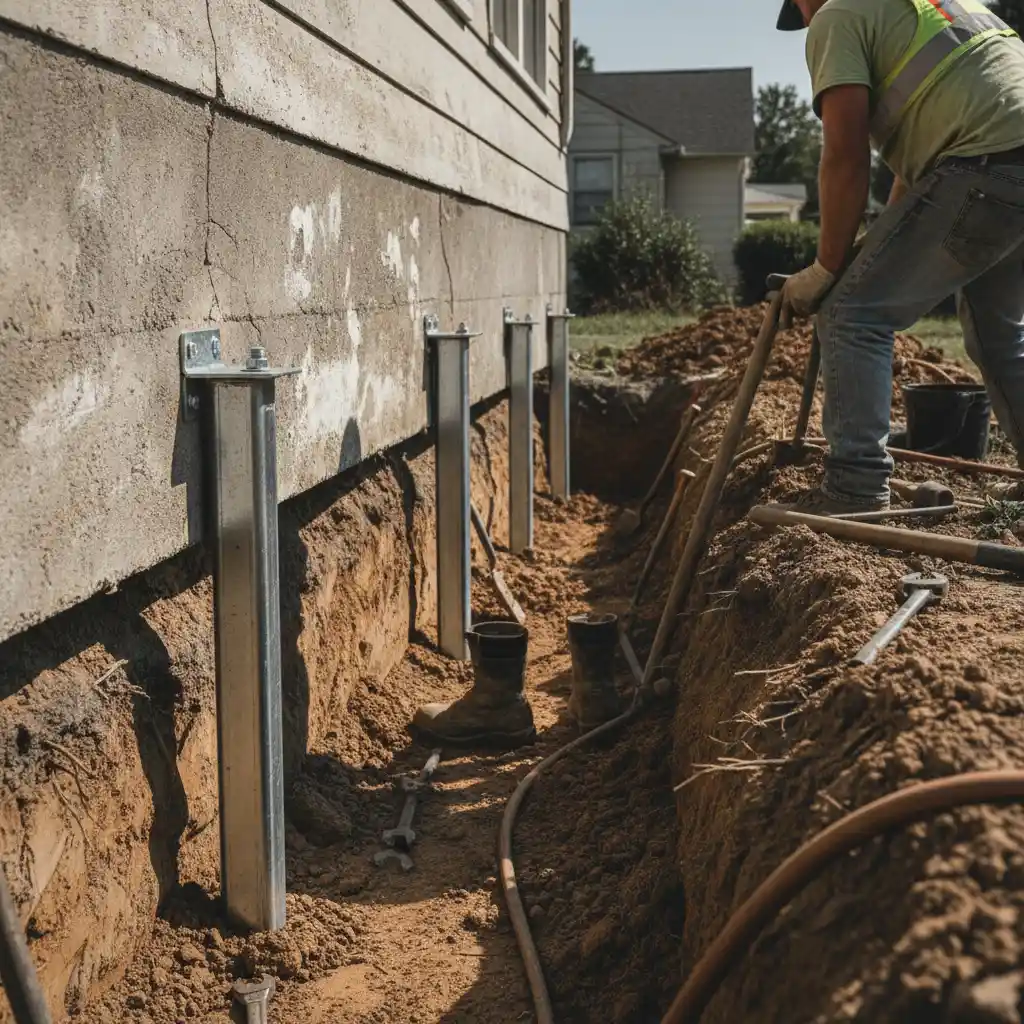
Our team in action — foundation-repair professionals serving Cedar Park
Pier and Beam Repair Methods Used in Cedar Park
Concrete Pier Shimming and Replacement
For homes where existing concrete block or poured piers have settled unevenly but the blocks themselves are structurally sound, steel shims or grout pads are installed to restore level bearing. When piers are cracked or significantly displaced — common in Buttercup Creek homes built on heavily expansive clay — full pier replacement using pre-cast concrete columns is performed. This method is cost-effective for moderate, localized settlement.
Steel Helical Piers
Where soil conditions are unstable or where piers need to reach deeper load-bearing strata beneath Cedar Park’s expansive clay layer, helical piers are screwed mechanically into the ground to depths of 15 to 25 feet or more, reaching competent soil or bedrock. This method is particularly appropriate for lots near Brushy Creek with high moisture variability or for commercial properties along Whitestone Boulevard and US-183.
Pressed Concrete Piers
Hydraulically pressed concrete cylinders are driven into the ground until resistance indicates competent bearing strata. This method offers a cost-effective alternative to helical piers for residential applications and is commonly used in neighborhoods like Ranch at Brushy Creek where pier depths are more predictable.
Beam and Joist Replacement
When structural wood components have been compromised by rot, fungal decay, or insect damage — conditions accelerated by Cedar Park’s humid summers and frequent moisture cycles — damaged beams and joists are removed and replaced with pressure-treated lumber rated for ground-contact or near-ground-contact applications. Learn more about our crawl space repair services.
Vapor Barrier and Drainage Installation
As a standalone preventative service or as part of a full repair, we install heavy-duty vapor barriers and improve crawl space drainage to address the root moisture causes that accelerate pier and beam deterioration in Cedar Park’s climate.
Ready for Pier and Beam Foundation Repair? Get Your Free Estimate Today.
Round Rock Foundation Repair Group serves Cedar Park and the surrounding area — we’ll be on-site within 24 hours.
📞 Call (512) 220-3502Pier and Beam Foundation Repair Cost in Cedar Park, TX
The cost of pier and beam foundation repair in Cedar Park, TX ranges widely depending on the extent of structural damage, the repair methods required, and the size of the home. Understanding the typical cost ranges helps homeowners plan appropriately before receiving a formal estimate.
Typical Cost Ranges
- Minor repairs (shimming 2 to 5 piers, replacing one or two beams, installing a new vapor barrier): $1,500 to $4,500
- Moderate repairs (replacing 6 to 15 piers, sistering multiple joists, improving drainage): $4,500 to $12,000
- Comprehensive foundation restoration (full releveling with helical or pressed piers, beam replacement, vapor barrier, drainage): $12,000 to $30,000+ for larger homes or severely damaged structures
- Crawl space moisture management only (vapor barrier, ventilation, minor drainage): $1,200 to $3,500
Factors Affecting Cedar Park Pier and Beam Repair Cost
- Soil conditions: Lots on deeply expansive Houston Black clay — common in Cedar Park’s older western neighborhoods — require deeper pier installation, increasing material and labor costs by 20 to 40 percent compared to lots over shallower limestone.
- Crawl space access: Homes with extremely low crawl spaces (under 18 inches) require additional labor for confined-space work.
- Extent of wood damage: Active rot or widespread beam deterioration significantly increases material costs given current lumber pricing.
- Home size: Larger homes in communities like 1890 Ranch or Whitestone Estates require more piers and longer beam spans.
- Permits: Williamson County and the City of Cedar Park require structural permits for foundation repair work exceeding certain thresholds; permit fees typically add $200 to $600 to project costs.
Contact us at (512) 220-3502 for a free on-site estimate with no obligation. View all pier and beam repair services.
Cedar Park Neighborhoods We Serve
Buttercup Creek
Developed primarily between 1978 and 1995, Buttercup Creek homes represent some of the oldest pier and beam construction in Cedar Park. Built on heavily expansive clay soils in the 78613 zip code, these homes commonly experience beam rot combined with pier settlement. Many original vapor barriers have reached the end of their service life and require full replacement.
Ranch at Brushy Creek
This community’s proximity to Brushy Creek and its tributary drainage system means that pier and beam homes here face elevated moisture exposure. Lots on the eastern edges of the neighborhood are particularly prone to crawl space water intrusion following significant rain events. The May and October 2015 flood events impacted multiple properties in this area.
Whitestone Estates and Neighborhoods Along US-183
The rapid commercial and residential development along the US-183 corridor has altered stormwater flow patterns, increasing moisture loading on pier and beam homes in adjacent residential streets. Older homes here, built in the late 1980s and early 1990s, increasingly show signs of differential settlement as surrounding development changes their soil moisture environment.
Anderson Mill Vicinity (Cedar Park / Austin Border)
Homes straddling the Cedar Park and Austin border in the Anderson Mill area feature a mix of pier and beam and slab construction from the 1970s and 1980s. Pier and beam structures here frequently show floor bounce and joist deterioration driven by limestone bedrock proximity combined with thin overlying clay layers. Explore our home foundation repair services.
Pier and Beam Foundation Maintenance Tips for Cedar Park Homeowners
- Maintain consistent soil moisture: During Cedar Park’s dry summers and drought periods, use a soaker hose system placed 18 inches from your foundation perimeter to maintain even soil moisture and reduce shrink-swell cycling in the underlying clay.
- Inspect your crawl space annually: Check for standing water, new wood staining, pier displacement, or vapor barrier damage each spring before Cedar Park’s storm season begins.
- Keep gutters and downspouts clear: Cedar Park’s fall leaf season from October through November can clog gutters rapidly. Ensure downspouts direct water at least 6 feet away from the foundation perimeter.
- Grade your lot away from the home: Maintain a minimum 6-inch drop in the first 10 feet of soil around your home to prevent water pooling near the foundation — critical for lots on Cedar Park’s clay-dominant soils.
- Control vegetation near the foundation: Tree roots from live oaks — extremely common throughout Cedar Park landscaping — can displace piers and draw moisture from soil unevenly. Maintain a 10-foot clearance between large trees and your foundation.
- Ventilate the crawl space properly: Ensure existing foundation vents are unobstructed. Cedar Park’s humid summers (average July relative humidity exceeds 70 percent) can cause rapid moisture accumulation in poorly ventilated crawl spaces.
- Schedule post-storm inspections: After significant rain events or severe weather like Winter Storm Uri-type freezes, schedule a professional check of your crawl space and pier system.
- Replace aging vapor barriers: Vapor barriers older than 10 to 15 years should be evaluated for replacement, particularly in Cedar Park’s climate where UV degradation and moisture cycling reduce barrier effectiveness over time.
Why Choose Round Rock Foundation Repair Group for Cedar Park Pier and Beam Repair
Round Rock Foundation Repair Group specializes in the specific foundation challenges created by Williamson County’s expansive soils, Central Texas climate patterns, and the diverse building stock found throughout Cedar Park, Round Rock, and Georgetown. We are not a national franchise — we are a locally focused team with direct knowledge of Cedar Park’s neighborhood-by-neighborhood soil conditions, Brushy Creek’s drainage behavior, and the construction methods used in homes built across every decade from the 1960s through today.
Our inspection and repair process is transparent and education-focused. We explain what we find, why it matters, and what your repair options are — without pressure tactics. We provide detailed written estimates and post-repair documentation that supports your home’s value in the Cedar Park real estate market.
We serve all of Cedar Park, TX as well as Round Rock, Georgetown, Austin, Brushy Creek, Pflugerville, Avery Ranch, Anderson Mill, and all surrounding communities. Whether your home needs a minor shim adjustment or a comprehensive foundation restoration, our team brings the same standard of care to every project.
Call us at (512) 220-3502 to speak directly with a foundation specialist. Contact us online to request your free inspection.
Frequently Asked Questions: Pier and Beam Foundation Repair in Cedar Park, TX
How much does pier and beam foundation repair cost in Cedar Park, TX?
Costs in Cedar Park typically range from $1,500 for minor shimming and vapor barrier replacement to $30,000 or more for comprehensive foundation restoration using helical piers on homes with significant structural damage. The highly expansive clay soils found across much of Cedar Park — particularly in older neighborhoods like Buttercup Creek — tend to require deeper pier installations, which increases costs compared to repairs in areas with shallower bedrock. A free on-site inspection is the only reliable way to establish your specific project cost.
How long does pier and beam foundation repair take in Cedar Park?
Most residential pier and beam repairs in Cedar Park are completed within 1 to 4 days. Simple beam replacement or shimming work may finish in a single day. Full foundation restorations involving new pier installation throughout the home, beam replacement, and drainage improvements typically take 3 to 5 days. Scheduling can vary based on permit timelines with the City of Cedar Park or Williamson County.
Is pier and beam foundation repair covered by homeowners insurance in Texas?
Standard Texas homeowners insurance policies typically do not cover foundation repair caused by soil movement, settling, or long-term moisture damage — which are the most common causes in Cedar Park. Coverage may apply if damage results from a covered sudden event, such as a plumbing leak that caused soil erosion. We recommend reviewing your specific policy and can provide documentation of repair scope if needed for an insurance inquiry.
What makes Cedar Park pier and beam foundations more challenging to repair than in other Texas cities?
Cedar Park’s position on the boundary between Hill Country limestone geology and Blackland Prairie clay creates highly variable soil conditions that change lot by lot, sometimes even across a single property. This means repair approaches that work reliably in, say, full-clay neighborhoods of Round Rock may need to be adapted for a Cedar Park lot where limestone bedrock begins at 6 feet rather than 20 feet. Our local knowledge of these transitions within Cedar Park’s specific zip codes — 78613 and 78641 — directly informs how we design each repair plan.
Can I stay in my home during pier and beam foundation repair?
Yes, in most cases Cedar Park homeowners can remain in their homes during pier and beam repair. Access to the crawl space is from the exterior or through a dedicated access hatch, so interior living spaces are not typically disrupted. Some floor movement may be noticeable during releveling work; we communicate with homeowners throughout the process so there are no surprises.
How do I know if my Cedar Park home has a pier and beam or slab foundation?
The easiest way to identify a pier and beam foundation is to look for a crawl space access point — usually a small hatch or vent opening on the exterior of the home near ground level. Pier and beam homes also typically sit visibly higher off the ground than slab homes. Homes in Cedar Park built before approximately 1980 are disproportionately likely to be pier and beam; newer construction in communities like 1890 Ranch or Avery Ranch tends to be slab. If you are uncertain, our inspection team can confirm your foundation type during an initial visit.
How soon should I act if I notice signs of pier and beam foundation problems?
Foundation issues do not resolve on their own — in Cedar Park’s climate, they consistently worsen over time as seasonal moisture cycles continue to stress the structure. A soft floor or slightly sticking door today can become significant structural damage within one to two dry seasons if the underlying pier or beam problem is not addressed. We recommend scheduling an inspection within 30 days of noticing symptoms, and immediately if you observe active wood rot, significant floor slopes, or visible pier displacement.
Do you service areas outside Cedar Park?
Yes. Round Rock Foundation Repair Group serves Cedar Park, Round Rock, Georgetown, Austin, Brushy Creek, Pflugerville, Avery Ranch, Anderson Mill, Jollyville, Wells Branch, Tech Ridge, Great Hills, Mayfield Ranch, Behrens Ranch, Sendero Springs, Forest Creek, Teravista, La Frontera, Paloma Lake, Cat Hollow, and all surrounding communities throughout Williamson and Travis counties. View our complete service area.
Get Your Free Pier and Beam Foundation Inspection in Cedar Park, TX
If your Cedar Park home is showing signs of foundation trouble — soft floors, sticking doors, crawl space moisture, or visible pier damage — Round Rock Foundation Repair Group is ready to help. We provide free, no-obligation on-site inspections with written reports so you understand exactly what your foundation needs before you commit to any repair work.
Cedar Park’s expansive soils and variable climate make pier and beam foundation issues more common here than in many other parts of Texas. The sooner a problem is identified, the more options you have and the lower your repair costs are likely to be.
Call us today at (512) 220-3502 to schedule your free inspection. Our team serves all Cedar Park neighborhoods including Buttercup Creek, Ranch at Brushy Creek, Whitestone Estates, Anderson Mill, and beyond. Request your free inspection online and a local foundation specialist will respond promptly.