Foundation Waterproofing in Cedar Park, TX
Expert Foundation Waterproofing in Cedar Park, TX — Storm-Tested, Warranty-Backed
Need foundation waterproofing in Cedar Park, TX? Round Rock Foundation Repair Group protects homes from clay soils & flooding. Call (512) 220-3502 today.
- Licensed & Insured
- Locally Owned & Operated
- Free Inspection & Estimate
Request Your
Free EstimateFoundation waterproofing is the process of applying protective barriers, drainage systems, and sealing solutions to prevent water intrusion into your home’s foundational structure. In Cedar Park, TX, where expansive clay soils and seasonal flooding events create persistent moisture challenges, waterproofing your foundation is not optional — it is essential to preserving your property’s structural integrity.
Cedar Park’s rapid growth over the past two decades has brought thousands of new homes to neighborhoods like Buttercup Creek, Twin Creeks, and Whitestone Estates, many of which sit atop the Blackland Prairie soil belt — one of the most moisture-reactive soil types in Central Texas. Round Rock Foundation Repair Group specializes in delivering professional, lasting foundation waterproofing solutions tailored specifically to Cedar Park’s local geology, climate, and construction patterns. Whether you’re dealing with a wet crawl space, seeping basement walls, or saturated soil threatening your slab, our team has the expertise to protect your home from the ground up.
Call us today at (512) 220-3502 to schedule your foundation waterproofing consultation in Cedar Park.
Understanding Foundation Waterproofing
Foundation waterproofing refers to a comprehensive set of techniques and materials designed to block water from penetrating or accumulating against your home’s foundation. Unlike simple damp-proofing — which only slows moisture vapor — true waterproofing creates a complete barrier or actively redirects water away from the structure using drainage systems, membranes, coatings, and sump solutions.
The practice of foundation waterproofing has evolved significantly since the mid-20th century. Early construction in Central Texas often relied on basic asphalt damp-proofing applied to concrete block walls — a method now known to be inadequate for climates with heavy seasonal rainfall and reactive soils. Modern waterproofing systems incorporate interior drainage channels, exterior waterproof membranes, French drains, vapor barriers, and wall injection technologies that work together to manage both surface water and subsurface hydrostatic pressure.
In Cedar Park specifically, the issue is compounded by the city’s geography. Positioned at the intersection of the Blackland Prairie and the Edwards Plateau, Cedar Park experiences two distinct soil zones. Homes in the eastern portions of the city — including neighborhoods near Brushy Creek — sit on heavy expansive clay soils that absorb massive amounts of water during rain events and then shrink dramatically during droughts. Homes closer to the western hills near Twin Creeks and Crystal Falls often rest on limestone-based caliche soils, which drain quickly but can direct concentrated water flows toward foundations during storms.
Cedar Park’s population growth from roughly 26,000 residents in 2000 to over 82,000 by 2023 has resulted in extensive residential development across both soil zones. Many homes built between 2000 and 2015 during the construction boom used standard slab-on-grade foundations without dedicated waterproofing systems, leaving thousands of properties vulnerable to moisture intrusion as the city’s soil and drainage patterns mature around them. Understanding these local factors is the first step toward selecting the right waterproofing approach for your Cedar Park home.
Why Foundation Waterproofing Is Needed in Cedar Park, TX
Expansive Blackland Prairie Clay Soils
The dominant soil type across much of Cedar Park’s eastern residential areas is Vertisol clay — locally known as “black gumbo.” This soil has a plasticity index frequently exceeding 40, meaning it expands up to 10–15% in volume when wet and contracts sharply when dry. During Cedar Park’s intense summer droughts, when temperatures regularly exceed 100°F for weeks at a stretch, this soil can shrink away from foundation edges by 2–4 inches, leaving the perimeter unsupported. When heavy autumn or winter rains follow — such as the October 2018 flood event that dropped over 6 inches on Cedar Park in 24 hours — the soil re-expands rapidly, pushing hydrostatic pressure directly against foundation walls and slab edges.
Cedar Park’s Rainfall Variability
Cedar Park averages approximately 33 inches of annual rainfall, but this figure is misleading because the rain arrives unevenly. The city frequently experiences extended dry periods of 60–90 days followed by intense storm events. The May 2015 “Memorial Day Floods” deposited record rainfall across Williamson County, overwhelming drainage systems in neighborhoods like Deer Creek and Buttercup Creek and causing widespread foundation moisture intrusion. Similarly, February 2021’s Winter Storm Uri caused ground-level freeze-thaw cycling that cracked foundation perimeters across Cedar Park’s newer subdivisions, creating entry points for future water infiltration.
Topographic Water Channeling in Cedar Park Neighborhoods
Cedar Park’s rolling terrain causes surface water to concentrate in predictable low-lying areas. Neighborhoods such as Brushy Creek, Ranch at Brushy Creek, and Sendero Springs — which sit in natural drainage corridors — are particularly susceptible to subsurface water migration toward foundations after heavy rain. Homes in Anderson Mill (bordering Cedar Park’s southern edge near Austin) built in the 1980s and early 1990s frequently show signs of chronic moisture intrusion because drainage infrastructure was not designed to handle today’s impervious cover levels in the surrounding watershed.
Aging Infrastructure and Growing Impervious Cover
As Cedar Park has developed, impervious cover — roads, parking lots, rooftops — has increased dramatically, reducing the land’s ability to absorb rainfall and accelerating runoff toward residential foundations. Studies of Williamson County watersheds show that impervious cover in Cedar Park’s urban core has risen from under 15% in 1990 to over 45% in many districts by 2020, fundamentally changing how water moves through the landscape and increasing the hydraulic load on residential foundations throughout the city.
Signs You Need Foundation Waterproofing in Cedar Park
Interior Warning Signs
- White chalky deposits (efflorescence) on basement or crawl space walls, indicating ongoing water migration through concrete
- Musty or earthy odors emanating from lower levels or beneath flooring
- Visible mold or mildew growth on walls, floor joists, or insulation in crawl spaces
- Standing water or persistent dampness on concrete floors after rain events
- Staining, rust streaks, or discoloration along wall-floor joints
Exterior Warning Signs
- Soil visibly pulling away from the foundation perimeter during dry Cedar Park summers — a gap wider than 1 inch warrants immediate attention
- Water pooling within 3 feet of the foundation after rainfall
- Downspouts discharging within 5 feet of the foundation without proper extensions
- Landscape grading that slopes toward the home rather than away from it
Structural Urgency Indicators
- Horizontal cracks in foundation walls — these indicate active hydrostatic pressure and require immediate professional evaluation
- Stair-step cracks in brick veneer, especially after Cedar Park’s wet-dry seasonal cycles
- Doors or windows that stick or fail to close properly following heavy rainfall periods
If you observe any of these signs, contact our Cedar Park foundation inspection team for a professional assessment before conditions worsen.
Our Foundation Waterproofing Process in Cedar Park
Comprehensive Foundation Inspection (1–2 Hours)
Our Cedar Park specialists begin with a thorough on-site evaluation, assessing soil conditions around your foundation, grading patterns, existing drainage infrastructure, and any visible signs of water intrusion or structural compromise. We use moisture meters, crack mapping, and soil probing to document current conditions accurately.
Soil and Drainage Analysis (Same Day)
Because Cedar Park homes sit on vastly different soil types depending on their location within the city, we analyze your specific lot’s soil composition, drainage patterns, and proximity to natural water channels. Homes near Brushy Creek corridors receive different evaluations than those on the elevated caliche soils of Crystal Falls.
Customized Waterproofing Plan Development (1–3 Days)
We develop a site-specific waterproofing plan that accounts for your foundation type, soil classification, home age, and budget. This written plan specifies all materials, methods, expected timelines, and warranty terms before any work begins.
Surface Preparation and Excavation (1–3 Days Depending on Scope)
For exterior waterproofing systems, we carefully excavate around the foundation perimeter. Cedar Park’s clay soils require controlled excavation to prevent sidewall collapse, and we stage work in sections to maintain structural stability throughout the process.
Waterproofing System Installation (2–5 Days)
Our crews install the specified waterproofing system — whether exterior membrane application, interior drainage channels, French drain installation, or wall injection — using materials rated for Central Texas’s temperature extremes, ranging from summer highs above 105°F to occasional hard freezes.
Drainage Infrastructure and Backfill (1–2 Days)
We install or upgrade perimeter drainage, extend downspout discharge points, and backfill excavated areas with drainage-grade aggregate before restoring landscape features. Proper grading achieving a minimum 6-inch drop over the first 10 feet from the foundation is established.
Final Inspection and Documentation (2–3 Hours)
Every completed waterproofing project receives a final walkthrough, photographic documentation of all installed systems, and written maintenance guidelines specific to Cedar Park’s seasonal patterns.
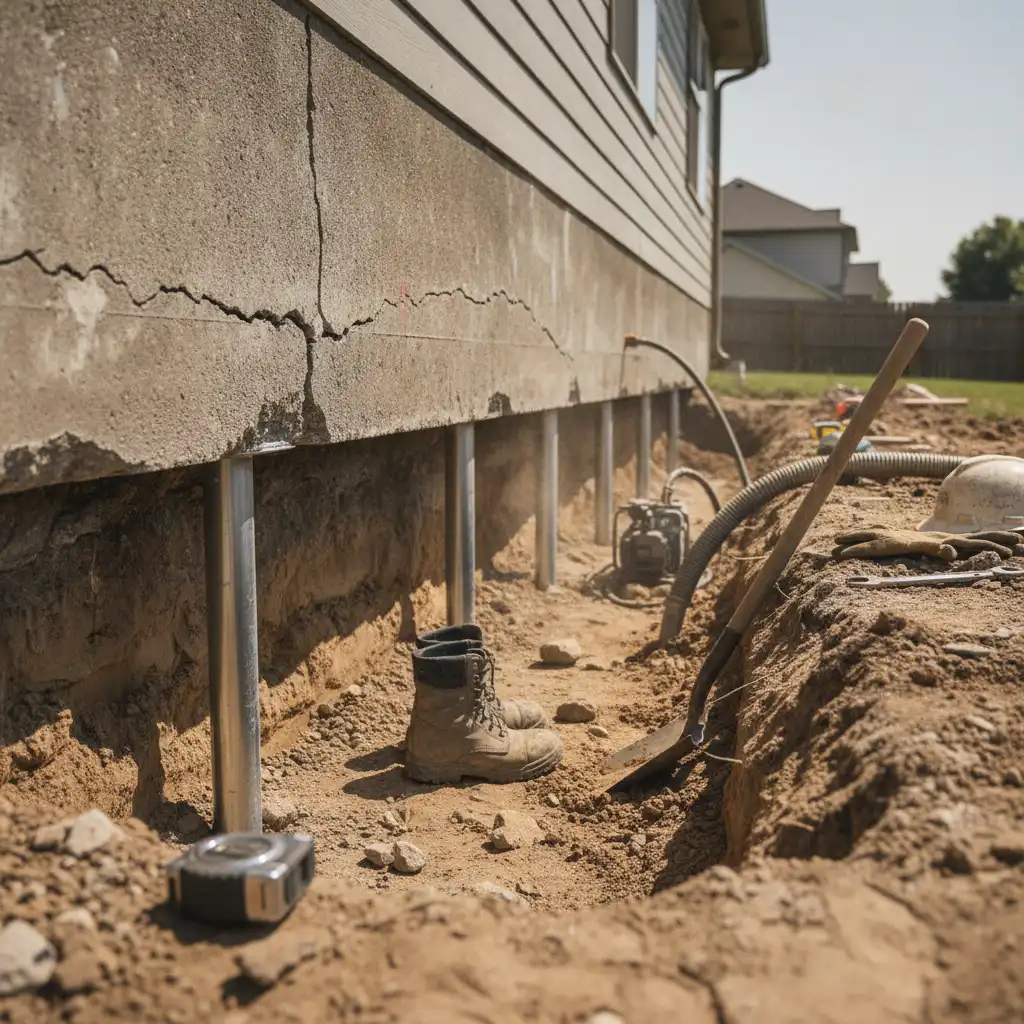
Our team in action — foundation-repair professionals serving Cedar Park
Foundation Waterproofing Methods We Use in Cedar Park
Exterior Waterproof Membrane Systems
Applied directly to the exterior foundation wall surface after excavation, these polymer-modified bitumen or crystalline membranes create a continuous barrier against hydrostatic pressure. This method is ideal for Cedar Park homes with chronic subsurface water intrusion, particularly in neighborhoods with high clay content soils like those near Brushy Creek and Sendero Springs where water tables rise significantly after heavy rain events.
Interior French Drain and Sump Systems
When exterior excavation is impractical or cost-prohibitive, interior perimeter drainage channels collect water that enters through wall-floor joints and direct it to a sump pump for removal. This method is particularly effective for Cedar Park’s older homes in Anderson Mill and the Buttercup Creek area where post-construction landscaping has made exterior access difficult.
Crack Injection Waterproofing
Polyurethane or epoxy injection fills active cracks in concrete foundation walls, restoring the moisture barrier. This targeted method is highly effective for Cedar Park homes that experienced crack formation during Winter Storm Uri’s freeze-thaw cycles or the 2015 flood events.
Crawl Space Encapsulation
For Cedar Park homes with crawl space foundations — more common in older sections of the city and in areas near the Brushy Creek watershed — full encapsulation using 20-mil vapor barriers, sealed vents, and dehumidification systems eliminates moisture-related damage to floor structures. Learn more about our crawl space repair services.
Exterior Grading and Surface Drainage Correction
In many Cedar Park cases, correcting negative grading and improving surface drainage alone can dramatically reduce foundation moisture loads. We regrade landscapes, install swales, and extend downspout discharge systems to redirect Cedar Park’s intense storm runoff away from foundation perimeters.
Ready for Foundation Waterproofing? Get Your Free Estimate Today.
Round Rock Foundation Repair Group serves Cedar Park and the surrounding area — we’ll be on-site within 24 hours.
📞 Call (512) 220-3502Foundation Waterproofing Cost in Cedar Park, TX
Understanding the cost of foundation waterproofing in Cedar Park helps homeowners plan appropriately and evaluate proposals accurately. Below are typical price ranges for the most common waterproofing services in the Cedar Park market:
- Interior Drainage and Sump System: $3,500–$8,500 for a typical Cedar Park single-family home, depending on linear footage and sump pump configuration
- Exterior Waterproof Membrane Application: $8,000–$20,000+ depending on foundation perimeter length, excavation depth, and soil conditions
- Crack Injection (Per Crack): $500–$1,500 per linear crack, with most Cedar Park projects involving 2–6 cracks
- Crawl Space Encapsulation: $4,500–$12,000 depending on square footage and moisture severity
- Grading and Drainage Correction: $1,500–$5,000 for surface drainage improvements
Cedar Park-Specific Cost Factors
Several factors unique to Cedar Park influence final project costs. Homes in high-clay-content zones near eastern Cedar Park typically require more robust drainage systems than those on western limestone soils. Properties in densely landscaped neighborhoods like Twin Creeks may face higher excavation costs due to mature trees and hardscaping. The severity of Cedar Park’s seasonal soil movement also means that some properties require engineered drainage solutions rather than standard systems, increasing material costs by 20–40%.
The average Cedar Park homeowner invests between $5,000 and $15,000 in a complete foundation waterproofing solution. Contact us for a precise estimate tailored to your specific property. Schedule your free inspection today.
Cedar Park Neighborhoods We Serve
Buttercup Creek
This established Cedar Park neighborhood features homes primarily built between 1985 and 2005 on Blackland clay soils adjacent to Brushy Creek tributaries. Properties here frequently experience hydrostatic pressure against foundation perimeters during heavy rain seasons and benefit most from interior drainage systems combined with exterior grading corrections.
Twin Creeks
Located in western Cedar Park near the Williamson-Travis County border, Twin Creeks homes sit on a transition zone between caliche and clay soils. The subdivision’s heavily landscaped lots and mature tree canopy create unique drainage challenges, and homes here often require targeted crack injection combined with improved surface drainage management.
Brushy Creek Area
Homes in and around the Brushy Creek community sit within the historic floodplain corridor of Brushy Creek itself. Despite modern flood mitigation infrastructure, subsurface moisture migration remains a persistent concern, particularly for homes on slab-on-grade foundations built before 2010 without dedicated perimeter drainage. Crawl space repair is also commonly needed in this area.
Avery Ranch (Austin/Cedar Park Border)
This master-planned community straddles the Cedar Park-Austin boundary and includes homes built from 2001 through the mid-2010s. Rapidly constructed during Cedar Park’s growth boom, many Avery Ranch foundations show early signs of moisture intrusion as the surrounding drainage infrastructure handles ever-increasing storm runoff from the growing watershed.
Foundation Waterproofing Maintenance Tips for Cedar Park Homeowners
- Maintain positive grading year-round: Inspect the slope around your foundation every spring before Cedar Park’s rainy season begins. Soil should drop at least 6 inches within the first 10 feet from your foundation walls.
- Water your foundation perimeter during Cedar Park droughts: During extended dry periods (common June–September), use a soaker hose set 12–18 inches from the foundation to maintain consistent soil moisture and prevent the extreme shrinkage that damages foundations.
- Clean gutters before major storm seasons: Clear gutters and downspouts every October before Cedar Park’s fall rain season to prevent overflow and concentrated water discharge against the foundation.
- Extend downspout discharge: Ensure all downspouts discharge at least 6 feet from your foundation perimeter using rigid extensions or underground drain pipes.
- Inspect crawl space vents annually: Check that crawl space vents are functioning, unobstructed, and intact after each winter, particularly following any hard freezes like the February 2021 Winter Storm Uri event.
- Monitor and maintain sump pump systems: Test sump pumps every spring by pouring water into the pit and confirming automatic activation. Cedar Park’s intense storm events can overwhelm undersized or failing pumps quickly.
- Address new cracks promptly: Any crack wider than 1/4 inch appearing after a significant weather event should be professionally evaluated within 30 days to prevent water infiltration from expanding the damage.
Why Choose Round Rock Foundation Repair Group for Foundation Waterproofing in Cedar Park
Round Rock Foundation Repair Group brings deep, localized expertise to every Cedar Park waterproofing project. Our team has extensive hands-on experience working with the specific soil types, drainage patterns, and construction styles found across Cedar Park’s diverse neighborhoods — from the Blackland clay zones near Brushy Creek to the caliche-limestone terrain of Crystal Falls and Twin Creeks.
We do not apply generic solutions. Every Cedar Park waterproofing project begins with a soil-specific assessment and results in a customized plan built for your home’s unique conditions and Cedar Park’s challenging climate cycles. Our crews are trained in the full spectrum of waterproofing technologies, allowing us to recommend and install the most effective solution for each situation rather than a one-size-fits-all approach.
We serve the entire Cedar Park and greater Round Rock metropolitan area, including Georgetown, Pflugerville, Austin, Brushy Creek, and surrounding communities. Our commitment to Cedar Park homeowners extends beyond project completion — we provide thorough post-installation documentation and ongoing support to ensure your waterproofing system performs through Cedar Park’s toughest weather seasons for years to come.
Call (512) 220-3502 to speak directly with a Cedar Park foundation waterproofing specialist today.
Frequently Asked Questions About Foundation Waterproofing in Cedar Park, TX
How much does foundation waterproofing cost in Cedar Park, TX?
Foundation waterproofing costs in Cedar Park typically range from $3,500 for basic interior drainage systems to $20,000 or more for comprehensive exterior membrane installations on larger homes. The high clay content soils in eastern Cedar Park neighborhoods and the drainage complexity of areas near Brushy Creek corridors often push project costs toward the higher end of that range. Most Cedar Park homeowners invest between $5,000 and $15,000 for complete waterproofing solutions.
How long does foundation waterproofing take in Cedar Park?
Most Cedar Park waterproofing projects are completed within 3–7 business days. Simple crack injection or interior drainage installations typically take 1–3 days. Comprehensive exterior excavation and membrane systems on larger Cedar Park properties can take 5–10 days depending on soil conditions and site access.
Is foundation waterproofing different in Cedar Park than in other Texas cities?
Yes, significantly. Cedar Park’s position on the Blackland Prairie-Edwards Plateau transition zone creates soil and drainage conditions that require specific adaptations. The extreme plasticity of Cedar Park’s eastern clay soils, combined with the city’s rainfall variability — shifting from months-long droughts to intense flood events — demands waterproofing systems rated for higher hydrostatic pressure and greater soil movement than what would be appropriate in, for example, San Antonio or Dallas.
Will waterproofing fix my foundation, or do I need foundation repair too?
Waterproofing prevents future water damage, but it does not correct existing structural damage. If your Cedar Park home already has significant foundation movement, settled piers, or structural cracks from years of moisture exposure, waterproofing should be combined with structural foundation repair to address both the source and the existing damage simultaneously.
Do Cedar Park homes on slabs need waterproofing?
Yes. The majority of Cedar Park homes are slab-on-grade construction, and these foundations are highly susceptible to perimeter moisture intrusion through wall-slab joints, utility penetrations, and surface cracks — especially given Cedar Park’s reactive clay soils. Slab foundations in Cedar Park’s eastern neighborhoods near Buttercup Creek and Brushy Creek are particularly vulnerable during the seasonal wet-dry cycles that cause repeated soil expansion and contraction cycles.
What is the difference between waterproofing and damp-proofing?
Damp-proofing — typically an asphalt coating applied to foundation walls — only resists moisture vapor and light soil moisture. True waterproofing creates a complete barrier or active drainage system capable of managing hydrostatic water pressure. For Cedar Park homes, where soil saturation after heavy rain events can exert significant pressure against foundation walls, waterproofing rather than damp-proofing is the appropriate standard of protection.
How do I know if my Cedar Park home needs waterproofing or just better drainage?
Both are often needed simultaneously. In many Cedar Park cases — particularly in newer subdivisions where landscaping has matured and altered original drainage patterns — improved surface grading and extended downspout discharge can resolve 40–60% of moisture intrusion issues without full waterproofing system installation. Our inspection process determines the appropriate scope for each property specifically.
Do you offer foundation waterproofing near me in Cedar Park’s surrounding areas?
Yes. Round Rock Foundation Repair Group serves Cedar Park and all surrounding communities including Round Rock, Georgetown, Pflugerville, Austin, Brushy Creek, Avery Ranch, Anderson Mill, and Great Hills. View our full service area.
Contact Round Rock Foundation Repair Group for Foundation Waterproofing in Cedar Park, TX
Don’t let Cedar Park’s reactive soils, intense storm events, and seasonal drought cycles compromise your home’s foundation. Round Rock Foundation Repair Group is ready to assess your property, recommend the right waterproofing solution, and protect your investment with professional, locally adapted installation.
Whether you’ve noticed early warning signs of moisture intrusion or want to proactively protect a newer Cedar Park home, our team delivers straightforward assessments and lasting results without pressure or upselling.
- Call us: (512) 220-3502
- Service Area: Cedar Park, Round Rock, Georgetown, Austin, Pflugerville, Brushy Creek, and all surrounding communities
Schedule your free Cedar Park foundation waterproofing inspection today — and get the expert, Cedar Park-specific guidance your home deserves.