
Understanding the cost of home foundation repair in Round Rock, TXis the first step toward protecting your most valuable investment. Home foundation repair refers to the professional process of diagnosing, stabilizing, and restoring a residential foundation that has shifted, cracked, settled, or otherwise deteriorated due to soil movement, moisture changes, or structural stress.
Round Rock sits atop the expansive clay-rich soils of the Blackland Prairie — a geological zone notorious for dramatic soil volume changes with every rain cycle. These local conditions make foundation issues more common here than in many other Texas cities, and they directly influence what homeowners pay for repairs. At Round Rock Foundation Repair Group, we bring deep regional experience to every project, delivering honest assessments and lasting solutions tailored to the specific challenges of Central Texas construction and climate. Call us today at (512) 220-3502 for a free foundation inspection.
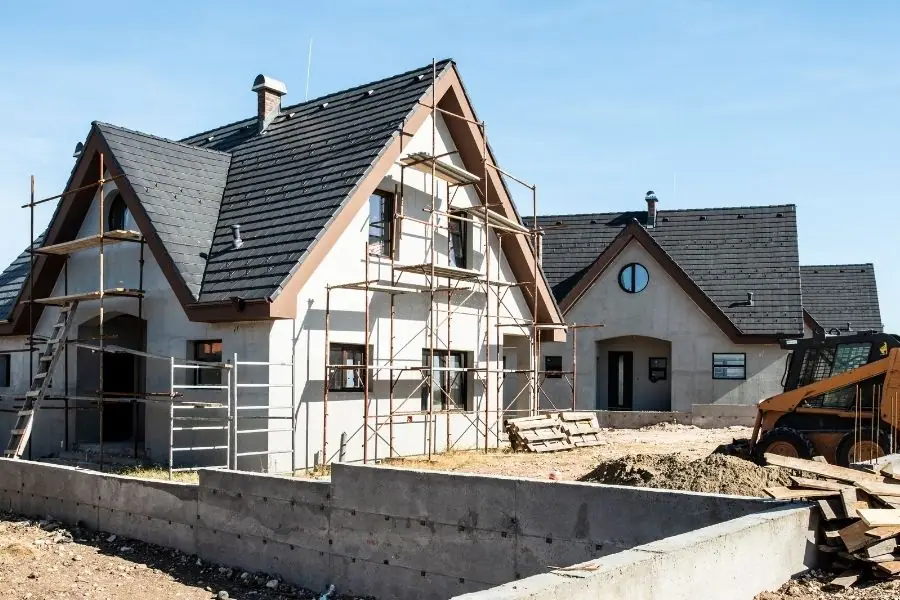
Understanding Home Foundation Repair Costs in Round Rock, TX
Home foundation repair is not a single service — it is an umbrella term covering a spectrum of interventions ranging from minor crack patching to comprehensive structural stabilization using steel pier systems. The cost of home foundation repair in Round Rock, TX varies considerably depending on the severity of damage, the type of foundation, the repair method required, and the unique soil and moisture conditions found beneath your specific property.
Historically, Round Rock’s residential building boom accelerated through the 1990s and continued into the 2000s as the city’s population grew rapidly — from roughly 30,000 residents in 1990 to over 130,000 today. Thousands of slab-on-grade homes were constructed during this period, many on lots that were minimally graded for drainage. When these homes were built, contractors were often working quickly to meet demand, and soil preparation was not always optimal. The result is a large housing stock now entering its 20-to-35-year lifecycle — precisely the age range when foundation movement becomes most pronounced and costly if ignored.
Read moreShow less
The majority of Round Rock homes feature post-tensioned or conventionally reinforced concrete slab foundations. A smaller percentage of older homes near downtown Round Rock and in established neighborhoods like Brushy Creek feature pier-and-beam construction, which presents its own unique repair considerations and cost structures. Understanding which foundation type your home has is the essential first step before any cost estimate can be meaningful.
Foundation repair pricing in Round Rock also reflects the regional labor market and material supply chains tied to the greater Austin metro area. Demand for skilled foundation contractors has increased significantly since 2020, which has placed upward pressure on service costs throughout Williamson County. This page will give you a clear, honest picture of what to expect when budgeting for foundation repair in Round Rock and surrounding communities.
Why Home Foundation Repair Is Needed in Round Rock, TX
Blackland Prairie Expansive Clay Soils
The dominant soil type beneath much of Round Rock is Houston Black Clay, a highly expansive Vertisol classified by the USDA Natural Resources Conservation Service as having a shrink-swell potential exceeding 6 centimeters of vertical movement per meter of soil depth. This means the ground beneath your home can rise several inches during wet seasons and drop by an equal amount during drought conditions. The Texas Drought of 2011 — one of the most severe single-year droughts in Texas recorded history, with Williamson County receiving less than 14 inches of annual rainfall against a normal of 32 inches — caused widespread foundation settlement across Round Rock neighborhoods including Teravista, Forest Creek, and Sendero Springs. Many homeowners who experienced cracking during that period are now dealing with compounded damage.
Round Rock’s Rapid Development and Grading Issues
Neighborhoods like La Frontera, Mayfield Ranch, and Behrens Ranch were developed on rolling terrain that required significant cut-and-fill grading. Fill soil, when not properly compacted and allowed to settle over years, creates differential settlement — meaning one part of a slab sinks faster than another. This uneven movement is responsible for the diagonal cracks at window and door corners that are extremely common in homes built in Round Rock between 1998 and 2008.
Drought-Flood Cycles Unique to Central Texas
Round Rock sits in the transition zone between the humid subtropical climate of Houston and the semi-arid climate of West Texas. This means the city regularly experiences alternating multi-month droughts followed by intense rainfall events. The May 2015 Memorial Day floods deposited over 11 inches of rain across Williamson County in under 48 hours. Rapid soil saturation following prolonged dry periods causes heaving — upward foundation movement — that can be just as damaging as settlement. Neighborhoods near Brushy Creek, including Cat Hollow and Behrens Ranch, experienced notable heave events following that storm system.
Tree Root Moisture Competition
Round Rock’s mature live oak and cedar elm canopy in neighborhoods like Great Hills (bordering Austin’s 78759 zip code) and Anderson Mill creates significant moisture competition. Large trees within 20 feet of a foundation can extract enough soil moisture during summer to cause localized drying and settlement of 1 to 3 inches directly beneath the structure — a measurable and documented cause of foundation distress in Central Texas.
Aging Infrastructure and Plumbing Leaks
Homes built in the early 1990s throughout Wells Branch and Jollyville are now experiencing slab plumbing failures at increasing rates. A single under-slab plumbing leak can introduce enough moisture to cause localized heave of 2 to 4 inches directly above the leak point, creating dangerous and costly foundation distortions that require both plumbing repair and structural correction.
Free, no-obligation estimates
Talk to Round Rock Foundation Repair Group
Tell us what you need and we’ll take it from there.
Signs You Need Home Foundation Repair in Round Rock
Interior Warning Signs
- Diagonal cracks at the corners of door frames or window openings, especially cracks wider than 1/4 inch
- Doors or windows that stick, drag, or no longer latch properly — a sign of frame distortion from foundation movement
- Cracks in drywall following a stair-step pattern along seams or at ceiling-to-wall junctions
- Floors that feel uneven, bouncy, or slope noticeably when walking across a room
- Gaps appearing between baseboards and the floor, or between crown molding and the ceiling
Exterior Warning Signs
- Stair-step cracks in brick veneer, particularly on the corners or around window openings
- Horizontal cracks in the foundation stem wall visible from outside the home
- Gaps between the exterior brick and the roofline or window frames
- Visible separation between the garage slab and the main house foundation
Urgency Indicators
Cracks wider than 1/2 inch, doors that will not close at all, or visible tilting of walls or chimneys indicate advanced movement requiring immediate professional inspection. Do not delay — in Round Rock’s expansive clay environment, foundation problems do not self-correct and worsen with each seasonal moisture cycle.
Foundation Repair Methods Used in Round Rock, TX
Steel Push Piers (Underpinning)
The most common method for settled slab foundations in Round Rock. Steel pier sections are hydraulically driven through the unstable clay layer to load-bearing strata or bedrock — typically reached at depths of 15 to 25 feet beneath Round Rock properties. The foundation is then hydraulically lifted and locked at the correct elevation. Best for: homes in Teravista, Forest Creek, and Sendero Springs experiencing settlement from expansive clay compression.
Helical Piers
Screw-type steel piers installed by rotating them into the soil, ideal for lighter structures or areas with limited access. Commonly used for additions, porches, and pier-and-beam homes in older Round Rock neighborhoods near downtown. Installation is faster and causes less vibration than push piers.
Slab Pier Lifting (Polyjacking / Foam Injection)
High-density polyurethane foam is injected beneath voids in the slab, expanding to fill gaps and lift settled sections. Ideal for minor, uniform settlement in garage slabs and interior floor areas. Cost-effective for Round Rock homes where settlement is less than 2 inches and soil has been stabilized. Learn more about our concrete foundation repair services
Crawl Space Repair and Encapsulation
For pier-and-beam homes, we replace deteriorated wood beams, install adjustable steel supports, and encapsulate the crawl space with heavy-duty vapor barriers to control the moisture fluctuations that Central Texas humidity creates. Explore our crawl space repair services
Learn moreFoundation Crack Injection and Patching
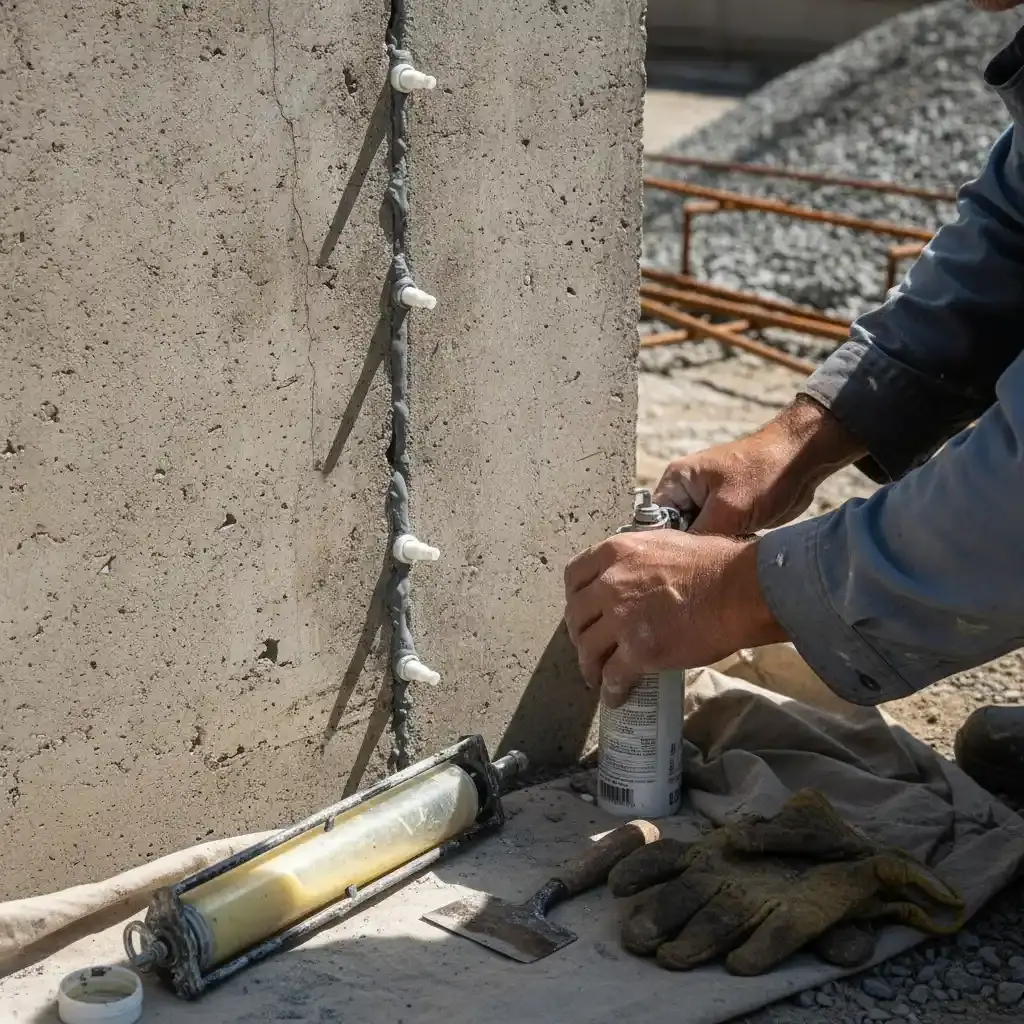
Epoxy and polyurethane injection seals active cracks, restores tensile strength, and prevents water infiltration. Used as a standalone solution for minor cosmetic cracks or as a final step following structural pier installation. View our foundation patching services
Cost of Home Foundation Repair in Round Rock, TX — What to Expect
Pricing for foundation repair in Round Rock varies based on the scope of work, the method used, and site-specific conditions. Below are realistic cost ranges based on current Central Texas market rates.
- Foundation Inspection: Free to $300 depending on the provider. We offer free inspections to Round Rock homeowners.
- Minor Crack Patching or Epoxy Injection: $500 – $1,500 for isolated crack repairs with no structural lifting required.
- Polyjacking / Foam Lifting: $800 – $3,000 for garage slabs or minor interior settlement affecting limited areas.
- Steel Push Pier Installation: $1,200 – $1,800 per pier. Most Round Rock slab homes require 8 to 20 piers, placing total project costs between $12,000 and $35,000 for comprehensive stabilization.
- Helical Piers: $1,400 – $2,000 per pier, with smaller projects averaging $7,000 – $15,000.
- Crawl Space Repair: $3,000 – $12,000 depending on the extent of beam replacement and encapsulation scope.
- Full Foundation Restoration (Large Home or Severe Damage): $25,000 – $50,000+ for significant structural interventions on homes over 2,500 square feet.
Read moreShow less
Round Rock-specific pricing factors include Williamson County permit fees (typically $150 – $400), engineered repair plans required for some projects, and premium costs for working around mature tree root systems in established neighborhoods. Many homeowners finance foundation repair through home equity lines of credit or contractor financing programs. Call (512) 220-3502 for a free, no-obligation estimate. Schedule your free foundation inspection today
Round Rock Neighborhoods We Serve
Teravista
Built primarily between 2003 and 2015, Teravista homes sit on highly expansive clay-over-limestone soil profiles. Many homes in this master-planned community near SH-130 show early signs of differential settlement as the fill soil placed during development continues its long-term consolidation. Steel push pier underpinning is the most common intervention here.
Forest Creek (78664)
One of Round Rock’s earlier master-planned communities, with homes dating to the early 1990s. Forest Creek properties are now entering a high-risk age window for slab plumbing failure alongside foundation movement. Combination plumbing and foundation repair projects are common in this area.
Sendero Springs and Behrens Ranch (78681)
Located in western Round Rock near the Brushy Creek greenbelt, these neighborhoods feature significant topographic variation. Cut-and-fill grading is extensive, and differential settlement between filled and native soil sections is a recurring challenge for homeowners.
Avery Ranch (Austin, 78717)
Straddling the Round Rock and Austin border along Parmer Lane, Avery Ranch homes built between 2000 and 2010 frequently exhibit brick veneer cracking related to slab edge settlement. Our crews are fully familiar with the soil and drainage patterns specific to this community. Learn more about our home foundation repair services
Foundation Maintenance Tips for Round Rock Homeowners
- Maintain consistent soil moisture year-round. During Round Rock’s summer droughts, run a soaker hose 18 inches from your foundation perimeter 2 to 3 times per week to prevent clay from drying and shrinking beneath the slab.
- Clean gutters every spring and fall. Central Texas live oak pollen and leaf drop in April and November clog gutters quickly, causing uncontrolled roof runoff that saturates foundation soils.
- Ensure positive drainage away from the foundation. Grade soil so that water flows away at a minimum slope of 6 inches over 10 feet — especially important in low-lying sections of neighborhoods like La Frontera.
- Keep large trees at least 15 to 20 feet from the foundation. Round Rock’s cedar elms and live oaks are aggressive moisture competitors in clay soils.
- Repair plumbing leaks immediately. A slow under-slab leak can saturate several cubic yards of clay over months before becoming visible.
- Avoid overwatering landscape beds adjacent to the foundation. Excess irrigation is as damaging as drought in Round Rock’s clay environment.
- Schedule a professional foundation inspection every 3 to 5 years, or immediately following any significant drought, flood event, or nearby construction activity.
Why Choose Round Rock Foundation Repair Group
Round Rock Foundation Repair Group is a locally operated company focused exclusively on foundation repair in the greater Round Rock and Central Texas area. We are not a national franchise — we are your neighbors, and we understand the specific soil types, building styles, and climate patterns that affect Williamson County homes better than any out-of-area contractor can.
Our team has direct experience working in every major Round Rock neighborhood, from the aging pier-and-beam homes near downtown to the sprawling slab communities of Teravista and Mayfield Ranch. We provide transparent, itemized estimates with no hidden fees, and we stand behind our work. Every project we complete is documented with before-and-after elevation readings so you have objective proof of results.
Read moreShow less
We offer free foundation inspections to all Round Rock area homeowners, and our team is available seven days a week to answer your questions. Whether you need a quick assessment or a comprehensive structural repair plan, Round Rock Foundation Repair Group is the team you can trust. Call (512) 220-3502 today. View our structural foundation repair services Learn about our commercial foundation repair services
FAQ
Frequently Asked Questions About Home Foundation Repair Costs in Round Rock, TX
How much does foundation repair cost for an average Round Rock home?
For a typical 1,800 to 2,400 square foot slab home in Round Rock requiring steel push pier underpinning, homeowners should budget between $12,000 and $25,000. Minor repairs involving crack patching or limited polyjacking may cost as little as $1,500 to $4,000. Every home is different — a free inspection is the only way to get an accurate number for your specific situation.
Does homeowners insurance cover foundation repair in Texas?
Standard Texas homeowners insurance policies typically exclude foundation damage caused by soil movement, settling, or shrinkage — the most common causes in Round Rock. Damage caused by a sudden, covered event such as a burst pipe may be partially covered. We recommend reviewing your policy carefully and consulting your insurance agent before assuming coverage.
How long does foundation repair take in Round Rock?
Minor crack repair or polyjacking can be completed in a single day. A typical steel pier installation project for a Round Rock slab home takes 2 to 4 days. Large-scale structural repairs involving 20 or more piers may require 5 to 7 working days. Weather delays are rare but possible during Central Texas rain events.
Do I need a permit for foundation repair in Round Rock, TX?
Williamson County and the City of Round Rock may require permits for structural foundation work, particularly when engineered plans are involved. Round Rock Foundation Repair Group handles all permitting on your behalf as part of the project process. Permit fees typically range from $150 to $400 in Williamson County.
Will foundation repair affect my home’s resale value?
Properly documented foundation repair with transferable warranty coverage typically has a neutral to positive effect on resale value in the Round Rock market. Buyers and their lenders require that foundation issues be resolved prior to closing, and a completed repair with documentation is far preferable to an outstanding issue. Homes with unresolved foundation problems often sell at significant discounts or fail to close entirely.
What is the difference between settlement and heave, and which is more common in Round Rock?
Settlement is downward foundation movement caused by soil compression or loss of support. Heave is upward movement caused by soil expansion when it absorbs moisture. Both occur in Round Rock due to the expansive Blackland Prairie clay soils. Settlement is slightly more common overall, but heave events following drought-breaking rains — like those experienced after the 2011 drought ended — can cause significant interior slab damage, particularly in Forest Creek and Teravista.
How do I know if I need foundation repair or just cosmetic crack repair?
Cracks wider than 1/4 inch, cracks that are actively growing, doors or windows that no longer function properly, or floors with a measurable slope of more than 1 inch over 20 feet all suggest structural movement requiring professional repair rather than cosmetic patching. Our free inspection uses digital elevation tools to give you objective measurements rather than guesswork.
Do you serve areas outside of Round Rock proper?
Yes. Round Rock Foundation Repair Group serves Cedar Park, Georgetown, Austin, Pflugerville, Brushy Creek, Wells Branch, Jollyville, Paloma Lake, and all surrounding communities throughout Williamson and Travis counties. Call (512) 220-3502 to confirm service availability at your address.
Get Your Free Foundation Inspection in Round Rock Today
Do not wait for small cracks to become costly structural failures. The expansive clay soils beneath Round Rock homes work against your foundation every single season — and early intervention is always less expensive than delayed repair. Round Rock Foundation Repair Group is ready to provide an honest, thorough assessment of your home’s foundation at no cost to you.
Call us now at (512) 220-3502 to schedule your free inspection, or use our online form to request a callback at your convenience. We serve Round Rock, Cedar Park, Georgetown, Austin, Pflugerville, Brushy Creek, and all surrounding communities. Protect your home. Protect your investment. Contact Round Rock Foundation Repair Group today. Request your free foundation inspection online
Get in touch
Find foundation repair help near you
Request a free estimate online or give us a call — our team will follow up quickly.
- Call us(512) 220-3502
- Visit1 Chisholm Trail Rd suite 450 room j, Round Rock, TX 78681
- HoursMon-Sat: 7:00 am – 7:00 pm