
Foundation Repair Methods in Round Rock, TX
Fast, Reliable Foundation Repair Methods in Round Rock, TX — Licensed & Insured
Learn about foundation repair methods in Round Rock, TX. Round Rock Foundation Repair Group covers steel piers, foam injection, crawl space repair & more. Call (512) 220-3502.
Foundation repair methods are the specific techniques used to stabilize, lift, and restore a structure’s foundation to its original bearing capacity. Round Rock Foundation Repair Group, a foundation repair company serving Round Rock, TX and nearby areas, applies these methods to homes and commercial buildings across the region.
Round Rock sits on expansive clay soils that swell when wet and shrink during drought — a cycle that places exceptional stress on concrete slabs and pier-and-beam foundations year after year. The city’s rapid growth since the 1990s also means a wide range of construction eras, from post-tension slabs in newer master-planned communities like Teravista to older raised foundations in established neighborhoods near downtown.
Read moreShow less
Choosing the right repair method depends on soil conditions, foundation type, the degree of movement, and the age of the structure. We assess each factor before recommending any approach, so repairs hold for the long term rather than masking symptoms temporarily.
Understanding Foundation Repair Methods
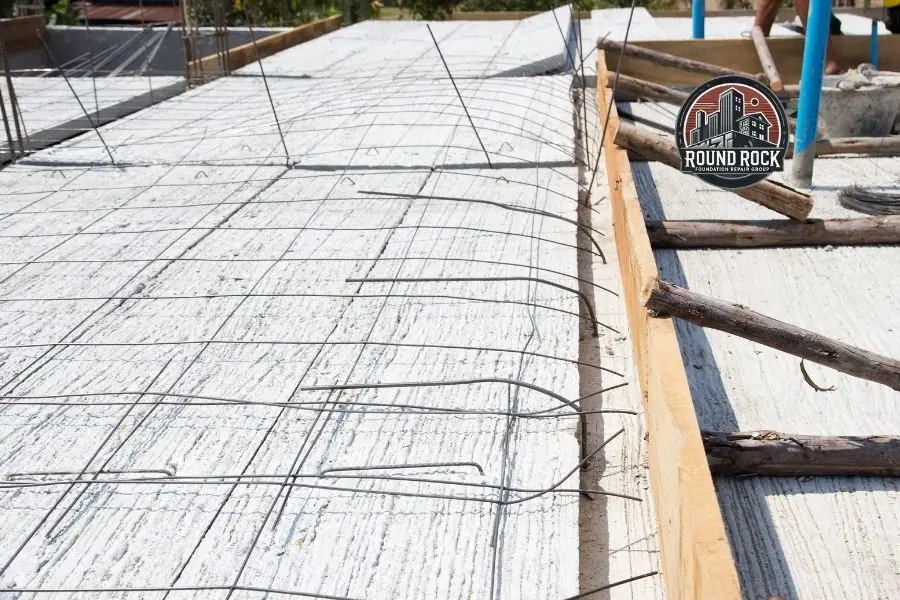
Foundation repair methods are the engineered techniques contractors use to address soil settlement, moisture-driven movement, and structural deterioration beneath a building. Each method transfers load to more stable soil or bedrock, fills voids, or reinforces compromised concrete — depending on what caused the movement in the first place.
Why Foundation Repair Methods Are Needed in Round Rock, TX
Drought and Rain Cycles
Central Texas experiences extreme precipitation swings. During drought periods, the clay beneath a foundation dries out and contracts, pulling away from the slab and creating voids. When heavy rain returns, the clay absorbs water rapidly and expands, pushing upward unevenly. The drought of 2011 was an especially damaging year for foundations across Williamson County; soil moisture deficits that developed that summer caused foundation distress that many homeowners did not fully address, leading to compounding movement through subsequent years. Round Rock’s annual rainfall averages approximately 34 inches, but distribution is irregular — extended dry stretches followed by intense rain events create the worst conditions for expansive clay.
Drainage Patterns and Impervious Cover
Round Rock’s growth has added significant impervious cover — roads, parking lots, and rooftops — that concentrates runoff against foundations rather than allowing gradual soil absorption. Neighborhoods like La Frontera near IH-35 and the dense subdivisions of Sendero Springs include large areas of pavement that redirect water toward building perimeters. Poor grading around the foundation perimeter, common in homes built quickly during the rapid growth periods of the late 1990s and early 2000s, allows water to pond against the foundation rather than draining away from it.
Tree Root Influence
Live oaks and cedar elms are common throughout Round Rock neighborhoods like Behrens Ranch, Cat Hollow in Brushy Creek, and Great Hills in north Austin. The root systems of mature live oaks can extend 2 to 3 times the canopy diameter, reaching distances of 40 to 60 feet from the trunk. Roots draw moisture from the soil on the side of a foundation nearest the tree, causing differential drying and uneven settlement. This pattern produces a recognizable tilt toward the tree side, which helps identify the cause during inspection.
Construction Era and Slab Design
Homes built in Round Rock between 1985 and 2005 during the city’s fastest growth phase were often constructed on shallow slab foundations without deep beams. Some of these slabs were designed for soil conditions that have since changed as surrounding development altered local drainage. Foundations in Forest Creek, Mayfield Ranch, and Avery Ranch in northwest Austin are among the areas where we regularly see movement consistent with this combination of soil type and construction era.
Learn more about structural foundation repair options
Free, no-obligation estimates
Talk to Round Rock Foundation Repair Group
Tell us what you need and we’ll take it from there.
Signs You Need Foundation Repair Methods in Round Rock
Structural and Exterior Signs
- Stair-step cracking in brick veneer, particularly at corners and around window openings
- Gaps between the brick or siding and the foundation perimeter beam
- Visible slope or bow in the foundation perimeter when viewed from outside
- Separation between the porch slab or patio and the main structure
- Sinking sections of walkway, driveway, or patio adjacent to the home
Interior Signs
- Doors that stick, swing open on their own, or no longer latch correctly
- Windows that are difficult to open or have visible gaps at the frame
- Diagonal cracks running from the corners of door frames or window frames
- Cracks in drywall, particularly at ceiling and wall junctions
- Gaps between baseboards and the floor
- Uneven or sloping floors noticeable when walking through the home
Urgency Indicators
Contact us promptly if cracks are wider than 1/4 inch, if a door or window has become impossible to close, or if floors have developed a noticeable slope greater than 1 inch over 10 feet. These measurements indicate active, significant movement rather than minor settling.
Schedule a foundation inspection
Foundation Repair Methods We Use in Round Rock
Steel Pier Underpinning
Steel push piers are driven through unstable soil to load-bearing strata — in Round Rock, this is typically the Austin Chalk bedrock at depths of 15 to 30 feet below grade. Steel piers are the most common method we use for significant foundation settlement, particularly in homes where the slab has dropped more than 1 inch. They are appropriate for both slab-on-grade and post-tension foundations when piers are placed correctly to avoid tension cables.
Helical Pier Installation
Helical piers are screwed into the soil and are preferred where access is restricted or where load-bearing capacity needs to be verified during installation by torque measurement. We use helical piers in crawl space repairs and in locations where driving equipment cannot reach, such as interior closets or tight side yards common in older Round Rock neighborhoods.
Pressed Concrete Pilings
Pressed concrete pilings are cylinders driven in stacked segments to depth. This method is cost-effective for slab foundations with moderate settlement, and it has been widely used in Central Texas for decades. The limitation is that concrete pilings may not reach bedrock in all locations, so they are best suited for sites with consistent, moderately stable soils below the expansive clay layer.
Polyurethane Foam Injection
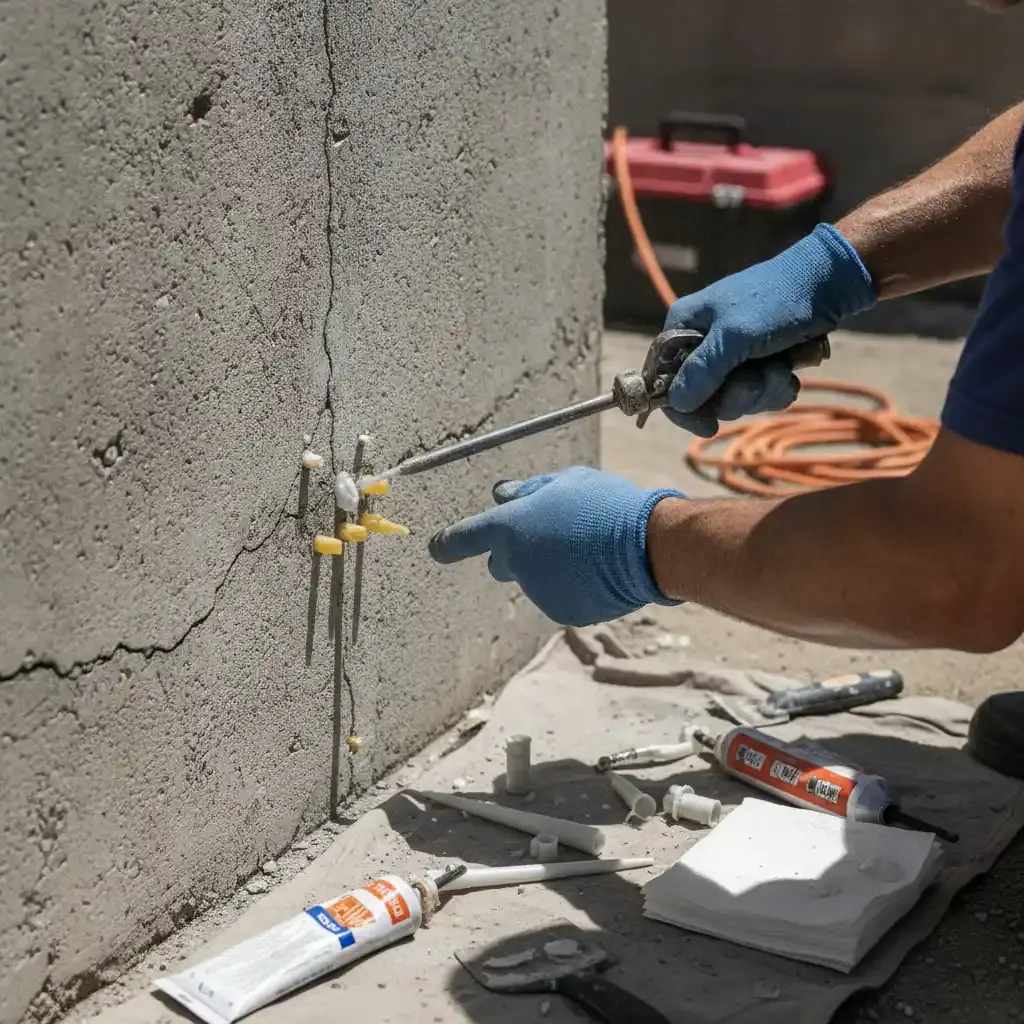
Foam injection fills voids beneath concrete and lifts sections that have sunk due to soil washout or minor settlement. It is most appropriate for driveways, walkways, and patios, and for interior slab sections where voids are confirmed. Foam injection is not a substitute for pier underpinning when load-bearing capacity has been compromised.
Crawl Space Repair and Pier Replacement
For pier-and-beam homes, we replace deteriorated wood piers with adjustable steel supports, sister compromised beams, and address moisture intrusion. This method is specific to older homes in Round Rock’s historic downtown area and in some Brushy Creek properties.
If the movement is under a pier-and-beam home, learn more about crawl space repair and the other services we offer.
Foundation Repair Methods Cost in Round Rock, TX
Foundation repair costs in Round Rock range from $3,500 for minor slab patching or foam injection on a small affected area to $25,000 or more for full perimeter pier underpinning on a large home with significant settlement. Most residential repair projects fall between $7,000 and $15,000.
Cost Factors
- Number of piers: Steel pier installation typically costs $1,200 to $1,800 per pier installed, including all equipment and labor. The number of piers depends on the linear footage of the foundation perimeter and the degree of movement.
- Foundation type: Post-tension slab repairs require additional care and sometimes engineering review to avoid cutting tension cables, which can add $500 to $2,000 to the project cost compared to conventional slab repairs.
- Access conditions: Tight side yards, landscaping, and fencing that restrict equipment access can increase labor time and cost.
- Drainage work: If French drains, regrading, or downspout extensions are needed alongside structural repair, budget an additional $1,500 to $5,000 depending on the scope.
- Permitting fees: City of Round Rock building permit fees for foundation repair vary by project value. Budget $200 to $600 for permit costs alone.
Read moreShow less
Round Rock-Specific Pricing Notes
Round Rock’s depth to Austin Chalk bedrock varies by neighborhood. Properties in the eastern portions of Round Rock near Teravista may require piers driven to 25 to 30 feet to reach stable bearing, increasing material costs compared to sites further west where bedrock is shallower. We provide a written cost estimate after completing the site inspection — cost estimates given over the phone without an inspection are not reliable for this reason.
18% of foundation repair requests we received came from home buyers, sellers, or their agents — typically during an option period or before closing. These situations often require a faster turnaround on inspection and repair scope, which is a service we accommodate.
More information on foundation repair costs
Round Rock Neighborhoods We Serve
Forest Creek (Round Rock, 78664)
Forest Creek was developed primarily in the 1990s on conventional slab foundations. Many homes here are in the 25- to 35-year age range where the first significant settlement cycles become apparent. Drainage from the golf course area affects soil moisture in sections bordering the community.
Teravista (Round Rock)
Teravista is a newer master-planned community where post-tension slabs are standard. Post-tension slab repairs require careful pier placement to avoid the tension cable grid, so we always review original cable layouts before drilling or driving near the slab perimeter.
Sendero Springs and Behrens Ranch (Round Rock, 78681)
Both communities are built on heavily expansive clay soils in the western section of Round Rock. Mature tree canopy in Behrens Ranch contributes to differential drying beneath slabs. We frequently address the combination of tree root moisture extraction and poor perimeter drainage in these neighborhoods.
Cat Hollow (Brushy Creek, 78681)
Cat Hollow includes a mix of older pier-and-beam and slab foundations. Crawl space moisture is a recurring issue here due to the area’s topography and seasonal high water table in lower-lying sections.
Not sure whether we work in your neighborhood? See all of the service areas we cover.
Foundation Maintenance Tips for Round Rock Homeowners
Preventative maintenance reduces the rate of foundation movement and extends the life of any repair already completed.
- Maintain consistent soil moisture at the perimeter. During Round Rock’s dry summers, use a soaker hose placed 12 to 18 inches from the foundation to prevent the clay from drying out and pulling away from the slab. Run it 15 to 30 minutes every 2 to 3 days during extended dry periods.
- Direct all downspouts at least 6 feet from the foundation. Downspout extensions are inexpensive and are one of the highest-impact drainage improvements you can make.
- Maintain positive grading. The ground should slope away from your foundation at a minimum of 1 inch per foot for the first 6 feet. Re-check this after heavy rains that can erode graded soil.
- Control large trees near the foundation. Live oaks within 20 feet of the foundation perimeter should be monitored. Root barriers can be installed if roots are confirmed to be drawing moisture from beneath the slab.
- Inspect plumbing annually. Slab leaks from pressurized water lines or sewer lines beneath the slab introduce large volumes of water into the soil below the foundation. An annual plumbing pressure test is a low-cost way to catch leaks early.
- Clean gutters seasonally. Clogged gutters overflow and deposit concentrated water at the foundation perimeter. Central Texas’s live oaks drop debris in spring and fall — clean gutters at both times of year.
- Avoid deep watering of beds directly against the foundation. Saturating planting beds against the perimeter beam can cause the clay beneath to heave upward, pushing the slab from below.
Why Choose Round Rock Foundation Repair Group
Local Knowledge That Changes Repair Decisions
Understanding where the Austin Chalk bedrock sits at a given location, which subdivisions used post-tension slabs, and how seasonal drainage patterns affect soil moisture in specific neighborhoods directly influences the repair method we recommend. This local knowledge prevents over-engineering repairs in stable areas and under-engineering them in high-movement zones.
Transparent Process
We provide written inspection findings and a written repair plan before any work begins. Homeowners receive the elevation survey data, the pier count and placement map, and a clear explanation of why each element of the repair is included. We encourage homeowners to ask questions at every stage.
Coverage Across the Region
We serve Round Rock, Cedar Park, Georgetown, Austin, Pflugerville, Wells Branch, and all surrounding communities. For a full list of service areas, see our service areas page.
To read what homeowners in our service area have said about their repairs, visit our Google Business profile or see current reviews on our reviews page.
FAQ
Frequently Asked Questions: Foundation Repair Methods in Round Rock, TX
What foundation repair method is most common in Round Rock?
Steel push pier underpinning is the most frequently used method for significant settlement in Round Rock because it reaches the Austin Chalk bedrock below the expansive clay layer. For minor void filling under driveways or walkways, polyurethane foam injection is more common. The right method depends on the foundation type, the degree of movement, and whether the cause has been identified and corrected.
How much does foundation repair cost in Round Rock, TX?
Most residential foundation repairs in Round Rock cost between $7,000 and $15,000. Simple foam injection for a sinking patio may cost $3,500 to $5,000. Full perimeter pier installation on a large home with deep settlement can reach $20,000 to $25,000 or more. Post-tension slabs, which are common in newer Round Rock subdivisions, may add $500 to $2,000 to the cost due to the additional care required around tension cables.
Do I need a permit for foundation repair in Round Rock?
Yes. The City of Round Rock requires a building permit for structural foundation repairs involving underpinning. We handle the permit application as part of our process. Permitting typically adds 5 to 15 business days to the project start date. Unpermitted structural repairs can create complications during home sales, so this step is not optional.
How long does foundation repair take?
The on-site repair work for a residential pier installation typically takes 1 to 3 days. Larger projects with 20 or more piers may take 3 to 5 days. The total timeline from initial contact to completed repair — including inspection, proposal, permitting, and work — is typically 3 to 6 weeks, with permitting being the most variable factor.
Can foundation repair be done during Round Rock’s summer heat?
Yes. Heat does not prevent repair work. However, dry summer conditions may require pre-soaking the soil around the foundation perimeter in the days before pier installation to allow equipment to work efficiently in hardened clay. We assess soil moisture conditions before mobilizing and schedule pre-soaking when necessary.
What is a post-tension slab and why does it affect repair methods?
A post-tension slab contains steel cables tensioned after the concrete cures, running in a grid pattern beneath the surface. These cables are typically located 3 to 5 feet apart. Drilling or driving piers without first identifying cable locations can sever a cable, which is a serious structural failure. We obtain or request the original cable layout from the builder or Williamson County records before any work near a post-tension slab. This step is unique to Central Texas’s newer construction and is not required in regions where post-tension slabs are uncommon.
Should I repair my foundation before selling my home in Round Rock?
Foundation issues must be disclosed in Texas real estate transactions. Repairing before listing gives sellers more control over the cost and method selection. Buyers and their agents can also request repairs during the option period. 18% of foundation repair requests we received came from home buyers, sellers, or their agents — most of them in time-sensitive transaction situations. We accommodate inspection and repair scheduling that fits real estate transaction timelines.
How do I know if my drainage needs to be corrected before or alongside foundation repair?
If water is actively pooling against the foundation perimeter, correcting drainage should precede or accompany structural repair. Installing piers while water continues to saturate and destabilize the soil can allow continued movement after repair. During our inspection, we assess whether drainage correction is a prerequisite to structural work or a parallel improvement — and we include that determination in the written repair plan.
Get a Foundation Inspection in Round Rock, TX
Foundation movement does not stop on its own. The longer active settlement continues, the more repair scope it creates. If you are seeing cracks, sticking doors, uneven floors, or sinking concrete around your home, the first step is an on-site inspection with elevation measurements — not a phone estimate.
Contact Round Rock Foundation Repair Group today to schedule your foundation inspection. We serve Round Rock, Cedar Park, Georgetown, Austin, Pflugerville, Brushy Creek, and all surrounding communities across the region.
Call us at (512) 220-3502 to speak with our team directly, or use our online contact form to request an inspection appointment. We provide written findings and a clear repair plan so you understand exactly what your foundation needs before any commitment to repair work.
Request a foundation inspection online
Get in touch
Find foundation repair help near you
Request a free estimate online or give us a call — our team will follow up quickly.
- Call us(512) 220-3502
- Visit1 Chisholm Trail Rd suite 450 room j, Round Rock, TX 78681
- HoursMon-Sat: 7:00 am – 7:00 pm