Emergency Foundation Repair in Cedar Park, TX
24/7 Emergency Emergency Foundation Repair Available in Cedar Park, TX
Need emergency foundation repair in Cedar Park, TX? Round Rock Foundation Repair Group responds fast to slab, crawl space & structural failures. Call (512) 220-3502 now.
When your foundation fails without warning, every hour matters. Emergency Foundation Repair in Cedar Park, TX is a specialized, rapid-response service designed to stabilize, assess, and restore compromised foundations before structural damage spreads throughout your home or commercial building. Unlike scheduled maintenance repairs, emergency foundation work demands immediate mobilization, expert diagnostics, and proven stabilization techniques applied under urgent conditions.
Cedar Park’s unique combination of expansive clay soils, dramatic seasonal drought cycles, and rapid residential growth creates foundation vulnerabilities that can escalate from minor cracking to critical structural failure in a matter of days. Round Rock Foundation Repair Group has built deep expertise serving Cedar Park and the greater Austin metro area, understanding precisely how local geology, drainage patterns, and construction eras interact to produce the foundation emergencies we see across this region.
If you are noticing sudden cracks, doors that no longer close, or visible tilting in your structure, do not wait. Call us now at (512) 220-3502 for immediate assistance.
Understanding Emergency Foundation Repair
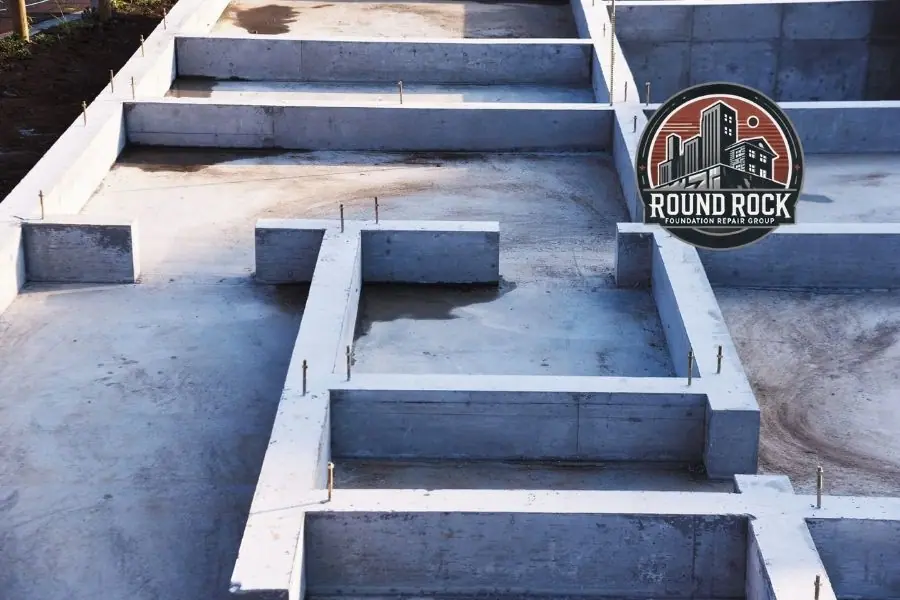
Foundation repair becomes an emergency when structural integrity is compromised to a degree that poses immediate safety risks or risks of accelerating, irreversible damage. Emergency foundation repair encompasses a range of urgent interventions — from temporary shoring and crack injection to full pier installation and underpinning — all performed on an expedited timeline to prevent collapse, water intrusion, or cascading structural failure.
Foundations in Central Texas follow a relatively consistent construction history. Homes built in Cedar Park during the 1980s and early 1990s, when the city first began its suburban expansion along US-183, typically feature slab-on-grade concrete construction with minimal reinforcement by modern standards. Subdivisions developed during Cedar Park’s explosive growth period between 2000 and 2015 — including Avery Ranch, Whitestone Estates, and Twin Creeks — brought improved building codes but also rapid construction on previously undeveloped land with poorly consolidated soils. Older agricultural-era properties near Brushy Creek and the Lake Travis watershed sometimes feature pier-and-beam foundations that present entirely different emergency failure modes.
Read moreShow less
Emergency conditions differ from standard repair scenarios in three critical ways. First, the timeline from detection to structural risk is compressed — what appears as a hairline crack Monday may become a two-inch gap by Friday in active shrink-swell soil conditions. Second, emergency repairs often require temporary stabilization measures before full diagnostic work can be completed. Third, water events — whether flooding from Brushy Creek overflow, burst plumbing beneath a slab, or rapid soil saturation from heavy rain — frequently trigger emergency calls that combine foundation instability with active water damage, requiring coordinated remediation.
Understanding these dynamics allows our team to deploy the right equipment, the right crew size, and the right methodology from the first moment we arrive on your Cedar Park property. Emergency foundation repair is not simply standard repair done faster — it requires a different decision-making framework, one our team applies every day across this region.
Why Emergency Foundation Repair Is Needed in Cedar Park, TX
Austin Black Clay and Taylor Marl Soils
The dominant soil type beneath most of Cedar Park is Austin Black Clay, derived from the underlying Taylor Marl geological formation. This highly expansive clay has a plasticity index exceeding 40 — meaning it swells dramatically when wet and shrinks and cracks when dry. Volumetric changes in Cedar Park’s soil have been documented at 4 to 6 inches of vertical movement during extreme drought-to-rain cycles. This is not minor settling; it is powerful enough to lift or drop an entire slab foundation within a single season.
The 2022–2023 Drought and Its Aftermath
The exceptional drought that gripped Central Texas from mid-2022 through early 2023 — one of the most severe on record for Williamson County — caused widespread soil desiccation beneath Cedar Park foundations. Soil moisture dropped to historic lows, causing extreme shrinkage and subsidence. When significant rainfall returned in the spring and fall of 2023, the rehydration of these parched soils triggered a surge in foundation emergency calls across Cedar Park neighborhoods including Forest Oaks, Buttercup Creek, and the Doris Drive corridor near US-183A. Many homeowners who thought their foundations had survived the drought discovered otherwise when the rains returned and differential movement cracked slabs unevenly.
Rapid Development and Poorly Consolidated Fill
Cedar Park’s population grew from approximately 26,000 in 2000 to over 82,000 by 2020, one of the fastest growth rates in Texas. This pace of development meant many subdivisions were built on graded and filled land that had not undergone adequate consolidation periods. Areas near Cypress Creek Road, the Anderson Mill Road expansion zone, and portions of Avery Ranch built in the mid-2000s have shown higher-than-average foundation movement rates as fill soils continue to consolidate years after construction.
Brushy Creek Floodplain Proximity
Properties within a quarter-mile of Brushy Creek and its tributaries — including neighborhoods such as Cat Hollow and sections of Forest Creek — face compounded risk from both expansive soils and periodic flood saturation. The May 2015 Central Texas flooding event, which caused Brushy Creek to exceed its 100-year flood stage, resulted in documented foundation damage across dozens of Cedar Park-area properties as saturated soils lost bearing capacity rapidly.
Aging Infrastructure and Plumbing Leaks
Homes built in Cedar Park’s first development wave of the late 1980s and 1990s along Bell Boulevard and Buttercup Creek Boulevard now carry aging cast-iron and early PVC plumbing systems prone to leaks beneath slabs. A single persistent under-slab leak can erode the soil bearing layer, creating voids that cause sudden, emergency-level slab collapse without visible warning until the failure is already underway.
Free, no-obligation estimates
Talk to Round Rock Foundation Repair Group
Tell us what you need and we’ll take it from there.
Signs You Need Emergency Foundation Repair in Cedar Park
Structural Warning Signs
- Cracks wider than one-quarter inch in interior drywall, especially diagonal cracks radiating from door and window corners
- Visible stair-step cracking in brick veneer or exterior masonry along your home’s facade
- Horizontal cracks in stem walls or garage foundation walls, which indicate lateral soil pressure — a high-urgency warning sign
- Floors that feel springy, soft, or that visibly slope more than one inch per ten feet
Operational Failure Signs
- Interior doors or windows that suddenly stick, will not latch, or have developed visible gaps at their frames
- Garage doors that no longer align with their tracks or that have developed a visible lean
- Separation between exterior walls and the roofline, soffit, or attached deck structures
Immediate Emergency Indicators
- Any visible tilting of walls or columns — call immediately
- A crack that has grown measurably wider over 24 to 72 hours
- Active water intrusion through foundation cracks following rainfall
- A sudden, loud cracking sound from your slab or walls with no apparent cause
- Visible void space beneath an exterior slab edge or porch
If you are observing any emergency indicators, evacuate the affected area of the structure and contact Round Rock Foundation Repair Group at (512) 220-3502 immediately.
Our process
Our Emergency Foundation Repair Process in Cedar Park
- 01
Emergency Dispatch and Site Safety Assessment (0–2 Hours)
Upon receiving your call, we dispatch a certified foundation specialist to your Cedar Park property. Our first priority is a rapid safety evaluation — identifying any immediate collapse risk, active water intrusion, or utility hazards. We will advise you on wh
- 02
Diagnostic Evaluation and Soil Analysis (2–4 Hours)
Using digital laser levels, moisture meters, and visual crack mapping, we assess the full extent of movement. In Cedar Park specifically, we check for signs of differential movement consistent with Taylor Marl clay shrink-swell activity versus movement from a
- 03
Temporary Stabilization (Same Day, As Needed)
If the structure requires immediate stabilization before full repair can begin, we deploy temporary shoring, hydraulic jacking supports, or crack injection to prevent further movement. This step is particularly important in pier-and-beam structures common in o
- 04
Repair Plan Presentation and Authorization (4–6 Hours After Arrival)
We present a clear, written repair plan with scope, methodology, timeline, and pricing before any permanent work begins. We walk you through every recommendation so you understand what is being done and why.
- 05
Full Repair Execution (1–5 Days Depending on Scope)
Permanent repairs are executed using the appropriate method for your specific foundation type and failure mode — pier installation, slab lifting, crawl space repair, or concrete patching. Cedar Park’s clay soils require us to account for seasonal moisture cond
- 06
Grade and Drainage Correction (Final Day of Project)
We address contributing drainage and grading issues around your foundation perimeter — a critical step in Cedar Park where flat lots in subdivisions like Sendero Springs and Behrens Ranch frequently allow water to pool against foundation edges.
- 07
Post-Repair Inspection and Documentation
We provide a completed repair report with before-and-after measurements, materials used, and maintenance recommendations specific to Cedar Park soil and climate conditions.
Emergency Foundation Repair Methods We Use in Cedar Park
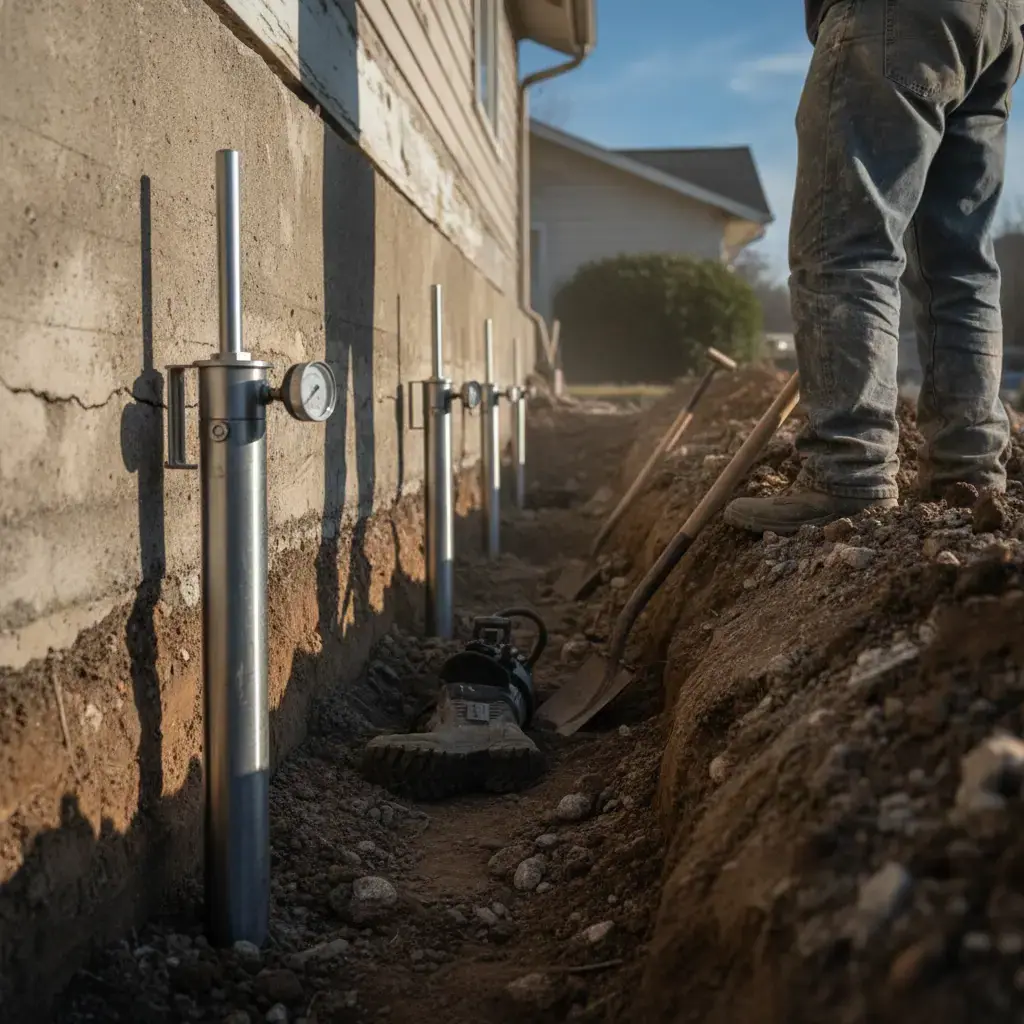
Steel Push Pier Installation
The most common emergency repair method for slab-on-grade foundations in Cedar Park. Steel push piers are driven through the unstable clay layer to bedrock or load-bearing strata, providing a permanent, soil-movement-independent support system. Ideal for foundations experiencing settlement in expansive clay zones along the US-183A and Cypress Creek corridors.
Helical Pier Installation
Used when soil conditions require a screwed-in pier with greater immediate load capacity — particularly effective for lighter residential structures and commercial properties in Cedar Park where interior access limits push pier equipment deployment. Also preferred near Brushy Creek floodplain areas where soil saturation reduces push pier friction values.
Slab Pier and Polyurethane Foam Lifting
For slabs with void spaces beneath them — common after drought-related soil shrinkage events — we inject high-density polyurethane foam through small drilled ports to fill voids and stabilize the slab. Fast-curing and minimally invasive, this method allows same-day return to service for most residential applications.
Crawl Space Repair and Sister Beam Installation
For pier-and-beam homes — more common in older Cedar Park neighborhoods and near the Brushy Creek rural overlay areas — emergency repairs include replacing rotted or cracked beams, resetting shifted masonry piers, and installing supplemental steel support columns.
Crack Injection and Waterproofing
Epoxy and polyurethane crack injection seals active cracks to prevent water intrusion and further deterioration. Used as both an emergency stabilization measure and a permanent repair for non-structural cracks in concrete foundation walls and slabs.
Emergency Foundation Repair Cost in Cedar Park, TX
Understanding the cost of emergency foundation repair helps Cedar Park homeowners and property managers make informed decisions under pressure. Costs vary significantly based on foundation type, failure severity, and the repair method required.
Typical Cost Ranges
- Initial emergency inspection and assessment: $200–$500 (credited toward repair costs in most cases)
- Polyurethane foam void filling (per injection point): $150–$300, with most residential jobs requiring 10–25 points, totaling $1,500–$7,500
- Steel push pier installation (per pier): $1,200–$1,800, with most Cedar Park slab homes requiring 8–20 piers, totaling $10,000–$36,000 for full perimeter repair
- Helical pier installation (per pier): $1,400–$2,200 per pier
- Crawl space beam replacement and re-leveling: $3,000–$12,000 depending on extent of damage
- Crack injection (per linear foot): $75–$150
- Partial slab repair and patching: $500–$3,500
Read moreShow less
Cedar Park-Specific Pricing Factors
Cedar Park properties frequently require deeper pier installation than average — often 18 to 28 feet — to penetrate through the full depth of expansive Taylor Marl clay and reach competent bearing strata. This additional depth increases per-pier material and labor costs compared to regions with shallower stable soil profiles. Properties near Brushy Creek with consistently high soil moisture may require corrosion-resistant pier coatings at an additional cost of $50–$100 per pier.
Emergency mobilization — meaning same-day or next-day dispatch — may carry a premium of $300–$800 over standard scheduling. For an accurate estimate specific to your property, call us at (512) 220-3502. See our full foundation repair cost guide
Cedar Park and Surrounding Neighborhoods We Serve
Avery Ranch (Austin, TX 78717)
This large master-planned community, developed primarily between 2002 and 2012, features predominately slab-on-grade construction on partially filled lots graded for the subdivision. Homes in Avery Ranch have shown consistent differential settlement patterns as fill soils continue consolidating. We frequently see emergency calls following heavy rain events when rapid soil saturation triggers movement in previously stable areas.
Brushy Creek and Cat Hollow (78681)
Older residential areas near Brushy Creek include a mix of pier-and-beam and early slab construction from the 1980s. Proximity to the creek floodplain means these properties face both expansive soil risk and periodic flood saturation — a combination that accelerates foundation deterioration. Emergency calls here often involve both structural repair and crawl space water damage remediation.
Anderson Mill (Austin, TX 78750)
Anderson Mill’s late 1970s and 1980s construction era means many homes here have foundations approaching or exceeding 40 years of service on Central Texas clay. Aging under-slab plumbing is a leading cause of emergency foundation calls in this area. Learn more about our Anderson Mill services
Sendero Springs and Behrens Ranch (Round Rock, TX 78681)
These adjacent Round Rock communities near Cedar Park’s border feature relatively flat topography with documented drainage challenges. Pooling water along foundation perimeters during the area’s intense summer storms is a primary driver of emergency foundation events in these neighborhoods.
Foundation Maintenance Tips for Cedar Park Homeowners
Preventing the next foundation emergency starts with consistent, Cedar Park-specific maintenance habits.
- Maintain consistent soil moisture year-round. During Cedar Park’s intense summer droughts — which can drop soil moisture 20–30% below baseline in weeks — run a soaker hose 12 to 18 inches from your foundation perimeter 2–3 times per week to prevent extreme soil shrinkage.
- Inspect and clean gutters every spring and fall. Overflowing gutters deposit hundreds of gallons of water directly against your foundation during Cedar Park’s intense convective thunderstorm season (May through October).
- Maintain positive drainage grading. Ensure the soil around your home slopes away from the foundation at a minimum of 1 inch per foot for the first 6 feet — critical in flat Cedar Park subdivision lots.
- Have under-slab plumbing tested every 5–7 years. Homes in Cedar Park built before 1995 are prime candidates for hydrostatic plumbing testing to detect slow leaks before they become foundation emergencies.
- Avoid large trees within 15 feet of your foundation. Live oaks and cedar elms, common throughout Cedar Park landscaping, have aggressive root systems that extract moisture from clay soils and worsen differential settlement.
- Monitor and document cracks. Place a pencil mark at the end of any observed crack quarterly. Growth of more than one-eighth inch in 90 days warrants professional evaluation.
- Schedule an annual foundation inspection. Book a professional foundation inspection to catch developing problems before they become emergencies.
Why Choose Round Rock Foundation Repair Group for Emergency Service in Cedar Park
When a foundation emergency strikes in Cedar Park, you need a team that understands this specific landscape — not a national chain dispatching a generalist crew. Round Rock Foundation Repair Group has earned its reputation across Cedar Park, Round Rock, Georgetown, and the greater Austin metro by combining genuine local expertise with professional-grade equipment and an unwavering commitment to honest, transparent service.
We know Cedar Park’s soils. We know the difference in how a foundation moves in Avery Ranch versus Brushy Creek versus Anderson Mill. We understand how the 2022–2023 drought has left thousands of area foundations in a compromised state that may not fully manifest until the next heavy rain season. That local knowledge directly translates into faster, more accurate diagnosis and more durable repairs.
Read moreShow less
Our team serves all of Cedar Park and the surrounding communities including Round Rock, Georgetown, Austin, Pflugerville, Wells Branch, Great Hills, Jollyville, Paloma Lake, Teravista, La Frontera, Mayfield Ranch, and Forest Creek. We respond rapidly to emergency calls and provide honest assessments before any work begins. Learn more about our team and local commitment
Call us now at (512) 220-3502 — our team is ready to respond to your Cedar Park foundation emergency today.
FAQ
Frequently Asked Questions: Emergency Foundation Repair in Cedar Park, TX
How quickly can you respond to a foundation emergency in Cedar Park?
In most cases, we can have a certified specialist on-site in Cedar Park within 2 to 4 hours of your call during business hours, and we offer emergency after-hours response for critical structural failures. Cedar Park’s central location within our service territory means rapid dispatch is reliably achievable from our Round Rock base of operations.
How much does emergency foundation repair cost in Cedar Park, TX?
Emergency foundation repair in Cedar Park typically ranges from $3,500 for minor crack injection and stabilization work to $40,000 or more for full perimeter pier installation on a large slab home with significant settlement. The most common full repair projects in the Cedar Park area — slab homes requiring 10 to 16 push piers — typically fall in the $14,000 to $28,000 range. We provide a detailed written estimate before any permanent work begins. See our detailed cost breakdown
Is my Cedar Park home safe to stay in during a foundation emergency?
It depends on the severity and location of the failure. Many foundation issues, while urgent, do not immediately render a home uninhabitable. However, horizontal wall cracks, active floor collapse, or visible structural lean may require you to vacate specific areas or the entire structure. Our emergency assessment includes a specific safety determination for your situation.
Does homeowner’s insurance cover emergency foundation repair in Cedar Park?
Standard homeowner’s insurance policies in Texas typically exclude foundation repair caused by settling, shrinking, or expanding soils — the most common causes in Cedar Park. However, if the foundation failure is directly caused by a covered peril such as a burst pipe or flooding event, a portion of the damage may be covered. We recommend contacting your insurer immediately and documenting all damage with photographs before repairs begin.
What caused my foundation to fail so suddenly in Cedar Park?
Sudden foundation failures in Cedar Park are most frequently triggered by one of three events: a significant rainfall event following a prolonged dry period (which causes rapid, uneven soil rehydration and expansion), a plumbing leak beneath the slab that has eroded soil bearing capacity over time until sudden collapse occurs, or extreme drought conditions that cause accelerating soil shrinkage beneath a portion of the foundation. The 2022–2023 drought left many Cedar Park foundations in a precarious state that is now manifesting as the rain cycles return.
How long does emergency foundation repair take in Cedar Park?
Emergency stabilization can be completed same-day in many cases. Full pier installation for a typical Cedar Park slab home takes 2 to 5 business days depending on the number of piers required and site access conditions. Crawl space repairs typically take 1 to 3 days. We work efficiently to restore your property’s structural integrity as quickly as possible without sacrificing quality.
Do you offer foundation repair services in areas near Cedar Park?
Yes. We serve Cedar Park and all surrounding communities including Round Rock, Georgetown, Austin, Pflugerville, Brushy Creek, Avery Ranch, Anderson Mill, Wells Branch, Great Hills, Jollyville, Paloma Lake, Teravista, La Frontera, Mayfield Ranch, Forest Creek, Behrens Ranch, Sendero Springs, Cat Hollow, and Tech Ridge. View our full service area map
Can foundation damage in Cedar Park be prevented after repair?
Significantly, yes. After repair, maintaining consistent soil moisture through drip irrigation during droughts, ensuring proper drainage grades, and scheduling periodic inspections dramatically reduces the risk of recurrence. Cedar Park’s clay soils will always be reactive to moisture changes — but managed properly, a repaired foundation can perform stably for decades.
Contact Round Rock Foundation Repair Group for Emergency Foundation Repair in Cedar Park, TX
Your Cedar Park home or business deserves immediate, expert attention when foundation problems arise. Do not let a developing emergency become a catastrophic structural failure. Round Rock Foundation Repair Group is ready to respond quickly, diagnose accurately, and repair your foundation using methods proven to perform in Cedar Park’s challenging clay soil environment.
Call us now at (512) 220-3502 for immediate emergency response. Our team serves Cedar Park, Round Rock, Georgetown, Austin, and all surrounding communities. Request a foundation inspection online or call us any time to speak directly with a Cedar Park foundation specialist. Do not wait — foundation emergencies move fast, and so do we.
Get in touch
Find foundation repair help near you
Request a free estimate online or give us a call — our team will follow up quickly.
- Call us(512) 220-3502
- Visit1 Chisholm Trail Rd suite 450 room j, Round Rock, TX 78681
- HoursMon-Sat: 7:00 am – 7:00 pm