Cost of Structural Foundation Repair in Round Rock, TX
Transparent Cost of Structural Foundation Repair Pricing for Round Rock, TX Homeowners — Free Estimates
Discover the real cost of structural foundation repair in Round Rock, TX. Get local pricing, repair methods, and a free assessment from Round Rock Foundation Repair Group. Call (512) 220-3502.
Understanding the cost of structural foundation repair in Round Rock, TXis the first step toward protecting your most valuable asset. Structural foundation repair is the professional process of diagnosing, stabilizing, and restoring a home or commercial building’s foundational base when it has shifted, cracked, settled, or become compromised due to soil movement, moisture changes, or structural load stress.
Round Rock’s expansive clay soils, dramatic seasonal rainfall swings, and rapid urban development create some of the most challenging foundation conditions in Central Texas. Whether you own a newer build in Teravista or an older ranch-style home in Forest Creek, the local geology demands expert attention. Round Rock Foundation Repair Group brings deep local knowledge and hands-on experience to every inspection and repair project throughout Round Rock and the surrounding communities.
Read moreShow less
If you’re searching for structural foundation repair near me or comparing costs across providers, this guide gives you the transparent, location-specific information you need. Call us today at (512) 220-3502 for a free assessment.
Understanding Structural Foundation Repair in Round Rock, TX
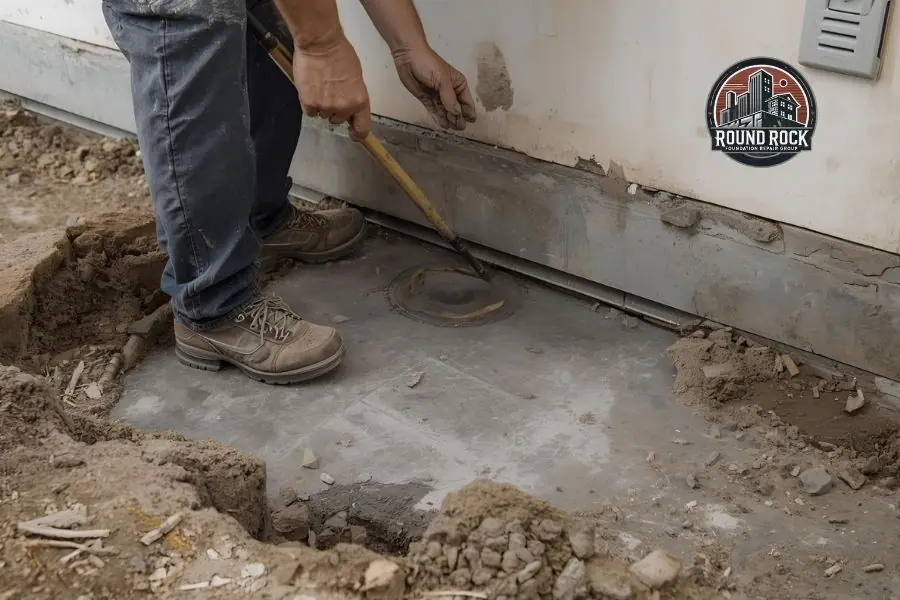
Structural foundation repair refers to a broad category of engineering and construction services designed to correct damage to the structural base that supports a building. Unlike cosmetic repairs — such as filling hairline cracks with caulk — structural foundation repair addresses root-cause failures that, if left untreated, can lead to progressive building collapse, door and window misalignment, and significant loss of property value.
The concept of foundation repair as a professional trade emerged significantly in the American South and Southwest during the mid-20th century, driven largely by post-World War II suburban expansion into geologically unstable regions. Texas, with its vast deposits of expansive Blackland Prairie clay, became one of the most active markets for foundation repair nationwide. Round Rock itself transitioned from a small agricultural community into one of the fastest-growing cities in the United States, with its population surging from roughly 61,000 in 2000 to over 133,000 by the early 2020s. That rapid construction boom placed thousands of homes and commercial buildings on soils that were never fully conditioned for dense residential use.
Read moreShow less
In Round Rock, structural foundation repair applies to a wide variety of building types. Single-family slab-on-grade homes — which make up the majority of residential construction in neighborhoods like Behrens Ranch, Sendero Springs, and Mayfield Ranch — are particularly susceptible to differential settlement. Pier-and-beam homes, more common in older sections of the city and in adjacent communities like Anderson Mill, face their own set of challenges including wood rot, inadequate ventilation, and crawl space moisture intrusion.
Commercial properties along the La Frontera corridor and near the Dell Diamond area often rest on larger, engineered slab systems that require specialized commercial foundation repair techniques. Concrete foundation repair, foundation restoration, and foundation patching each represent specific sub-disciplines within the broader structural repair category, and the correct method depends entirely on the building type, soil condition, and severity of movement detected during a professional foundation inspection.
For homeowners and business owners alike, understanding what structural foundation repair involves — and what drives its cost in Round Rock specifically — is essential for making informed decisions and avoiding being oversold on unnecessary work.
Why Structural Foundation Repair Is Needed in Round Rock, TX
Round Rock sits at the geological intersection of the Blackland Prairie and the Edwards Plateau transition zone, creating a uniquely unstable soil environment. The dominant soil type throughout most of Round Rock is Houston Black clay, classified as a highly expansive Vertisol. This clay can absorb moisture and swell by as much as 30 to 40 percent in volume, then shrink dramatically during dry periods — a cycle that exerts enormous upward and lateral pressure on concrete slabs and pier systems alike.
The seasonal rainfall pattern in Round Rock intensifies this problem. Average annual rainfall sits at approximately 33 inches per year, but that precipitation is distributed unevenly. Spring months can deliver 4 to 5 inches per month, saturating soils and causing significant upward heave, while July and August routinely bring less than 2 inches of rain combined, shrinking the clay and causing settlement of 1 to 3 inches beneath a slab in a single season in some cases. This expansion-and-contraction cycle repeats year after year, gradually fatiguing the concrete and any embedded steel reinforcement.
Read moreShow less
The summer of 2022 was particularly severe. Central Texas experienced one of its most intense drought conditions on record, with Round Rock recording fewer than 8 inches of rain from May through September. Foundation repair calls in Williamson County spiked significantly during the fall of 2022 as homeowners discovered wide cracks, sloping floors, and sticking doors following that prolonged dry spell. Neighborhoods built on deeper clay deposits — including Sendero Springs and Cat Hollow in Brushy Creek — reported some of the highest concentrations of foundation distress during that period.
Beyond natural soil behavior, Round Rock’s rapid development has introduced several human-driven factors. In subdivisions like Teravista and Paloma Lake, large-scale land grading during construction altered natural drainage patterns, concentrating water runoff in areas that previously drained freely. This concentrated moisture accelerates differential settlement in adjacent lots. In Forest Creek, mature oak trees with aggressive root systems have been documented drawing moisture from beneath slabs during drought conditions, causing localized settlement of 2 inches or more beneath affected areas of the foundation.
Older infrastructure also plays a role. Neighborhoods in the Anderson Mill and Wells Branch areas include homes built in the 1970s and 1980s on foundations that predate modern soil preparation standards. Many of these foundations were poured without adequate steel reinforcement or moisture barriers, making them far more vulnerable to the stresses described above.
Finally, Round Rock’s position within an active seismic zone — while not a high-earthquake-risk area, it does experience minor tremors related to Central Texas fault systems — can subtly accelerate existing foundation cracks. The combination of geological, climatic, developmental, and structural factors makes Round Rock one of the highest-need communities in Texas for professional structural foundation repair services.
Free, no-obligation estimates
Talk to Round Rock Foundation Repair Group
Tell us what you need and we’ll take it from there.
Signs You Need Structural Foundation Repair in Round Rock
Interior Warning Signs
- Doors and windows that stick, won’t latch, or have developed visible gaps at the top or bottom of the frame
- Diagonal cracks extending from the corners of door frames or window frames at 45-degree angles
- Floors that slope or feel bouncy, particularly noticeable when walking from a carpeted area onto tile
- Cracks in drywall, especially stair-step patterns along seams or near ceiling corners
- Separation between interior walls and the ceiling or floor
Exterior Warning Signs
- Horizontal or stair-step cracks in brick mortar joints wider than 1/4 inch
- Visible gaps between the foundation wall and siding or brick veneer
- Sections of the foundation that appear to have dropped or risen relative to adjacent sections
- Bowing or leaning of exterior walls
Crawl Space and Basement Indicators
- Sagging floor joists or cracked support beams in pier-and-beam structures
- Standing water or persistent moisture in the crawl space after rain events
- Wood rot or mold growth on structural members
Urgency Indicators
Cracks wider than 1/4 inch, rapidly progressing separation, or any structural member that has visibly shifted require immediate professional inspection. Do not wait through another Round Rock summer dry season — movement accelerates during drought conditions.
Structural Foundation Repair Methods Used in Round Rock, TX
Steel Push Piers
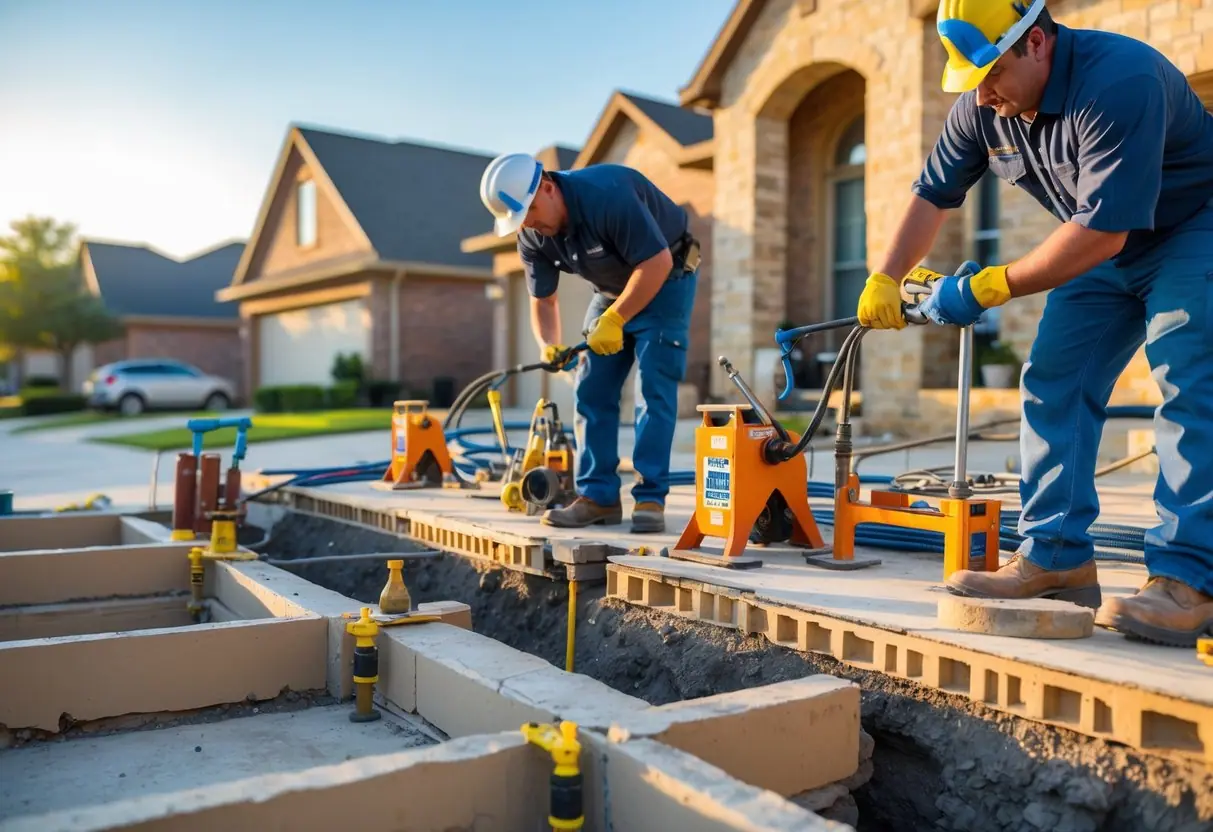
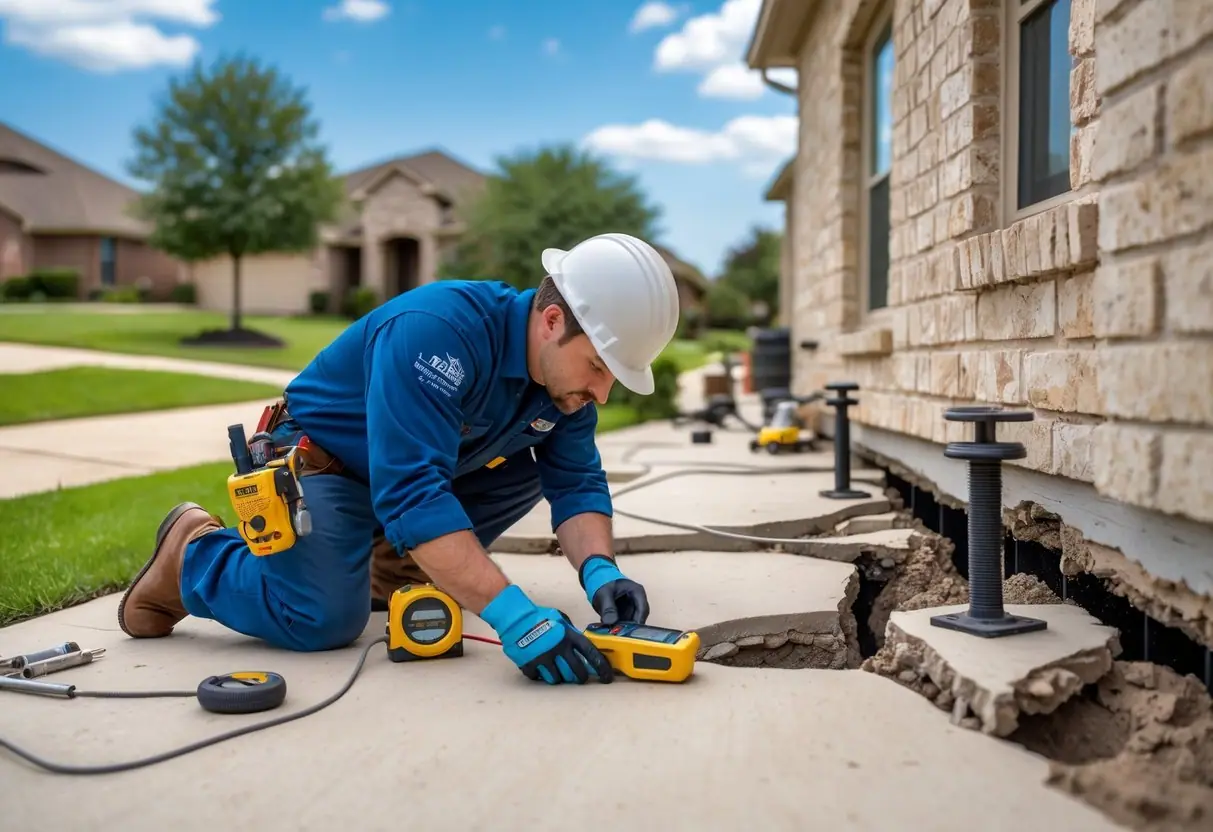
Steel push piers are driven hydraulically through unstable surface soil down to load-bearing bedrock or competent soil strata. In Round Rock, where unstable Houston Black clay can extend 6 to 15 feet below the surface, push piers are often the most effective solution for severe differential settlement. They are commonly used in Teravista, Paloma Lake, and Forest Creek homes that have experienced settlement of 2 inches or more.
Helical Piers
Helical piers feature screw-like plates that are rotated into the soil rather than driven. They are ideal for lighter structures, additions, or areas with restricted access — such as interior garage slabs or crawl space support columns in older Anderson Mill pier-and-beam homes. Installation is faster and creates less vibration than push piers.
Concrete Pressed Piling
Cylindrical concrete segments are pressed into the ground beneath the foundation beam. This method has a long history of use in Central Texas and remains a cost-effective solution for moderate settlement in residential slab-on-grade homes throughout Round Rock’s established neighborhoods.
Slab Patching and Concrete Foundation Repair
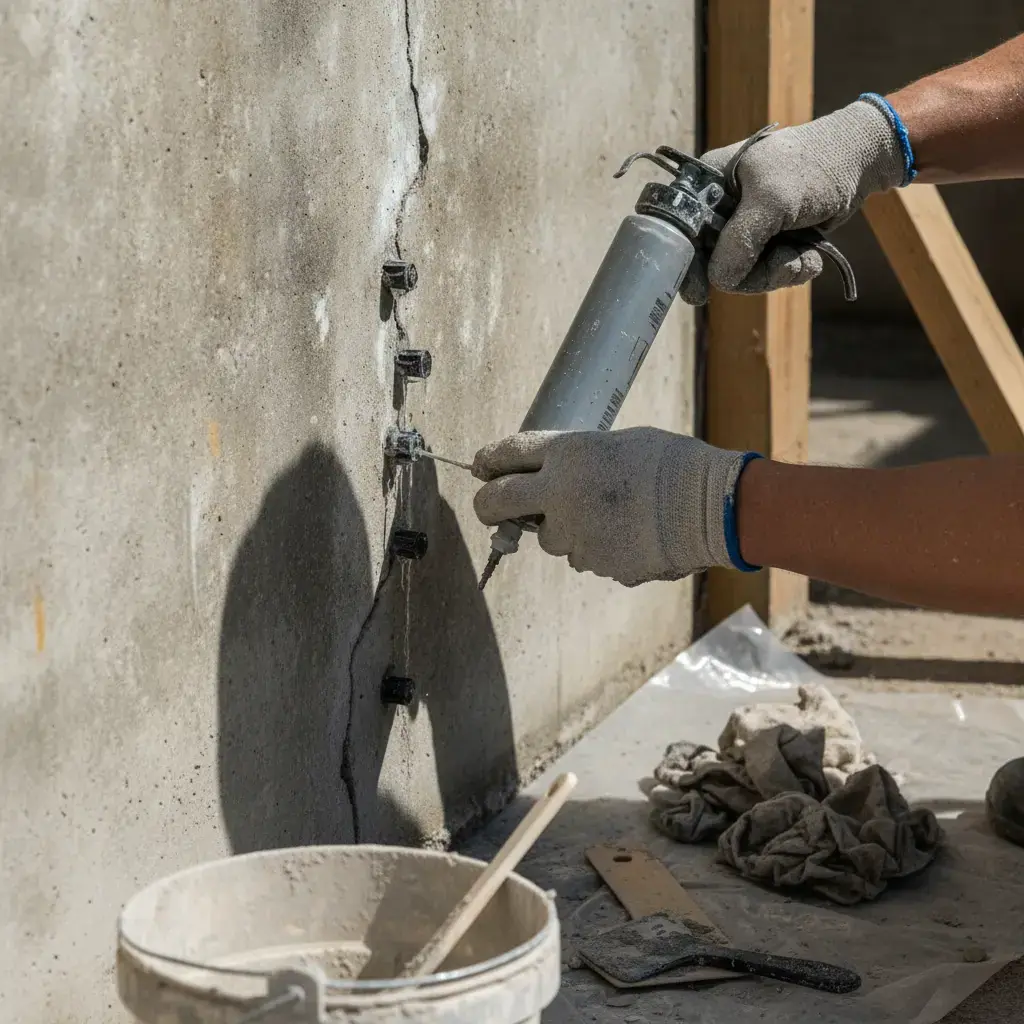
For localized surface cracks that do not indicate systemic settlement, professional concrete foundation repair involves routing, cleaning, and filling cracks with epoxy injection or polyurethane foam to restore structural continuity and prevent moisture intrusion.
Crawl Space Repair and Encapsulation
For pier-and-beam homes in areas like Cat Hollow and Wells Branch, crawl space repair addresses damaged joists, failing support posts, and moisture problems through sistering, replacement, and full crawl space encapsulation to stabilize the environment beneath the home.
Cost of Structural Foundation Repair in Round Rock, TX
The cost of structural foundation repair in Round Rock, TXvaries significantly based on the type of foundation, severity of damage, repair method, and property size. Below are realistic price ranges based on current Central Texas market conditions.
Typical Cost Ranges
- Foundation Inspection: $200–$500 (some companies offer free inspections; be cautious of inspection bias)
- Minor Concrete Foundation Repair / Crack Patching: $500–$1,500
- Moderate Slab Repair (8–12 Piers): $5,000–$10,000
- Significant Structural Repair (13–20+ Piers): $10,000–$20,000
- Severe Whole-Home Foundation Restoration: $20,000–$40,000+
- Crawl Space Repair and Encapsulation: $3,000–$12,000 depending on scope
- Commercial Foundation Repair: $15,000–$100,000+ depending on building size
Read moreShow less
Round Rock-Specific Cost Factors
Several local factors influence pricing in this market. Homes in Sendero Springs and Behrens Ranch with deeper clay deposits may require longer piers, increasing material costs by 15 to 25 percent compared to homes on shallower soils. Properties with extensive landscaping, pool decks, or hardscape near the foundation perimeter require additional care and may increase labor costs. Post-drought repair windows — typically September through November — represent the highest-demand period in Round Rock, which can affect scheduling availability.
Always request a detailed written estimate before authorizing any work. Schedule a Free Foundation Inspection to get an accurate cost assessment for your specific property.
Round Rock Neighborhoods We Serve
Teravista
This master-planned community in eastern Round Rock features primarily slab-on-grade homes built between 2004 and 2020. The area sits on deep expansive clay that has produced significant differential settlement in many homes, particularly those on lots adjacent to the Teravista golf course where irrigation runoff concentrates soil moisture unevenly.
Forest Creek
Homes in Forest Creek, built predominantly from the late 1990s through the 2000s, are surrounded by large heritage oak trees whose root systems have become a documented contributor to localized foundation settlement during drought years. We regularly perform root barrier assessments alongside foundation inspections in this neighborhood.
Behrens Ranch and Sendero Springs
Both communities in western Round Rock (ZIP code 78681) sit on some of the most active clay soils in Williamson County. Homes here frequently show greater seasonal movement than the city average, and structural repair projects in these neighborhoods typically require more piers per linear foot of beam than comparable homes in other areas.
Paloma Lake
This newer community (ZIP 78665) includes homes built in the 2010s that are still within their active settlement phase. Foundation inspection is especially important here for homeowners approaching their builder warranty expiration dates.
View All Service Areas
Foundation Maintenance Tips for Round Rock Homeowners
- Maintain consistent soil moisture year-round. During Round Rock’s July–September dry season, run a soaker hose 18 to 24 inches from the foundation perimeter for 30 to 60 minutes, three times per week to prevent clay shrinkage beneath the slab.
- Ensure positive drainage away from the foundation. The grade around your home should slope at least 6 inches over the first 10 feet away from the foundation. Many Round Rock lots have settled to near-flat grades over time.
- Clean gutters and extend downspouts. Downspouts should discharge at least 5 feet from the foundation. Concentrated roof runoff is a leading cause of differential settlement in Pflugerville and Round Rock subdivisions.
- Monitor and manage large trees. Keep oak and cedar trees at least 15 to 20 feet from your foundation. If trees are closer, consider installing root barriers.
- Service your plumbing annually. Slab leaks from deteriorating copper or cast-iron pipes are a hidden cause of foundation movement. Annual plumbing pressure tests can catch leaks before they cause soil washout.
- Avoid over-watering landscape beds. Excessive irrigation along the foundation perimeter can cause upward heave in Round Rock’s clay soils, particularly during already-wet spring months.
- Schedule a professional inspection every 3–5 years. Early detection keeps minor settlement from becoming a major structural repair project. Book Your Inspection Today

Why Choose Round Rock Foundation Repair Group
Round Rock Foundation Repair Group is a locally operated foundation repair company with deep roots in Williamson County. We understand the specific soil profiles of neighborhoods from Teravista to Sendero Springs, and we bring that local knowledge to every job we take on. Unlike national chains that rotate crews unfamiliar with Central Texas clay behavior, our team works this region every day.
We offer transparent, itemized estimates with no pressure tactics. We explain what we find, what it means, and what your real options are — including cases where we determine that a foundation does not yet require structural intervention and only monitoring is needed. That kind of honest assessment saves homeowners thousands of dollars unnecessarily spent.
Read moreShow less
Our repair work is backed by manufacturer warranties on all pier systems installed, and we provide written post-repair elevation documentation to support future home sales or insurance claims. We serve all of Round Rock and surrounding communities including Cedar Park, Georgetown, Pflugerville, Austin, and beyond.
To speak with a local foundation expert, call (512) 220-3502 today. Request a Free Consultation
FAQ
Frequently Asked Questions About Structural Foundation Repair Costs in Round Rock, TX
How much does structural foundation repair cost in Round Rock, TX?
Costs range widely based on severity and method. Minor patching may cost $500 to $1,500, while moderate slab repairs involving 8 to 12 piers typically run $5,000 to $10,000. Large-scale foundation restoration projects can reach $20,000 to $40,000 or more. Round Rock’s expansive clay soils often require deeper piers than the national average, which influences total project cost.
How long does foundation repair take in Round Rock?
Most residential foundation repair projects in Round Rock take 1 to 3 days for the physical repair work. From initial inspection through completed repair, the full process — including permitting — typically spans 2 to 4 weeks. Larger commercial foundation repair projects may take 1 to 4 weeks of active construction.
Is foundation repair covered by homeowner’s insurance in Texas?
Most standard Texas homeowner’s insurance policies exclude foundation damage caused by soil movement, which is the most common cause in Round Rock. Coverage may apply if the damage resulted from a sudden covered peril such as a plumbing slab leak. We recommend reviewing your policy and consulting your insurance agent. We can provide documentation to support any valid claim.
What time of year is best for foundation repair in Round Rock?
Foundation repair can be performed year-round in Round Rock. However, fall — particularly October and November — is often considered optimal because soil moisture has typically partially rebounded from summer drought conditions, reducing the risk of post-repair secondary movement. Spring work is also effective when soil moisture is relatively balanced.
How do I know if my foundation problem is structural or cosmetic?
Cosmetic issues include hairline cracks less than 1/8 inch wide that have not changed over time. Structural concerns involve cracks wider than 1/4 inch, diagonal cracks from door or window corners, sloping floors of more than 1 inch per 20 feet, or any crack that has measurably widened or lengthened. A professional foundation inspection with a manometer survey — not a visual-only assessment — is the only reliable way to distinguish between the two.
Do I need a permit for foundation repair in Round Rock?
Permit requirements in Round Rock and Williamson County depend on the scope of work. Structural repairs involving excavation or modification of load-bearing elements typically require a permit. We handle the permitting process on your behalf as part of our service.
Will foundation repair affect my home’s resale value?
Properly documented foundation repair typically protects and preserves resale value rather than harming it. Buyers and their inspectors are looking for evidence of resolved issues, not perfection. A written warranty and post-repair elevation report are valuable disclosures that can reassure buyers in the Round Rock real estate market, where foundation history is a common concern.
How do I find reliable structural foundation repair near me in Round Rock?
Look for companies that provide written, itemized estimates, carry proper Texas contractor registration, offer manufacturer-backed pier warranties, and have demonstrable local experience in Williamson County’s specific soil conditions. Avoid any company that refuses to provide a written estimate or pressures you to sign a contract on the day of the initial inspection.
Get an Honest Assessment of Your Foundation Today
If you’ve noticed cracking walls, sticking doors, sloping floors, or any other warning signs described on this page, don’t wait through another Round Rock dry season. Foundation movement that is caught early is almost always less expensive to repair than damage that has been allowed to progress through multiple cycles of clay expansion and contraction.
Round Rock Foundation Repair Group is ready to provide a thorough, honest evaluation of your property’s structural foundation and give you clear answers about what — if anything — needs to be done. We serve Round Rock, Cedar Park, Georgetown, Pflugerville, Austin, and all surrounding communities.
Call us now at (512) 220-3502 to schedule your inspection, or use our online form to request a callback at your convenience.
Request Your Free Foundation Assessment | Learn About Our Inspection Process
Get in touch
Find foundation repair help near you
Request a free estimate online or give us a call — our team will follow up quickly.
- Call us(512) 220-3502
- Visit1 Chisholm Trail Rd suite 450 room j, Round Rock, TX 78681
- HoursMon-Sat: 7:00 am – 7:00 pm