
Foundation Repair Resources in Taylor, TX refers to the full spectrum of professional services, educational guidance, and hands-on solutions available to property owners dealing with foundation distress in Taylor and the surrounding Williamson County area. From hairline cracks in concrete slabs to severe structural settling caused by the region’s notoriously expansive clay soils, Taylor homeowners and commercial property managers face foundation challenges that demand local expertise and proven repair techniques.
Round Rock Foundation Repair Group brings deep familiarity with the geological conditions, construction eras, and seasonal weather patterns that make Taylor’s foundations uniquely vulnerable. Whether you own a post-World War II bungalow near downtown Taylor or a newer construction home in a growing subdivision off Carlos G. Parker Boulevard, our team understands the specific pressures your foundation faces. Call us today at (512) 220-3502 to connect with a foundation specialist who knows Taylor.
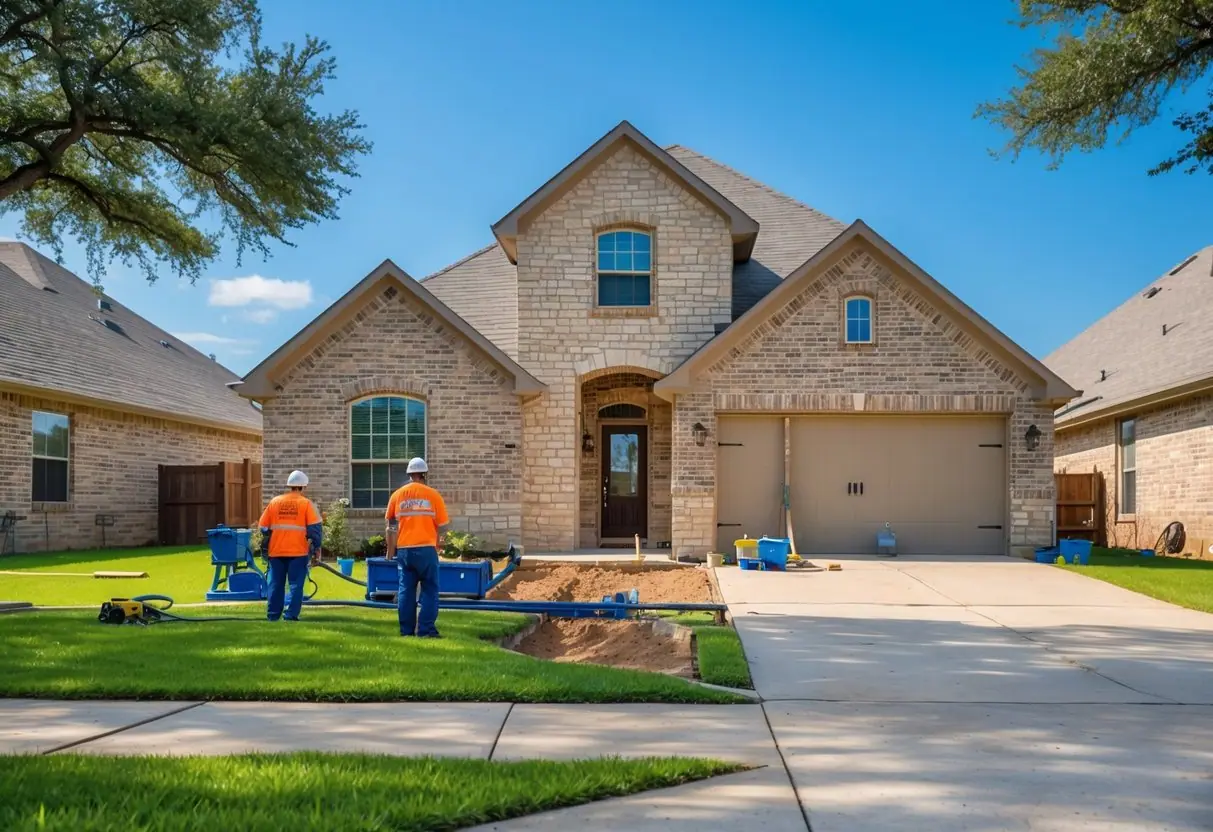
Understanding Foundation Repair Resources in Taylor
Foundation repair resources encompass far more than a single fix or a single product. They represent a coordinated ecosystem of inspections, engineering assessments, repair methodologies, material solutions, and ongoing maintenance strategies designed to stabilize and restore the structural base of any building. In the context of Taylor, TX, these resources take on added significance because of the city’s location within one of the most geologically active foundation-risk corridors in the entire state of Texas.
Historically, Taylor was incorporated in 1892 and grew rapidly as a railroad hub for Williamson County. Many of the older structures in the downtown core and surrounding residential blocks were built on simple pier-and-beam systems or unreinforced concrete slabs that predate modern foundation engineering standards. As the city has expanded over the past three decades — driven in part by proximity to the Samsung Austin Semiconductor plant corridor and the broader Central Texas tech boom — newer construction has introduced post-tension slab foundations that carry their own distinct repair requirements.
Read moreShow less
Foundation repair resources available to Taylor property owners include structural foundation repair, foundation restoration for historic buildings, commercial foundation repair for industrial and retail properties, thorough foundation inspections, crawl space repair for pier-and-beam homes, foundation patching for localized damage, home foundation repair for residential structures, and concrete foundation repair for slab systems. Each of these service categories requires different tools, materials, and levels of expertise, which is why having access to a comprehensive local provider matters enormously.
The prevalence of foundation issues in Taylor is not coincidental. Studies from the Texas A&M AgriLife Extension Service have consistently identified Williamson County as one of the highest-risk counties in Texas for foundation movement related to shrink-swell clay soil behavior. Understanding this backdrop helps property owners make informed decisions about when to inspect, when to repair, and which repair approach fits their specific situation.
Why Foundation Repair Resources Are Needed in Taylor, TX
Expansive Clay Soils: The Austin Chalk and Taylor Clay Formation
The dominant soil type underlying much of Taylor and western Williamson County is the Taylor Clay formation — a dark, heavy, montmorillonite-rich clay that shrinks dramatically during drought and expands with equal force when moisture returns. This soil can experience volumetric changes of up to 30 percent between its driest and wettest states. Over a single year, a typical Taylor residential lot may see the soil beneath a foundation move vertically by 2 to 4 inches, a range that standard slab foundations cannot accommodate without cracking. The Texas shrink-swell hazard map published by the Bureau of Economic Geology at UT Austin classifies much of Taylor’s developed area in the “high” to “very high” hazard zone.
Drought and Flood Cycles
Taylor sits within a climate corridor that regularly alternates between extended drought and intense rainfall events. The historic 2011 Texas drought — the worst single-year drought on record for the state — caused severe soil desiccation across Williamson County, triggering widespread foundation failures in Taylor neighborhoods including areas near Murphy Park and along the older residential streets east of Main Street. Conversely, significant flood events associated with the Little River and Mustang Creek drainages have caused rapid soil saturation and differential settlement in lower-lying areas of the city. In 2015, Williamson County received more than 20 inches of rainfall in a single month, causing foundation heave in multiple Taylor neighborhoods.
Aging Infrastructure and Tree Root Intrusion
Older neighborhoods near downtown Taylor, particularly those with housing stock dating from the 1940s through the 1970s, face compounding challenges from aging plumbing systems and mature tree canopy. Live oaks, post oaks, and cedar elms common to Taylor yards have root systems that extend 1.5 to 2 times the diameter of the tree canopy, drawing moisture from soil immediately adjacent to foundations and causing localized drying and settlement. Additionally, cast-iron and clay sewer lines common in pre-1980 construction frequently develop leaks that saturate soil under slabs and create voids.
Rapid New Development and Fill Soils
Taylor’s rapid growth since 2020 — accelerated by Samsung’s announced $17 billion chip fabrication plant investment in nearby Taylor — has brought new residential subdivisions where builders sometimes use fill soil that is inadequately compacted. Newly constructed homes on inadequately prepared fill can experience settlement of 1 to 3 inches within the first five years, making early foundation inspection critical for newer Taylor property owners.
Free, no-obligation estimates
Talk to Round Rock Foundation Repair Group
Tell us what you need and we’ll take it from there.
Signs You Need Foundation Repair Resources in Taylor
Interior Warning Signs
- Diagonal cracks running from the corners of door frames or window openings, typically at 45-degree angles
- Doors and windows that stick, jam, or no longer latch properly — especially after seasonal dry spells
- Visible gaps between interior walls and ceilings or between walls and floors
- Uneven or sloping floors, detectable by placing a marble on the floor and watching it roll
- Cracks in drywall that reappear after patching
Exterior Warning Signs
- Stair-step cracks in brick veneer, particularly on the corners of a structure
- Horizontal cracks in concrete block or poured concrete foundation walls
- Gaps between the exterior brick or siding and the foundation edge
- Visible displacement or rotation of the foundation perimeter beam
Crawl Space and Structural Signs
- Sagging floor joists or visibly bowed beams in pier-and-beam homes
- Standing water or chronic moisture in the crawl space
- Pier tops that have separated from the wood beam above them
Urgency Indicators
Cracks wider than one-quarter inch, any horizontal crack in a foundation wall, or a sudden change in door or window alignment after a rain event all represent urgent conditions requiring same-week professional inspection.
Our process
Our Foundation Repair Process in Taylor, TX
Round Rock Foundation Repair Group follows a structured, transparent process tailored to the specific soil and structural conditions found across Taylor and Williamson County.
- 01
Initial Contact and Scheduling (Day 1)
Call us at (512) 220-3502 or submit an online inquiry. We typically schedule Taylor-area inspections within 2 to 5 business days. We gather basic information about your property type, age, and visible symptoms before arriving so our inspector comes prepared.
- 02
Comprehensive Foundation Inspection (2–4 Hours On-Site)
Our inspector performs a full perimeter walk, interior elevation survey using a digital manometer level accurate to 1/100 of an inch, and a crawl space or under-slab assessment where accessible. We document all crack locations, widths, and orientations, and we
- 03
Soil and Site Analysis (1–2 Days)
We review available Williamson County soil survey data and, when warranted, conduct a basic soil probe to assess moisture content and clay depth at your specific address. This step directly informs pier depth recommendations for Taylor’s Taylor Clay formation
- 04
Written Repair Proposal (Within 3 Business Days of Inspection)
You receive a detailed written proposal specifying methods, materials, pier depths, and itemized costs. We explain all options in plain language and never pressure a timeline.
- 05
Permits and Scheduling (3–7 Business Days)
Where required by the City of Taylor or Williamson County, we pull the appropriate structural repair permits before work begins.
- 06
Repair Execution (1–5 Days Depending on Scope)
Our crews mobilize with equipment sized for Taylor residential and commercial lots. Pier installation, slab lifting, crawl space repairs, and patching are completed per the approved plan. Work areas are restored and debris removed daily.
- 07
Post-Repair Inspection and Documentation (Final Day)
We perform a final elevation survey and provide you with a written completion report including before-and-after measurements — documentation that is valuable for home resale in Taylor’s active real estate market.
Foundation Repair Methods and Approaches Used in Taylor
Steel Push Pier Installation
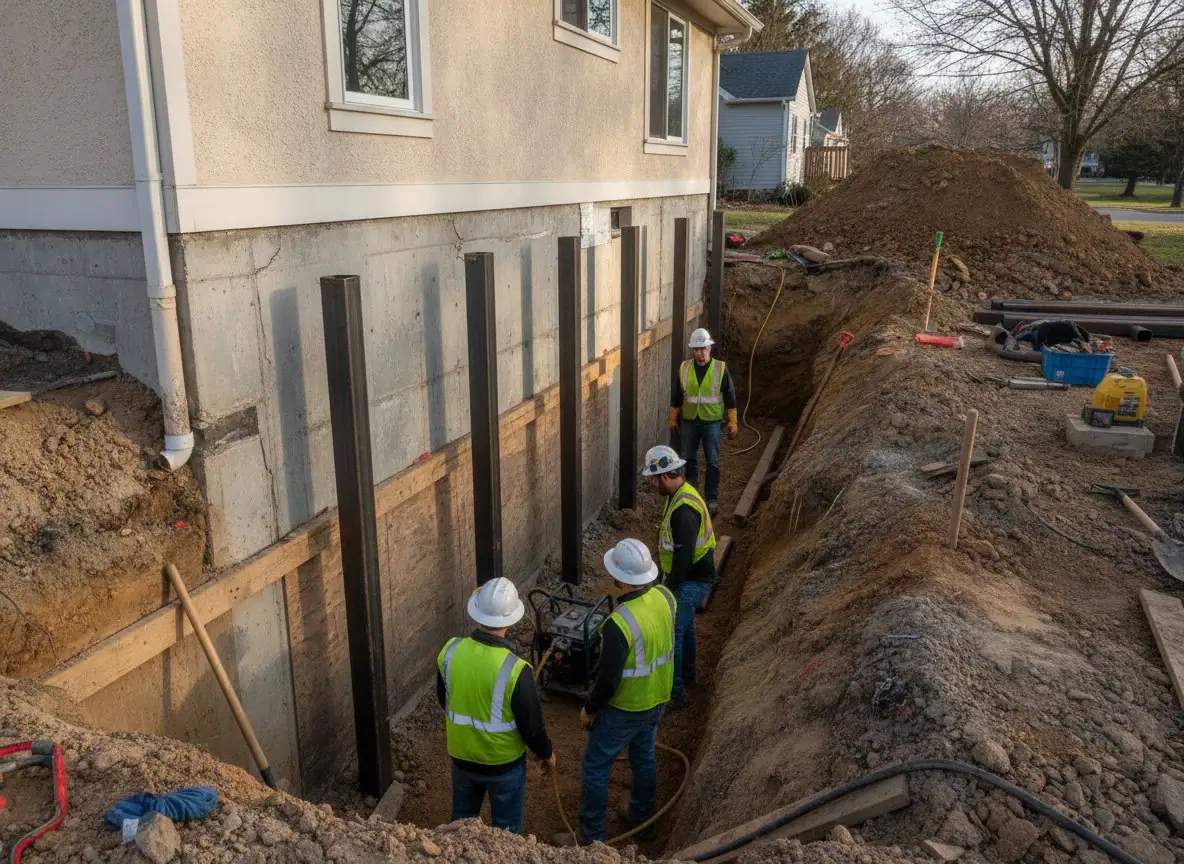
The most common method used in Taylor for settling slab foundations. Galvanized steel pipe sections are hydraulically driven through the unstable Taylor Clay soils until they reach load-bearing bedrock or dense stratum, typically at depths of 15 to 30 feet in this area. Brackets are then attached to the existing foundation beam and the structure is hydraulically lifted and stabilized. Best suited for structures experiencing ongoing settlement or located on lots with significant soil moisture variation.
Helical Pier Installation
Helical piers are screwed into the ground using torque motors and are preferred for lighter structures, additions, and porches, as well as for new construction underpinning on the expanding-development sites north of downtown Taylor. They can be installed with minimal vibration, making them ideal for historic structures near Taylor’s Main Street corridor.
Pressed Concrete Piling
Short concrete cylinders pressed hydraulically into the clay soil. A cost-effective option for certain Taylor residential properties, though their performance is more variable in the high-shrink-swell soils prevalent in this area compared to deep pier systems.
Slab Lifting and Mudjacking / Polyurethane Foam Injection
Used to lift and stabilize interior concrete floor sections or exterior flatwork that has settled due to void formation or soil washout. Polyurethane foam injection is the modern preference due to its lighter weight and faster cure time — critical in Taylor’s clay soils where added water weight from traditional mudjacking slurry can cause additional settlement.
Crawl Space Pier Repair and Encapsulation
For Taylor’s pier-and-beam homes — prevalent in neighborhoods built before 1970 — we replace deteriorated wood piers, sister damaged floor joists, and install vapor barriers to control the chronic moisture that accelerates wood decay in Central Texas crawl spaces.
Foundation Repair Resources in Taylor Cost Information
Understanding Foundation Repair Resources in Taylor cost helps property owners plan and budget appropriately. Costs vary significantly based on foundation type, damage severity, property size, and the repair method required. Below are current general pricing ranges observed in the Taylor, TX market.
Typical Cost Ranges
- Foundation Inspection: $300–$600 for a standard residential inspection in Taylor; some inspectors offer free estimates, though paid inspections typically include written elevation reports valuable for real estate transactions.
- Steel Push Pier Installation: $1,200–$1,800 per pier, with most Taylor residential projects requiring 8 to 20 piers, placing total project costs in the $10,000–$36,000 range.
- Helical Pier Installation: $1,500–$2,200 per pier depending on required depth and load.
- Pressed Concrete Pilings: $300–$450 per piling, with typical projects using 15 to 30 pilings — total costs of $4,500–$13,500.
- Slab Lifting (Polyurethane Foam): $800–$2,500 for targeted interior or exterior concrete lifting.
- Crawl Space Repair: $3,000–$12,000 depending on the number of piers replaced, joist sistering required, and encapsulation scope.
- Commercial Foundation Repair: Projects in Taylor’s commercial corridors typically begin at $15,000 and scale with building footprint and soil conditions.
Read moreShow less
Taylor-Specific Cost Factors
The depth required to reach stable bearing strata through Taylor’s expansive clay soils often exceeds the depth needed in sandier Central Texas markets, which can increase per-pier costs by 10 to 20 percent compared to regional averages. Properties near the Little River floodplain may also require additional drainage improvements to protect repaired foundations, adding $1,500–$5,000 to total project costs.
Get a detailed cost breakdown for your Taylor property
Taylor Neighborhoods and Communities We Serve
Downtown Taylor and Historic Core
Homes and commercial buildings near Murphy Park, the Williamson County courthouse square, and Main Street date from the 1890s through the 1950s. Most are pier-and-beam construction with original wood piers that are overdue for replacement. The combination of aging infrastructure, clay soil, and mature tree canopy creates layered foundation risks unique to this area.
East Taylor Residential Areas
Neighborhoods east of US-79 feature mid-century slab homes built in the 1960s and 1970s. These unreinforced or lightly reinforced slabs are highly vulnerable to the differential movement caused by Taylor’s seasonal moisture cycles. Stair-step brick cracking is a near-universal sight on properties in this zone.
Newer Northwest Taylor Subdivisions
Subdivisions developed along Carlos G. Parker Boulevard and near Granger Lake Road since 2015 feature post-tension slabs. While modern, these foundations require specialized repair techniques — standard pier bracket placement must account for embedded tensioning cables to avoid catastrophic cable damage.
Rural Parcels and Acreage Properties
Taylor’s surrounding Williamson County rural properties, including farmsteads and newer rural residential developments near Hutto Road corridors, often have older slab or block-foundation structures sitting on minimally prepared native clay — among the highest settlement-risk scenarios in our service area.
View all communities we serve across the greater Taylor and Round Rock area
Foundation Maintenance Tips for Taylor Property Owners
Proactive maintenance is the most cost-effective foundation repair resource available to Taylor homeowners. The following tips are specifically calibrated for Taylor’s clay soils and climate patterns.
- Maintain Consistent Soil Moisture Year-Round: Use a soaker hose placed 18 inches from your foundation perimeter during dry months — especially June through September — to prevent the extreme soil desiccation that drives settlement in Taylor’s Taylor Clay soils.
- Ensure Positive Drainage: Grade your yard so that the first 6 feet from the foundation slope away at a rate of at least 1 inch per foot to redirect rainwater away from the slab or piers.
- Clean and Extend Gutters: Downspouts should discharge at least 4 feet from the foundation. In Taylor’s high-intensity rainfall events, inadequate gutter systems are a leading cause of localized foundation saturation.
- Monitor and Repair Plumbing Leaks Promptly: Given the prevalence of aging cast-iron plumbing in older Taylor homes, annual plumbing pressure tests are strongly recommended. Even a slow slab leak can saturate clay soil enough to cause heave within one season.
- Maintain Strategic Distance for Trees: Keep large live oaks and cedar elms at least 15–20 feet from your foundation. If existing trees are closer, root barriers installed to a depth of 24–36 inches can help redirect moisture-seeking roots.
- Inspect Annually After Seasonal Extremes: Walk your property after the first significant rain following a dry summer and after any extended drought. Look for new cracks, door changes, or soil gaps along the foundation edge.
- Address Crawl Space Moisture Immediately: For pier-and-beam homes in Taylor, any standing water or persistent dampness in the crawl space should be remediated within days, not weeks, to prevent accelerated wood deterioration.
Why Choose Round Rock Foundation Repair Group for Taylor Foundation Repair Resources
Round Rock Foundation Repair Group has built its reputation serving the greater Williamson County and Central Texas market, with direct, hands-on experience in Taylor’s unique combination of Taylor Clay soils, aging building stock, and rapidly expanding new construction zones.
Our team understands that no two Taylor foundations are identical. The difference between a 1950s pier-and-beam home near Murphy Park and a 2022 post-tension slab home off Carlos G. Parker Boulevard requires entirely different assessment approaches and repair methods — and we have expertise in both.
We serve Taylor as part of a broad regional footprint that includes Round Rock, Cedar Park, Georgetown, Austin, Pflugerville, and surrounding communities, giving us unmatched local knowledge of the soil conditions, permitting requirements, and construction patterns across Central Texas. Our work is performed by trained in-house crews — not subcontractors — and we communicate transparently throughout every project.
For a foundation repair resource you can count on in Taylor, TX, call us at (512) 220-3502.
Learn more about our team and service philosophy
FAQ
Frequently Asked Questions About Foundation Repair Resources in Taylor, TX
How much does foundation repair cost in Taylor, TX?
Foundation repair costs in Taylor typically range from $4,500 for minor pressed concrete piling work to $36,000 or more for full-perimeter steel push pier installation on a larger home. The depth required to penetrate through Taylor’s expansive Taylor Clay soils to a stable bearing layer often adds 10–20% to costs compared to less clay-intensive markets. A professional inspection is the only way to get an accurate estimate for your specific property.
How long does foundation repair take in Taylor?
Most residential foundation repair projects in Taylor are completed in 1 to 3 days once permits are in place and materials are on hand. Larger commercial projects or historic structures requiring special care may take 5 to 10 business days. Post-repair monitoring and final documentation add 1 additional day.
Is foundation repair covered by homeowner’s insurance in Taylor?
Standard homeowner’s insurance policies in Texas generally exclude foundation damage caused by soil movement, drought, or settling — which covers the vast majority of Taylor foundation issues. However, if foundation damage can be directly linked to a sudden, covered event such as a ruptured water main or specific storm damage, partial coverage may apply. We recommend reviewing your policy and consulting your insurance agent before assuming coverage.
What makes Taylor’s foundation problems different from other Texas cities?
Taylor sits directly on the Taylor Clay formation, one of the most expansive clay soil types in Texas. This, combined with the city’s position in a climate corridor prone to both extreme droughts (such as the historic 2011 drought) and intense rainfall events, creates a higher frequency and severity of foundation movement than many comparable Texas cities of similar size. Taylor also has a significant stock of pre-1970 pier-and-beam homes that face additional wood deterioration challenges in Central Texas humidity.
Do I need a permit for foundation repair in Taylor, TX?
The City of Taylor requires permits for structural foundation repairs in most cases. Our team handles all permit applications on your behalf as part of our service process. Attempting unpermitted foundation work can create complications during future home sales and may void repair warranties.
How do I know if my Taylor home needs foundation repair or just cosmetic patching?
Cosmetic patching is appropriate only for surface-level cracks less than 1/16 inch wide that have shown no growth over 6 or more months. Any crack wider than 1/4 inch, any horizontal crack in a wall or foundation, or any crack accompanied by door or window misalignment requires professional structural evaluation. In Taylor’s active soil environment, cracks that “seem small” frequently indicate ongoing movement that will worsen without intervention.
Can foundation repair increase my Taylor home’s resale value?
Yes, and significantly so in Taylor’s competitive real estate market. Buyers and their inspectors in Williamson County routinely flag foundation concerns during due diligence. A professionally repaired and documented foundation — complete with before-and-after elevation surveys — removes a major negotiating obstacle and can recover or exceed the cost of repair in net sale price, particularly in Taylor’s rapidly appreciating market driven by proximity to the Samsung semiconductor corridor.
How soon after buying a Taylor home should I get a foundation inspection?
We recommend a foundation inspection within 90 days of purchasing any Taylor home older than 15 years, and within the first year for any newer home built on a platted subdivision after 2015 where fill soil compaction may still be settling. Early detection dramatically reduces the cost and complexity of any necessary repairs.
Get Expert Foundation Repair Resources in Taylor, TX Today
Whether you’re seeing your first diagonal crack near a doorframe or dealing with a serious settling problem that has been growing for years, Round Rock Foundation Repair Group is ready to help Taylor property owners with honest assessments, clear options, and quality repairs built for Williamson County’s demanding soil conditions.
Don’t wait for a small problem to become a structural emergency. Taylor’s expansive clay soils move fast — and so does foundation damage when left unaddressed.
Call us now at (512) 220-3502 to schedule your Taylor foundation inspection, or visit our contact page to submit your information online and receive a response within one business day.
Schedule Your Taylor Foundation Inspection Today
Explore All Foundation Repair Services We Offer
Get in touch
Find foundation repair help near you
Request a free estimate online or give us a call — our team will follow up quickly.
- Call us(512) 220-3502
- Visit1 Chisholm Trail Rd suite 450 room j, Round Rock, TX 78681
- HoursMon-Sat: 7:00 am – 7:00 pm