
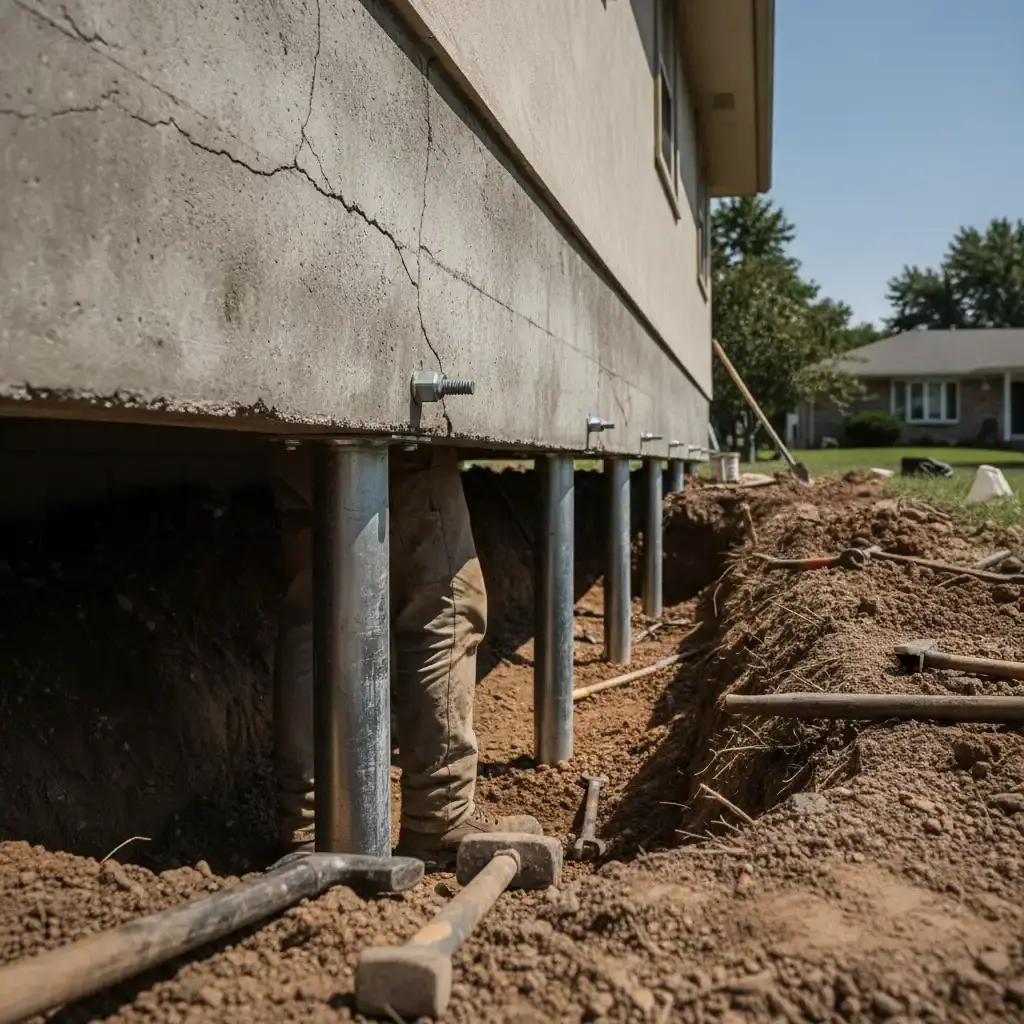
Emergency Foundation Repair in Georgetown, TX
24/7 Emergency Emergency Foundation Repair Available in Georgetown, TX
Need emergency foundation repair in Georgetown, TX? Round Rock Foundation Repair Group responds fast to slab, pier & beam failures. Call (512) 220-3502 now.
When your foundation fails without warning, every hour counts. Emergency Foundation Repair in Georgetown, TX is a specialized, rapid-response service designed to stabilize, assess, and restore compromised foundations before minor damage escalates into catastrophic structural failure. Unlike scheduled foundation work, emergency repairs address sudden cracking, sinking, or shifting that poses an immediate threat to your home’s safety and structural integrity.
Georgetown’s unique combination of expansive black clay soils, the Blackland Prairie geology beneath its older subdivisions, and the dramatic rainfall swings common to Williamson County create foundation emergencies that demand local expertise. At Round Rock Foundation Repair Group, we understand the specific soil behavior, drainage patterns, and construction standards that define Georgetown homes and commercial buildings. Our team responds quickly to Georgetown addresses, bringing the right equipment and region-specific knowledge to stabilize your property and protect your investment from further harm.
If you’re facing a foundation emergency right now, call us at (512) 220-3502.
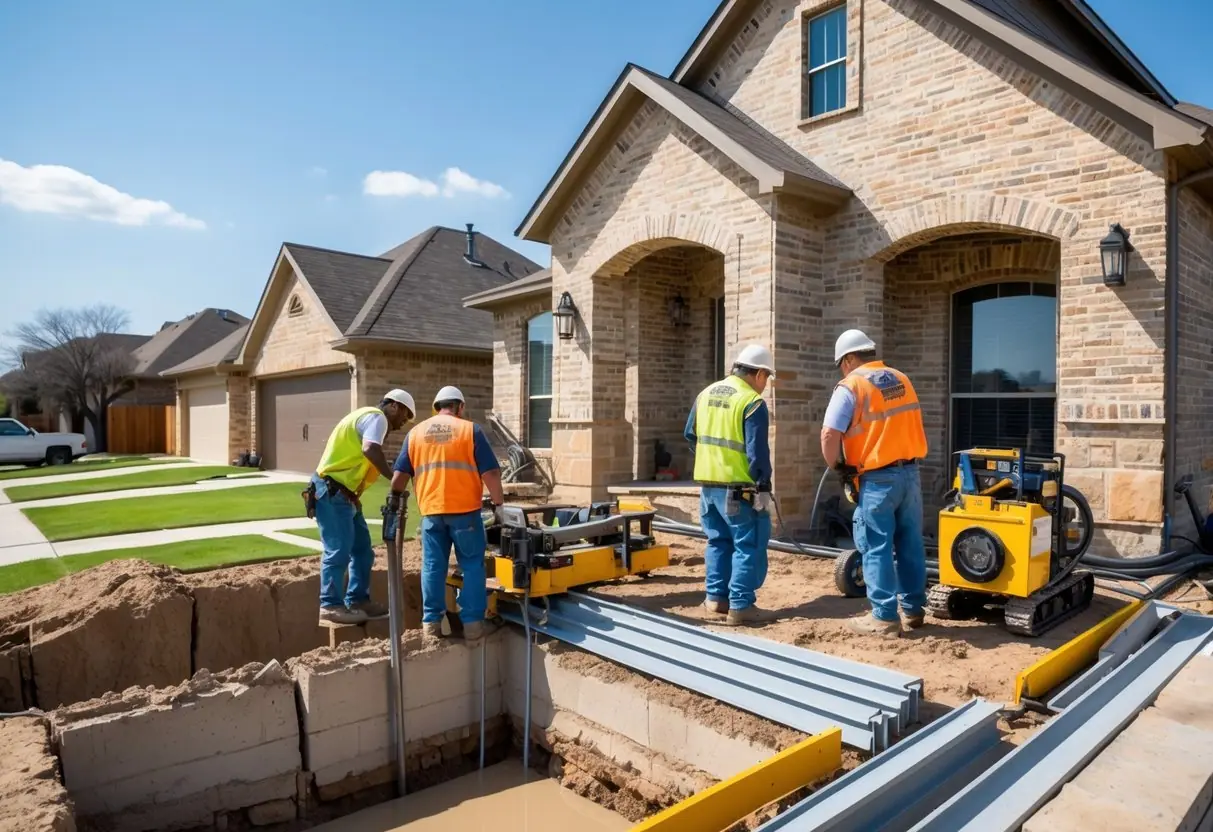
Understanding Emergency Foundation Repair
Emergency foundation repair refers to unplanned, urgent intervention required when a structure’s foundation experiences sudden or rapidly accelerating distress. While many foundation issues develop gradually over years, certain triggering events — heavy flooding, extreme drought, plumbing failures, or seismic activity — can push a foundation from manageable deterioration into a true structural emergency within days or even hours.
Foundations in Central Texas fall into several categories: slab-on-grade concrete (the most common in Georgetown’s post-1980 subdivisions), pier-and-beam systems found extensively in Georgetown’s historic downtown and pre-1970 homes, and, less commonly, crawl space foundations present in some transitional-era construction from the 1960s and 1970s. Each type responds differently to soil movement and each demands a different emergency stabilization approach.
Read moreShow less
Historically, Georgetown’s foundation challenges trace back to its settlement on the Blackland Prairie, a geological zone defined by dark, calcium-rich clay soils known as Houston Black clay. These soils, technically classified as Vertisols, have an unusually high shrink-swell capacity — they expand dramatically when wet and contract when dry, generating lateral and vertical pressures on foundations that can exceed 10,000 pounds per square foot in extreme cycles.
The prevalence of emergency foundation events in Georgetown has grown alongside the city’s rapid population expansion. Between 2010 and 2023, Georgetown ranked among the fastest-growing cities in the United States, adding thousands of new homes in developments like Wolf Ranch, Rancho Sienna, and Georgetown Village. Faster construction timelines and newly disturbed soils in these areas have contributed to an increase in foundation distress calls, particularly during the severe drought periods that hit Williamson County in 2011, 2022, and 2023.
Understanding whether your situation requires emergency intervention versus a scheduled repair is itself part of our service. Not every crack is a crisis, but some are — and distinguishing between the two requires trained eyes and local knowledge. Schedule a Foundation Inspection
Why Emergency Foundation Repair Is Needed in Georgetown, TX
Expansive Clay Soils Beneath Georgetown
The dominant soil type beneath most of Georgetown is Houston Black clay, a member of the Vertisol order with a Plasticity Index (PI) that regularly measures between 40 and 60 — well above the threshold of 20 at which soils are considered problematic for foundations. During dry conditions, this clay can shrink and pull away from foundation edges, leaving footings unsupported along their perimeter. During wet periods, the same clay expands with enough force to heave slab foundations upward by one to three inches in extreme cases. This cycle of shrinking and swelling, repeated over years and intensified during dramatic weather events, is the primary driver of emergency foundation conditions throughout Georgetown.
Georgetown’s Drought and Flood Cycles
Williamson County experiences some of the most volatile precipitation swings in Texas. The historic drought of 2011 — when Georgetown recorded less than 11 inches of annual rainfall against a normal of approximately 34 inches — caused widespread emergency foundation calls across neighborhoods including Sun City Texas, Gabriels Overlook, and Berry Creek. Foundations that had settled equilibrium over decades were suddenly destabilized as soils contracted by as much as 4 to 6 inches in depth across open lots.
Conversely, intense rainfall events associated with Gulf moisture and the Hill Country’s flash-flood geography can saturate Georgetown soils in hours. The May 2015 Memorial Day floods and the October 2018 storm system both caused emergency foundation calls from homeowners who saw sudden interior cracking, sticking doors, and visible perimeter gaps appear within 48 to 72 hours of saturation events.
The Inner Loop and Older Construction
Georgetown’s historic downtown district and Inner Loop neighborhoods — including homes along Austin Avenue, Rock Street, and the blocks surrounding Southwestern University — contain a high density of pier-and-beam structures built between 1900 and 1960. Many of these homes have original wooden piers that are now over 60 years old. When saturated soils cause rapid soil movement, aged wood piers can fail suddenly, creating genuine structural emergencies requiring immediate shoring and replacement rather than routine repair scheduling.
New Development on Disturbed Soils
Georgetown’s explosive growth has brought mass grading operations to former agricultural land. Newly graded clay soils in neighborhoods like Wolf Ranch, Morningstar, and Rancho Sienna take years to reach compaction equilibrium. Homes built on recently disturbed fill soils are statistically more vulnerable to emergency settlement events during their first five to ten years, especially when exposed to drought stress within that window.
Aging Infrastructure and Plumbing Leaks
Plumbing failures beneath slab foundations are a leading cause of sudden foundation emergencies in Georgetown’s mid-century neighborhoods. A slab leak introducing as little as 20 to 30 gallons of water per day directly beneath a foundation can saturate a localized clay zone within weeks, causing differential heave that creates emergency-level cracking and displacement. Learn About Concrete Foundation Repair
Free, no-obligation estimates
Talk to Round Rock Foundation Repair Group
Tell us what you need and we’ll take it from there.
Signs You Need Emergency Foundation Repair
Structural Warning Signs
- Diagonal cracks running from door or window corners at 45-degree angles, wider than 1/4 inch
- Horizontal cracks in brick veneer or block walls, indicating lateral soil pressure
- Visible separation between the wall and ceiling, or wall and floor, exceeding 1/2 inch
- Bowing or leaning exterior walls visible from street level
- Sudden appearance of multiple cracks throughout the home simultaneously
Interior Symptoms
- Doors and windows that suddenly refuse to open or close and were operating normally within the past 30 days
- Floors with a slope measurable by feel or a level greater than 1 inch per 8 feet
- Gaps appearing between baseboards and the floor
- Cracked or buckled interior tile, especially in bathroom and kitchen areas
Exterior and Perimeter Signs
- Visible foundation movement with gaps between the slab edge and the soil exceeding 2 inches
- Chimney separation from the main structure
- Pooling water against the foundation after rain that persists beyond 24 hours
Urgency Indicator: If you observe multiple symptoms appearing simultaneously or a single crack widening by a visible amount over 24 to 48 hours, treat this as an active emergency. Call (512) 220-3502 immediately.
Our process
Our Emergency Foundation Repair Process
Our emergency response protocol is designed to move from first contact to stabilization as efficiently as possible while ensuring every decision is grounded in accurate diagnosis. Here is what you can expect when you call Round Rock Foundation Repair Group for emergency service in Georgetown.
- 01
Emergency Phone Triage (0–30 Minutes)
When you call (512) 220-3502, a knowledgeable team member walks you through a rapid phone assessment. We ask specific questions about crack width, location, and rate of change to determine whether immediate dispatch or a same-day inspection is appropriate. For
- 02
On-Site Emergency Inspection (1–3 Hours)
Our inspector arrives with elevation measuring equipment, crack monitors, and soil probes. We assess the foundation type — slab, pier-and-beam, or crawl space — map all visible distress points, and use a digital manometer to measure elevation differences acros
- 03
Emergency Stabilization (Same Day to 24 Hours)
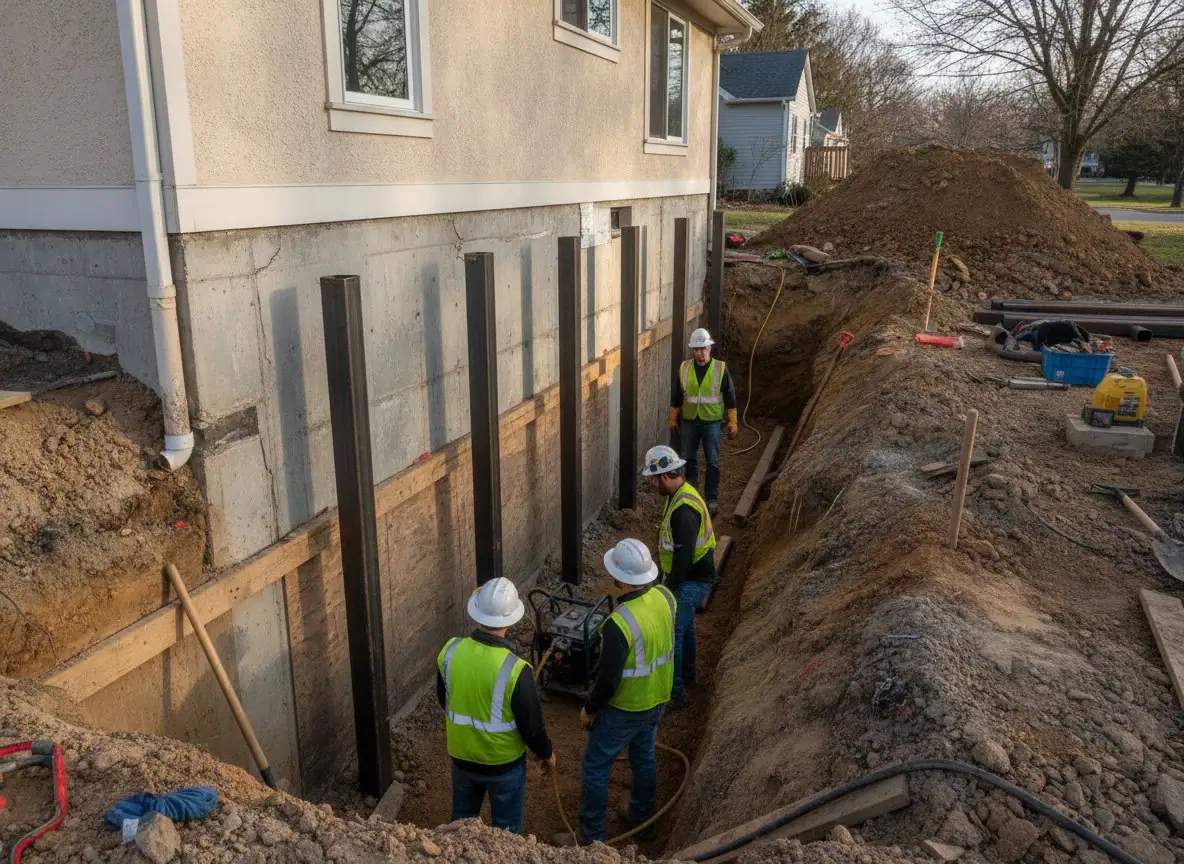
If the structure is at immediate risk, we implement temporary shoring using adjustable steel posts or helical anchors to arrest active movement before permanent repair begins. This step is especially critical for pier-and-beam homes in Georgetown’s historic di
- 04
Repair Plan and Material Staging (24–48 Hours)
We develop a written repair scope, select the appropriate method based on soil conditions and foundation type, and stage equipment. Georgetown’s clay soils often require pre-wetting or controlled soil moisture management during this phase to reduce the risk of
- 05
Permanent Foundation Repair (1–5 Days)
Depending on method, permanent repair involves pier installation, slab leveling, or structural patching. Work is sequenced to minimize ongoing risk to the structure throughout the process. Explore Structural Foundation Repair Options
- 06
Post-Repair Verification (Final Day)
We re-measure all elevation points, document crack status, and verify that all repaired zones meet engineering standards before closing the job. You receive a written post-repair report.
- 07
Follow-Up Monitoring Guidance
We provide specific guidance for monitoring your Georgetown home through the next drought or wet season, including soil moisture management recommendations tailored to your neighborhood’s soil profile.
Emergency Foundation Repair Methods and Approaches
Steel Push Piers
Steel push piers are driven hydraulically through unstable surface soils until they reach load-bearing bedrock or dense soil strata. Georgetown’s geology means bedrock (Austin Chalk and Georgetown Limestone formations) is accessible at depths ranging from 12 to 40 feet depending on location. Push piers are the preferred emergency method for heavily settled slab foundations in Sun City Texas, Wolf Ranch, and Teravista neighborhoods. Installation per pier typically takes 2 to 4 hours with minimal excavation.
Helical Piers
Helical piers use a screw-pile design that can be installed in both tension and compression applications. They are particularly well-suited for lighter residential structures, pier-and-beam emergency stabilization, and situations where limited access prevents the use of large hydraulic equipment. Common in Georgetown’s older Inner Loop neighborhoods. Home Foundation Repair Services
Slab Lifting and Mudjacking
For emergency situations involving localized slab depression rather than widespread settlement, polyurethane foam injection or traditional mudjacking can raise and stabilize a slab section within hours. Particularly effective for garage slabs, walkways, and interior floor sections in Georgetown slab homes where differential settlement is localized.
Pier-and-Beam Emergency Shoring and Replacement
For pier-and-beam foundations in crisis, we replace failed wood piers with concrete or adjustable steel alternatives and sister damaged beams. This method is common in Georgetown’s pre-1970 housing stock near downtown and around Williams Drive.
Crawl Space Stabilization
For homes with crawl spaces, we address moisture intrusion, install encapsulation barriers, and reinforce structural members compromised by water damage and soil movement. Crawl Space Repair Services
Emergency Foundation Repair Cost in Georgetown, TX
Understanding cost ranges helps Georgetown homeowners plan appropriately, even in crisis situations. Emergency foundation repair pricing reflects the urgency of response, complexity of the repair, and the specific conditions present at your property.
Typical Cost Ranges
- Emergency Inspection and Assessment: $200–$500 (often credited toward repair costs)
- Minor Emergency Patching and Stabilization: $1,500–$4,000
- Steel or Helical Pier Installation (per pier): $1,200–$1,800; most residential jobs require 8–16 piers, totaling $10,000–$28,000
- Slab Lifting (polyurethane foam, per zone): $800–$2,500
- Full Pier-and-Beam Emergency Repair: $4,500–$15,000 depending on home size and number of failed piers
- Commercial Foundation Emergency Repair: $20,000–$100,000+ depending on structure size and load requirements
Read moreShow less
Factors That Affect Georgetown Emergency Repair Costs
- Depth to stable soil or bedrock: Georgetown’s limestone formations vary in depth across the city; deeper installations cost more
- Accessibility: Historic Inner Loop properties with mature landscaping, narrow lots, or pier-and-beam clearance under 18 inches require specialized equipment
- Extent of damage: Emergency events that have propagated to plumbing, framing, or interior finishes increase total project scope
- Emergency versus scheduled dispatch: After-hours or weekend emergency calls carry a premium of 15–25% over standard rates
We provide written estimates before any work begins. For an accurate cost assessment specific to your Georgetown property, call (512) 220-3502. Learn More About Foundation Repair Costs
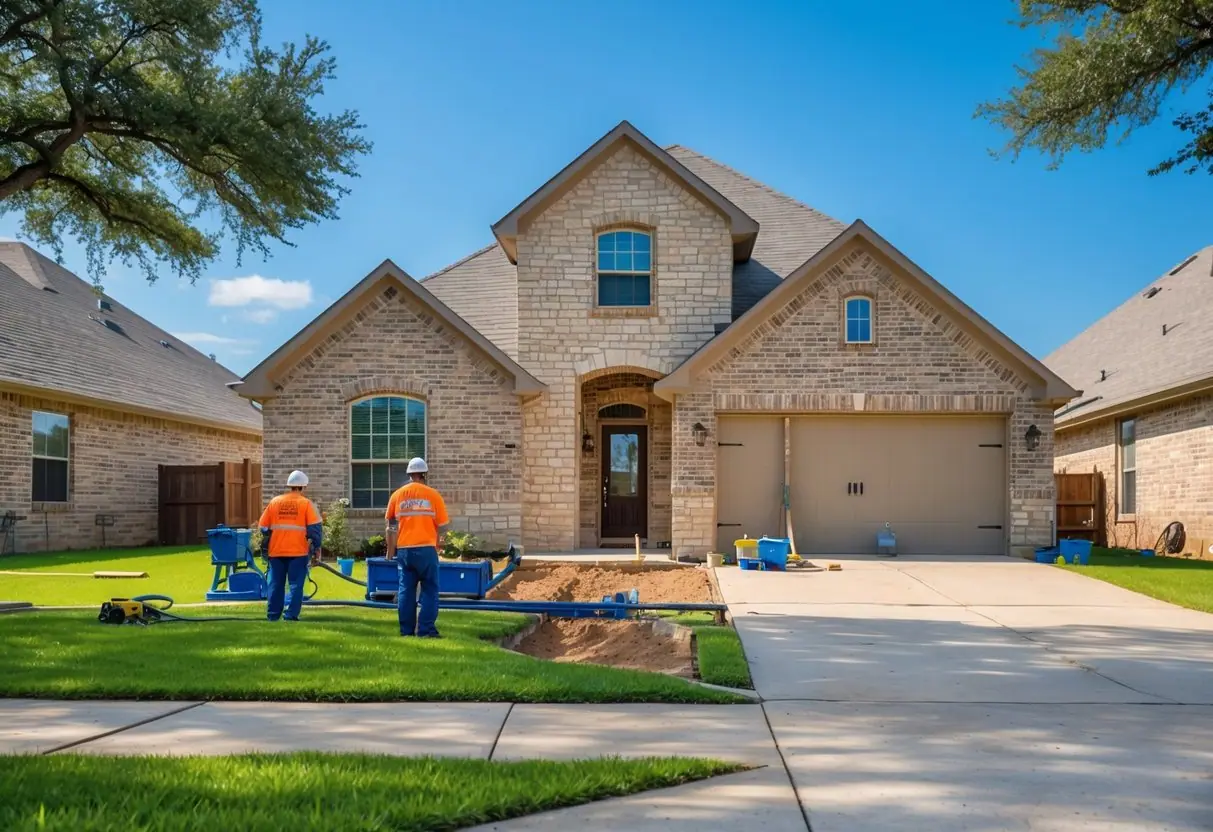
Georgetown Neighborhoods We Serve
Sun City Texas
This large active-adult community, developed primarily between 1995 and 2015 in far northwest Georgetown, contains thousands of slab-on-grade homes built on heavily engineered pads. Despite soil preparation at construction, the extreme 2011 and 2022 droughts have produced widespread differential settlement across Sun City, making it one of our most frequent emergency service areas in Georgetown.
Georgetown Historic Downtown and Inner Loop
Homes within roughly one mile of the Williamson County Courthouse, many built between 1890 and 1960, predominantly use pier-and-beam construction. Original cedar and wood piers in these homes are highly vulnerable to sudden failure during soil saturation events, requiring immediate emergency response.
Wolf Ranch
One of Georgetown’s fastest-growing master-planned communities, Wolf Ranch sits on soils graded and disturbed during the mid-2010s. Homes here are in their highest-risk settlement window and have shown elevated emergency call rates during the 2022–2023 drought cycle.
Berry Creek
This established golf community in northeast Georgetown features homes built primarily from the early 1990s through the 2000s on soils with variable clay content. We respond to Berry Creek emergency calls regularly, particularly following heavy rain events that cause rapid soil expansion beneath settled slabs. View All Service Areas
Maintenance Tips to Prevent Foundation Emergencies in Georgetown
While some emergencies cannot be prevented, consistent maintenance dramatically reduces risk for Georgetown homeowners dealing with the region’s challenging clay soils and weather volatility.
- Maintain consistent soil moisture year-round. Use a soaker hose system set on a timer to water foundation perimeters during Georgetown’s dry months (typically June through October), keeping soil 6 to 12 inches from the foundation edge consistently moist.
- Ensure proper grading away from the foundation. Soil should slope a minimum of 6 inches downward over the first 10 feet away from your home’s perimeter.
- Clean and maintain gutters and downspouts. Direct downspout discharge at least 4 feet from the foundation using splash blocks or extensions — especially critical during Georgetown’s intense spring storm season.
- Monitor and repair plumbing promptly. Even slow slab leaks can cause rapid emergency conditions in Georgetown’s clay soils. Investigate unusually high water bills immediately.
- Control large tree root systems. Live oaks and cedar elms common in Georgetown landscaping can extend roots that extract significant moisture from foundation soils. Maintain trees at least 15 to 20 feet from the foundation.
- Inspect foundation perimeter seasonally. Walk the exterior of your home each spring and fall looking for new cracks, gaps, or soil separation at the slab edge.
- Address drainage issues before storm season. Low spots, negative drainage, and blocked French drains should be corrected each spring before Georgetown’s April–June peak rainfall period.
Why Choose Round Rock Foundation Repair Group for Emergency Services
When your foundation fails in Georgetown, you need a team that knows Williamson County soils, understands local building stock, and can respond without delay. Round Rock Foundation Repair Group has built its reputation serving communities across the greater Georgetown area including Round Rock, Cedar Park, Pflugerville, and Austin — giving our team unmatched practical exposure to the specific foundation challenges of Central Texas clay country.
We specialize in every foundation type present in Georgetown — from the historic pier-and-beam homes of the Inner Loop to the modern slab construction of Wolf Ranch and Sun City Texas. Our crews are familiar with the unique depth-to-bedrock variability across Georgetown’s neighborhoods and adapt our pier installation methods accordingly.
Read moreShow less
We offer transparent, written estimates before work begins. Every emergency call is treated with the urgency it deserves, and our team is available to respond to structural emergencies throughout Georgetown and surrounding communities. From the initial emergency call through post-repair documentation, you will work with professionals who communicate clearly and stand behind the quality of their work.
Call (512) 220-3502 now for emergency response. Learn More About Our Team
FAQ
Frequently Asked Questions About Emergency Foundation Repair in Georgetown, TX
How quickly can you respond to a foundation emergency in Georgetown?
For active structural emergencies — situations where a home is at immediate risk — we aim to dispatch an inspector within one to two hours of your call during business hours. After-hours emergencies are triaged by phone and scheduled for the earliest available response, typically first thing the following morning unless the situation warrants immediate dispatch.
How much does emergency foundation repair cost in Georgetown, TX?
Emergency foundation repair in Georgetown typically ranges from $1,500 for minor stabilization and patching to $28,000 or more for full pier installation on a larger home. The wide range reflects the variety of foundation types, soil depths, and extent of damage found across Georgetown’s neighborhoods. We provide a written estimate before any work begins so you understand the scope and cost fully.
Does homeowners insurance cover emergency foundation repair in Texas?
Standard Texas homeowners insurance policies typically exclude foundation damage caused by soil movement, shrinkage, or settling. However, if the foundation damage is directly caused by a covered peril — such as a burst pipe causing a slab leak — the resulting damage may be partially covered. We recommend reviewing your policy and consulting with your insurer. We can provide documentation to support any insurance claim you file.
What causes sudden foundation emergencies in Georgetown specifically?
Georgetown’s Houston Black clay soils are among the most expansive in the state, with Plasticity Index values of 40 to 60. Sudden emergencies are most commonly triggered by extreme drought (such as 2011 and 2022), intense rainfall saturation events, and slab plumbing failures. New construction neighborhoods like Wolf Ranch on recently disturbed soils and older pier-and-beam homes in the Inner Loop are at the highest statistical risk.
How long does emergency foundation repair take in Georgetown?
Emergency stabilization can often be completed within the same day of inspection for targeted shoring. Permanent repairs — including full pier installation — typically take two to five days depending on the number of piers required, access constraints, and weather. We sequence work to keep your home structurally stable throughout the entire process.
Can you repair foundations in Georgetown’s historic district?
Yes. Our team has extensive experience with the pier-and-beam foundations common in Georgetown’s historic Inner Loop neighborhoods. We work within the tight access constraints of older lots, use equipment appropriate for historic structures, and coordinate with homeowners to minimize disruption to established landscaping and historic architectural features.
Should I evacuate my home during a foundation emergency?
In most cases, you do not need to evacuate. However, if you observe rapidly widening cracks, bowing walls, or structural elements visibly separating, exit the home and call us immediately along with local emergency services if you believe there is an imminent collapse risk. Our phone triage team can help you assess whether evacuation is warranted based on what you describe.
Do you serve areas near Georgetown, TX?
Yes. In addition to Georgetown, we serve Round Rock, Cedar Park, Pflugerville, Austin, Brushy Creek, Tech Ridge, Wells Branch, Jollyville, Paloma Lake, Teravista, La Frontera, Avery Ranch, Great Hills, Mayfield Ranch, Anderson Mill, Cat Hollow, Forest Creek, Behrens Ranch, and Sendero Springs. View Our Full Service Area
Contact Round Rock Foundation Repair Group for Emergency Foundation Repair in Georgetown, TX
Foundation emergencies do not wait — and neither should you. If you’re seeing sudden cracks, sticking doors, sloping floors, or visible foundation movement at your Georgetown home or commercial property, the time to act is now. Every hour of delay in an active foundation emergency can mean additional structural damage and significantly higher repair costs.
Round Rock Foundation Repair Group is ready to respond. Our team knows Georgetown’s soils, construction history, and neighborhoods, and we bring that local knowledge to every emergency call we receive.
- Call us now: (512) 220-3502
- Service area: Georgetown, TX and all surrounding Williamson County communities
Do not wait for the damage to get worse. Call (512) 220-3502 now and speak with an emergency foundation repair specialist. Request Emergency Service Online
Get in touch
Find foundation repair help near you
Request a free estimate online or give us a call — our team will follow up quickly.
- Call us(512) 220-3502
- Visit1 Chisholm Trail Rd suite 450 room j, Round Rock, TX 78681
- HoursMon-Sat: 7:00 am – 7:00 pm