Pier and Beam Foundation Repair in Georgetown, TX
Fast, Reliable Pier and Beam Foundation Repair in Georgetown, TX — Licensed & Insured
Need pier and beam foundation repair in Georgetown, TX? Round Rock Foundation Repair Group offers free inspections & lasting repairs. Call (512) 220-3502.
- Licensed & Insured
- Locally Owned & Operated
- Free Inspection & Estimate
Request Your
Free EstimatePier and beam foundation repair is a specialized structural service designed to restore stability, levelness, and long-term integrity to homes and commercial buildings constructed on raised crawl-space foundations. Unlike slab foundations, pier and beam systems use a network of wooden beams, posts, and piers to elevate the structure above grade — a design that offers flexibility but requires attentive maintenance, particularly in Central Texas environments.
Georgetown, TX presents a uniquely demanding set of conditions for pier and beam foundations. The city’s expansive Blackland Prairie soils, fluctuating moisture levels driven by the Balcones Fault Zone, and rapid growth across historic and newer neighborhoods all contribute to foundation movement that demands expert attention. At Round Rock Foundation Repair Group, our crews understand Georgetown’s specific geology, building stock, and seasonal stress cycles. We deliver precise, lasting pier and beam foundation repair solutions backed by thorough inspections and proven repair methods. Call us today at (512) 220-3502.
Understanding Pier and Beam Foundation Repair
Pier and beam construction — sometimes called post-and-beam or crawl space foundation — was the dominant residential building method across Central Texas from the late 1800s through the 1960s. Builders favored this approach because it elevated living spaces above grade, improving ventilation in hot climates, allowing easy access to plumbing and electrical systems, and accommodating the rolling limestone and clay terrain common throughout Williamson County.
A typical pier and beam system consists of concrete or masonry perimeter walls (called stem walls), interior wood or concrete piers rising from isolated footings, horizontal wood beams (called girders) spanning between those piers, floor joists running perpendicular to the girders, and finally the subfloor decking. Each component plays a critical structural role, and failure in any one of them can translate into sloping floors, sticking doors, or visible wall cracks throughout the home.
Georgetown’s older neighborhoods — particularly those platted before World War II along the original town square and along University Avenue — contain a significant concentration of pier and beam homes. Many of these structures were built with longleaf pine timbers that, while exceptionally durable, are now 80 to 100 years old and susceptible to wood rot, insect damage, and moisture-driven deterioration inside crawl spaces that were never designed with modern vapor barriers.
Pier and beam foundation repair addresses a wide spectrum of issues: replacing rotted sills and beams, re-leveling sunken piers, installing new concrete or steel piers to supplement failing wood posts, repairing or encapsulating crawl spaces to control moisture, and sistering damaged joists to restore structural capacity. The goal of every repair is to return the foundation to its original design elevation and ensure the structural load is properly transferred to stable soil or bedrock.
Because pier and beam systems are accessible from below, skilled contractors can often diagnose and repair problems with less disruption to the living space than slab repair — making early intervention especially practical and cost-effective for Georgetown homeowners.
Why Pier and Beam Foundation Repair Is Needed in Georgetown, TX
Expansive Blackland Prairie Clay
The eastern portions of Georgetown — including established neighborhoods like Georgetown Village and areas near DB Wood Road — sit on Taylor and Austin Chalk formations overlain by thick deposits of highly expansive Blackland clay. This clay, known geotechnically as montmorillonite, can expand by 30 to 40 percent in volume when saturated and shrink dramatically during drought. The Texas A&M AgriLife Extension has documented annual vertical movement of up to 4 inches in untreated Blackland Prairie soils under residential structures in Williamson County. This repeated swell-shrink cycle is the single largest driver of pier and beam deterioration in Georgetown.
Drought and Flash Flood Cycles
Georgetown averages approximately 34 inches of rainfall per year, but that precipitation is highly irregular. The 2011 Texas drought — one of the most severe on record — caused widespread soil shrinkage across Williamson County, pulling moisture from beneath foundations and causing piers to settle unevenly throughout Georgetown’s older core. Then, in October 2018, Williamson County experienced catastrophic flooding along the San Gabriel River, saturating soils and causing rapid heaving and lateral movement beneath structures in low-lying areas near the river corridor. These boom-and-bust moisture cycles accelerate wood deterioration and pier displacement faster than in more climatically stable regions.
Crawl Space Humidity and Wood Degradation
Georgetown’s hot, humid summers push crawl space relative humidity levels well above 70 percent from May through September. Without proper vapor barriers and ventilation, wood beams and joists absorb this moisture, creating ideal conditions for wood rot fungi and subterranean termites — both of which are endemic to Williamson County. The Texas A&M Forest Service identifies Georgetown and surrounding areas as within the highest-risk termite pressure zones in the state.
Rapid Development and Fill Soils
Georgetown has grown from approximately 28,000 residents in 2010 to over 80,000 today, according to U.S. Census estimates. Newer developments in areas like Wolf Ranch and Teravista — some of which include pier and beam custom homes — sometimes sit on engineered fill soils that can compress and consolidate unpredictably during the first decade after construction, stressing foundation systems prematurely.
Proximity to the Balcones Fault Zone
The Balcones Fault Zone runs approximately 3 to 5 miles west of Georgetown’s historic core, creating irregular bedrock depths that vary significantly from lot to lot. Some properties reach limestone bedrock at just 4 feet below grade while neighboring lots may not encounter stable rock until 18 feet or deeper — making proper pier depth critical and highly site-specific.
Signs You Need Pier and Beam Foundation Repair in Georgetown
Structural and Visible Symptoms
- Floors that slope, bounce, or feel spongy underfoot — particularly near the center of the home
- Visible gaps between baseboards and flooring exceeding ¼ inch
- Interior or exterior wall cracks running diagonally from door and window corners
- Separation between the ceiling and wall plane at room corners
- Visible sagging or bowing in the floor deck visible from the crawl space
Door and Window Performance
- Doors that stick, drag along the floor, or fail to latch — especially in spring after heavy rain
- Windows that jam in their frames or develop visible gaps along the sill
- Garage doors that no longer align with the floor or frame
Crawl Space Warning Signs
- Standing water or persistent mud in the crawl space after rainfall
- Visible wood rot, dark staining, or fungal growth on beams and joists
- Deteriorated or missing vapor barrier allowing ground moisture to wick upward
- Displaced, tilted, or settled pier blocks or wood posts
Urgency Indicators
If you observe a floor elevation differential greater than 1 inch over 10 linear feet, cracked or buckled hardwood flooring, or evidence of active pest infestation alongside wood degradation, treat the situation as urgent and schedule an inspection immediately.
Our Pier and Beam Foundation Repair Process in Georgetown, TX
At Round Rock Foundation Repair Group, every pier and beam project in Georgetown follows a disciplined, documented process developed specifically for Central Texas conditions.
Comprehensive Foundation Inspection (Day 1 — 2 to 4 Hours)
Our certified inspector performs a full perimeter walk, interior elevation survey using a digital manometer level accurate to 1/100th of an inch, and a thorough crawl space assessment. We document pier heights, beam conditions, moisture readings, pest evidence, and soil conditions specific to your Georgetown property.
Soil and Site Analysis (Days 1–3)
Given the variability of Georgetown’s geology near the Balcones Fault transition, we assess soil type, moisture content, and estimated bedrock depth before prescribing a repair plan. This step prevents over- or under-engineering the solution.
Custom Repair Plan and Proposal (Days 3–5)
We provide a written, itemized repair plan with clear scope, materials, timeline, and pricing. We explain every line item so Georgetown homeowners understand exactly what is being done and why.
Crawl Space Preparation and Access (Repair Day 1)
Our crew clears the crawl space of debris, installs temporary shoring as needed, and establishes safe working conditions. In Georgetown’s clay-heavy soil zones, we often install temporary drainage to manage any moisture present before structural work begins.
Structural Repairs (Days 1–5 Depending on Scope)
This phase includes pier replacement or supplementation, beam sistering or replacement, joist repair, sill plate restoration, and re-leveling of the floor system. We work systematically from the lowest elevation points outward, raising the structure gradually — typically no more than ¼ inch per day — to prevent stress cracking in plaster or drywall.
Crawl Space Encapsulation or Vapor Barrier Installation (1–2 Days)
After structural work is complete, we install or replace the vapor barrier with a minimum 6-mil polyethylene sheeting (or premium 20-mil reinforced liner on encapsulation projects) to protect restored wood components from Georgetown’s humid summer conditions.
Final Elevation Survey and Documentation (Final Day)
We perform a post-repair elevation survey, provide the homeowner with a written completion report including before-and-after readings, and walk through all work performed. Total project timelines typically range from 2 to 7 business days depending on scope.
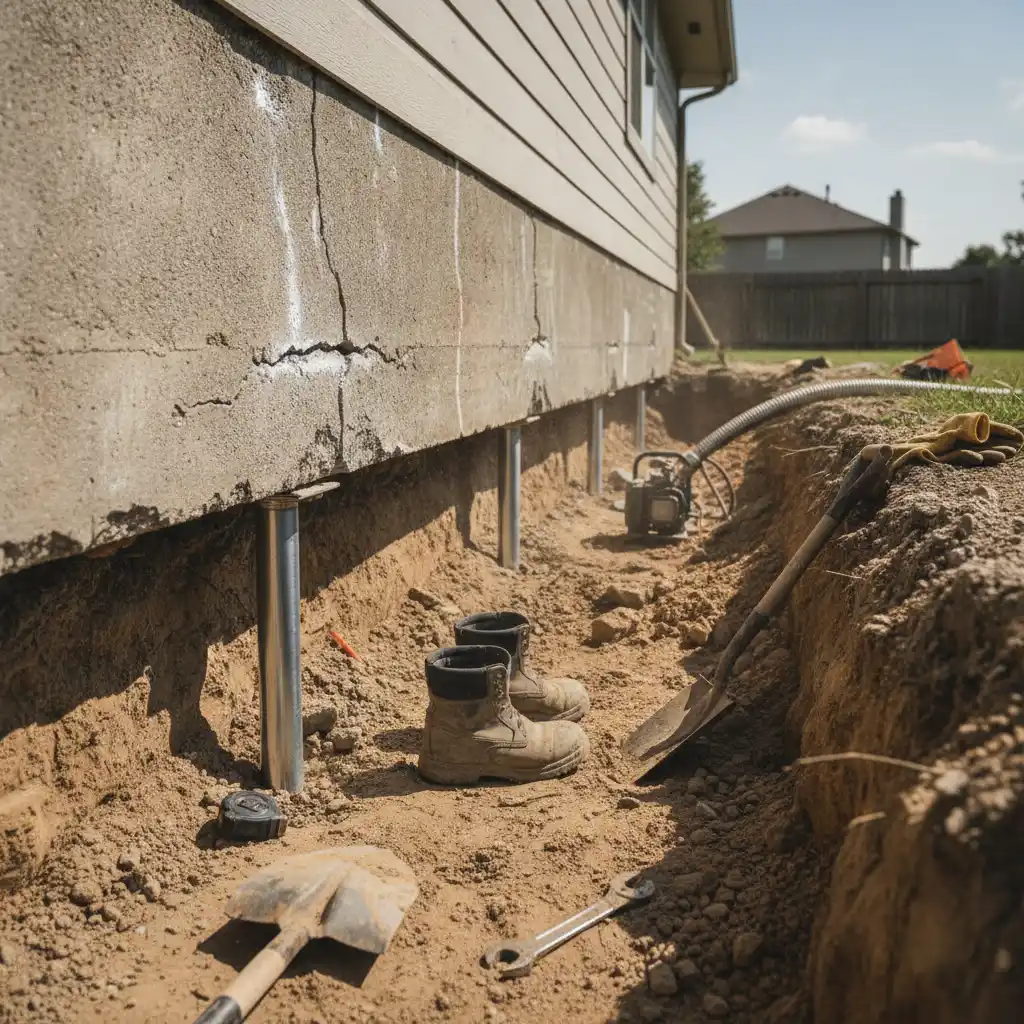
Our team in action — foundation-repair professionals serving Georgetown
Pier and Beam Repair Methods We Use in Georgetown
1. Wood Post and Beam Replacement
For homes in Georgetown’s historic core — many built between 1900 and 1950 — rotted or damaged wood posts and girder beams are replaced with pressure-treated lumber rated for ground contact (UC4B or higher). This method is ideal when the existing pier footings remain stable and only the wood components have deteriorated.
2. Concrete Pier Supplementation
When existing piers have settled or when additional load-bearing capacity is needed, we install new poured concrete piers on properly sized spread footings. This approach is frequently used in Georgetown Village and older sections of Williams Drive where original pier spacing was insufficient by modern standards.
3. Steel Push Pier Installation
For properties where pier and beam foundations have experienced significant settlement into unstable fill soils — common in some newer custom-home areas near Wolf Ranch — driven steel push piers can reach bedrock or load-bearing strata at depths of 15 to 25 feet, providing permanent, engineered support independent of surface soil movement.
4. Helical Pier Installation
Helical piers are screwed into the earth using hydraulic torque equipment and are particularly effective on lighter structures or in areas near Georgetown’s San Gabriel River corridor where saturated soils require a pier that can handle both tension and compression loads without the need for deep predrilled shafts.
5. Crawl Space Encapsulation
Often performed alongside structural repairs, full encapsulation seals the crawl space with reinforced vapor barriers, seals foundation vents, and may include a dehumidifier to maintain relative humidity below 55 percent year-round — critical for preserving restored wood components in Georgetown’s climate.
Ready for Pier and Beam Foundation Repair? Get Your Free Estimate Today.
Round Rock Foundation Repair Group serves Georgetown and the surrounding area — we’ll be on-site within 24 hours.
📞 Call (512) 220-3502Pier and Beam Foundation Repair Cost in Georgetown, TX
One of the most common questions we receive is: What does pier and beam foundation repair cost in Georgetown? Costs vary significantly based on the scope of damage, access conditions, and repair method required, but the following ranges reflect current market pricing in the Georgetown and greater Williamson County area.
- Basic beam or joist sistering and wood replacement: $1,500 – $4,500 for localized repairs on a standard 1,500 sq. ft. crawl space home.
- Full interior pier replacement with re-leveling: $3,500 – $9,000 depending on the number of piers and the degree of floor elevation correction required.
- Steel push pier or helical pier installation: $1,200 – $2,500 per pier, with most Georgetown projects requiring 6 to 12 piers for a total range of $7,200 – $30,000 for comprehensive settlement correction.
- Crawl space vapor barrier replacement: $1,200 – $3,500 for standard 6-mil sheeting on a typical Georgetown home crawl space.
- Full crawl space encapsulation: $4,000 – $12,000 including reinforced liner, vent sealing, and dehumidifier installation.
Georgetown-Specific Cost Factors
Properties in Georgetown’s historic downtown district may carry additional costs due to limited crawl space access heights (sometimes under 18 inches in pre-1940 homes) and the need for hand-digging rather than equipment excavation. Homes in flood-prone areas near the San Gabriel River may also require additional moisture mitigation measures. We provide free, no-obligation on-site estimates — call (512) 220-3502 to schedule yours.
Georgetown Neighborhoods We Serve
Historic Downtown Georgetown
Homes within a half-mile of Georgetown’s National Register-listed town square include some of Williamson County’s oldest residential structures, many built between 1885 and 1940 on original wood pier and beam systems. These properties require careful, historically sensitive repair approaches that preserve original character while modernizing structural support.
Georgetown Village
This established neighborhood east of I-35 sits on deep Blackland Prairie clay and features a mix of 1970s–1990s pier and beam homes that are now entering their most vulnerable decades. Soil movement from the 2011 drought caused measurable pier displacement across multiple streets in this area.
Wolf Ranch and Serenada
These western Georgetown communities sit closer to the limestone terrain of the Edwards Plateau, where shallower bedrock creates different repair challenges — specifically, the need for shorter but more precisely placed piers and attention to drainage away from the shallow rock shelf.
Berry Creek and Sun City Georgetown
Sun City, one of the largest master-planned 55+ communities in the country, includes custom pier and beam homes built from the mid-1990s onward. We serve residents throughout this community with discrete, minimal-disruption repair processes.
We also serve all surrounding communities including Round Rock, Cedar Park, and Pflugerville.
Pier and Beam Foundation Maintenance Tips for Georgetown Homeowners
- Maintain consistent soil moisture: During Georgetown’s dry summers, use a soaker hose set 18 inches from the foundation perimeter to prevent clay shrinkage. Run it 30–45 minutes every 2–3 days during extended dry spells.
- Inspect your crawl space annually: Schedule a visual inspection every spring — after Georgetown’s wet season — checking for standing water, new wood staining, or displaced piers.
- Keep gutters and downspouts clear: Direct water at least 6 feet from the foundation. Georgetown’s intense thunderstorm events can dump 2–4 inches of rain in an hour, overwhelming improperly directed drainage.
- Maintain positive grade: Ensure the soil slopes away from your home at a minimum of 6 inches over 10 feet around the perimeter.
- Replace vapor barriers every 10–15 years: Standard 6-mil polyethylene degrades in Georgetown’s acidic clay environment and should be inspected and replaced on a regular schedule.
- Schedule termite inspections annually: Subterranean termites are active year-round in Williamson County. Keep termite bait stations active around any pier and beam home.
- Avoid planting large trees near the foundation: Live oaks and cedar elms — common in Georgetown landscapes — have aggressive root systems that can draw moisture from beneath piers and disrupt footing soil.
Why Choose Round Rock Foundation Repair Group for Georgetown Pier and Beam Repair
Round Rock Foundation Repair Group has built its reputation specifically within the Central Texas market, serving Georgetown, Round Rock, Cedar Park, Pflugerville, and Austin. Our crews work in Georgetown’s soil and climate conditions every week — we understand the difference between Blackland clay behavior near Georgetown Village and the limestone-influenced terrain in Serenada. That hyperlocal knowledge translates into more accurate diagnoses and more durable repairs.
We use calibrated digital elevation equipment on every project, provide fully itemized written estimates, and never use high-pressure sales tactics. Our free foundation inspection service gives Georgetown homeowners an honest, expert assessment with no obligation to proceed.
Our team handles the full range of pier and beam related services — from crawl space repair and vapor barrier installation to structural foundation repair and commercial foundation repair for Georgetown businesses. Whether you own a 1920s bungalow near the historic square or a modern custom home in Wolf Ranch, we have the experience and equipment to restore your foundation properly. Call (512) 220-3502 to speak with a Georgetown foundation specialist today.
Frequently Asked Questions About Pier and Beam Foundation Repair in Georgetown, TX
How much does pier and beam foundation repair cost in Georgetown, TX?
Costs in Georgetown typically range from $1,500 for minor wood repairs to $30,000 or more for extensive pier replacement and encapsulation on larger properties. The average Georgetown pier and beam project — covering re-leveling and beam work on a 1,600 sq. ft. home — runs between $5,000 and $12,000. We provide free on-site estimates tailored to your specific property.
How long does pier and beam repair take in Georgetown?
Most residential pier and beam repair projects in Georgetown are completed in 2 to 7 business days. Simpler beam replacement jobs may finish in 1 to 2 days, while comprehensive re-leveling with pier installation and crawl space encapsulation may take a full week. We provide a project-specific timeline before any work begins.
Can I stay in my home during pier and beam repairs?
In most cases, yes. Pier and beam repairs are performed entirely from the crawl space below, meaning daily life inside the home is minimally disrupted. You may notice gradual floor elevation changes as the structure is lifted — we recommend temporarily removing fragile items from shelves and walls during the re-leveling phase.
What causes pier and beam foundations to fail specifically in Georgetown?
Georgetown’s expansive Blackland Prairie clay is the primary culprit — it swells during wet winters and springs, then contracts sharply during dry summers, cycling the foundation through repeated stress. Georgetown’s humidity also accelerates wood rot and attracts subterranean termites, both of which weaken the wood structural components of pier and beam systems over time.
How do I know if I have a pier and beam or slab foundation?
Pier and beam homes have a crawl space beneath the structure — typically accessed via a small hatch in the floor or an exterior access panel in the foundation perimeter. If your home was built before 1960 in Georgetown, it is very likely pier and beam. Our inspectors can confirm your foundation type during a free on-site visit.
Does homeowners insurance cover pier and beam foundation repair in Texas?
Standard homeowners insurance policies in Texas typically do not cover foundation repair caused by soil movement, drought, or long-term deterioration. However, damage caused by sudden, accidental events like a plumbing leak beneath the crawl space may be covered. We recommend reviewing your policy and can provide detailed documentation to support any insurance claims you choose to file.
Is pier and beam or slab foundation better for Georgetown homes?
Both have trade-offs in Georgetown’s geology. Pier and beam foundations offer easier access to plumbing and electrical systems and can flex somewhat with soil movement, but they require more ongoing maintenance in Georgetown’s humid, termite-active climate. Slab foundations are lower-maintenance in some respects but can crack under Georgetown’s extreme clay movement. For existing pier and beam homes, proper maintenance and timely repair is the most cost-effective long-term strategy.
How do I find a reliable pier and beam foundation repair company near me in Georgetown?
Look for a company with demonstrated experience in Williamson County’s specific soil conditions, who provides written estimates and post-repair elevation documentation, and who does not subcontract the structural work. Round Rock Foundation Repair Group performs all pier and beam repair work with our own trained crews and serves Georgetown homeowners directly. Call (512) 220-3502 to schedule a free inspection.
Schedule Your Free Pier and Beam Foundation Inspection in Georgetown, TX
Don’t let Georgetown’s expansive clay soils, humid crawl space conditions, or aging wood components compromise the safety and value of your home. Whether you’ve noticed sloping floors, sticking doors, or visible crawl space damage, the experienced team at Round Rock Foundation Repair Group is ready to help.
We serve Georgetown homeowners and business owners throughout Williamson County with honest assessments, detailed repair plans, and skilled craftsmanship. Our free foundation inspection gives you the facts you need — no pressure, no guesswork.
Call us today at (512) 220-3502 to schedule your free on-site inspection or to speak with a Georgetown pier and beam foundation specialist. You can also contact us online and we will respond within one business day. Your foundation deserves expert care — let’s get started.