
Slab Leaks in Georgetown, TX
Structural Slab Leaks Specialists Serving Georgetown, TX
Round Rock Foundation Repair Group detects & repairs slab leaks in Georgetown, TX. Local experts in expansive clay soils. Call (512) 220-3502 today.
- Licensed & Insured
- Locally Owned & Operated
- Free Inspection & Estimate
Request Your
Free EstimateA slab leak is a water or sewer line leak that develops beneath the concrete foundation of your home or commercial building. When pressurized pipes running under your slab crack, corrode, or shift, water can silently erode the soil beneath your foundation for weeks or months before any visible damage appears above ground. In Georgetown, TX, where expansive clay soils and dramatic seasonal moisture swings are facts of life, slab leaks are both common and particularly destructive.
Round Rock Foundation Repair Group specializes in detecting and resolving slab leaks throughout Georgetown and the surrounding communities. Our team understands the unique geological and climatic pressures that Georgetown homeowners face, from the black cotton soils of the Inner Space Corridor to the limestone karst terrain near the San Gabriel River. If you suspect a slab leak, fast, professional action is the difference between a manageable repair and a catastrophic foundation failure.
Call us today at (512) 220-3502 for an expert consultation.
Understanding Slab Leaks in Georgetown, TX
Post-tension and conventionally reinforced concrete slabs became the dominant foundation type in Central Texas beginning in the 1970s, replacing pier-and-beam systems as suburban development accelerated outward from Austin. Georgetown saw explosive residential growth in the decades following, and the vast majority of homes built in master-planned communities like Berry Creek, Teravista, and Georgetown Village sit on concrete slabs that are 4 to 6 inches thick, with copper or CPVC water supply lines and cast-iron drain lines embedded directly beneath them.
Over time, those pipes are subjected to stress from multiple directions. Soil movement pushes and pulls the slab, creating micro-fractures in pipe walls. Electrochemical corrosion eats through copper lines, particularly where pipes contact concrete or soil with high mineral content. Hard water — Georgetown is served by water with hardness levels frequently measured between 200 and 400 parts per million due to the region’s limestone aquifer system — accelerates interior pipe scale buildup and eventual pinhole leaks. Georgetown’s water source, the North Fork San Gabriel River feeding Lake Georgetown, carries naturally high mineral loads that contribute to accelerated corrosion in copper plumbing.
Slab leaks fall into two broad categories. Pressurized supply line leaks involve hot or cold water lines and are often identified by a continuous running sound, unexplained spikes in the water bill, or warm spots on the floor. Drain line leaks involve sewage or gray water lines and are slower to manifest but frequently cause significant void formation beneath the slab before they are discovered. Both types are equally urgent because the water or moisture they introduce destabilizes the subgrade soil that holds your foundation level.
In Georgetown’s older downtown neighborhoods — including blocks platted in the 1880s and 1890s near the Williamson County Courthouse Square — original clay sewer pipe infrastructure is still encountered in renovation projects, adding another layer of vulnerability. Understanding the history of your specific structure is a critical first step in diagnosing and resolving any slab leak event.
Signs You Need Slab Leak Detection or Repair in Georgetown
Plumbing and Water Indicators
- Water meter continues to spin when all fixtures and appliances are off
- Monthly water bills increase by $30 or more with no change in usage habits
- Low water pressure at fixtures throughout the home, not isolated to one faucet
- Sound of running water audible through floors or walls when no water is in use
- Hot spots on tile or hardwood floors, especially in hallways or near bathrooms
Structural and Cosmetic Indicators
- New cracks in drywall, especially diagonal cracks running from door or window corners
- Doors or windows that have suddenly become difficult to open or close
- Visible floor buckling, warping, or soft spots in laminate or hardwood flooring
- Mold, mildew, or musty odors at floor level without an obvious source
Exterior Indicators
- Wet or unusually green patches of grass in a yard that has not been recently irrigated
- Sinkholes or depressions forming adjacent to the foundation perimeter
- Visible foundation cracks that have appeared or widened over a short period
Urgency note: If you observe multiple indicators simultaneously, or if any structural cracking has appeared within days rather than months, contact a slab leak specialist immediately. Georgetown’s expansive soils mean that subsurface water can undermine a slab’s soil support within days under drought conditions.
Our Slab Leak Detection and Repair Process in Georgetown, TX
Initial Consultation and Site Assessment (Day 1 — 1 to 2 Hours)
We begin with a thorough phone consultation to gather information about your home’s age, construction type, and the symptoms you have observed. Upon arrival, our technician reviews available plumbing diagrams, inspects visible foundation conditions, and records baseline readings from your water meter. For Georgetown properties near Lake Georgetown or the San Gabriel River corridor, we also assess current groundwater conditions that could affect our diagnostic approach.
Electronic Leak Detection (Day 1 — 2 to 4 Hours)
We deploy acoustic listening equipment and electronic amplification technology to isolate leak sounds traveling through the slab. Thermal imaging cameras identify temperature anomalies consistent with hot-water supply line leaks. For drain line suspected leaks, we use in-line pipe camera inspection to visually confirm break locations without any excavation. This non-invasive approach is especially important in Georgetown’s newer neighborhoods where beautifully finished tile and hardwood floors would be costly to disturb unnecessarily.
Leak Location Mapping (Day 1 to Day 2)
Once the leak source is confirmed, we map its precise horizontal position beneath the slab and estimate its depth relative to the slab surface. This data informs our repair method recommendation and allows us to provide an accurate written estimate before any work begins.
Soil and Foundation Condition Evaluation (Day 2)
Because Georgetown’s Blackland Clay soils are reactive, we evaluate the soil condition around and beneath the foundation before proceeding with repair. If significant void formation or differential settlement is present, our foundation repair team coordinates a concurrent stabilization plan. Schedule a foundation inspection
Repair Execution (Day 2 to Day 5, Depending on Method)
Repair work is scheduled promptly after plan approval. Most Georgetown slab leak repairs are completed within one to three days of excavation or pipe rerouting initiation. We work systematically to minimize disruption to the household.
Pressure Testing and Verification (Day 5 to Day 6)
All repaired lines are pressure-tested to confirm no secondary leaks exist. We also re-inspect the surrounding slab and soil for evidence of moisture migration that may have gone undetected during initial assessment.
Site Restoration and Final Walkthrough (Day 6 to Day 7)
Concrete patches, landscaping disturbance, and interior flooring affected by access points are restored to pre-repair condition where applicable. We walk the homeowner through all completed work and provide documentation of the repairs performed.
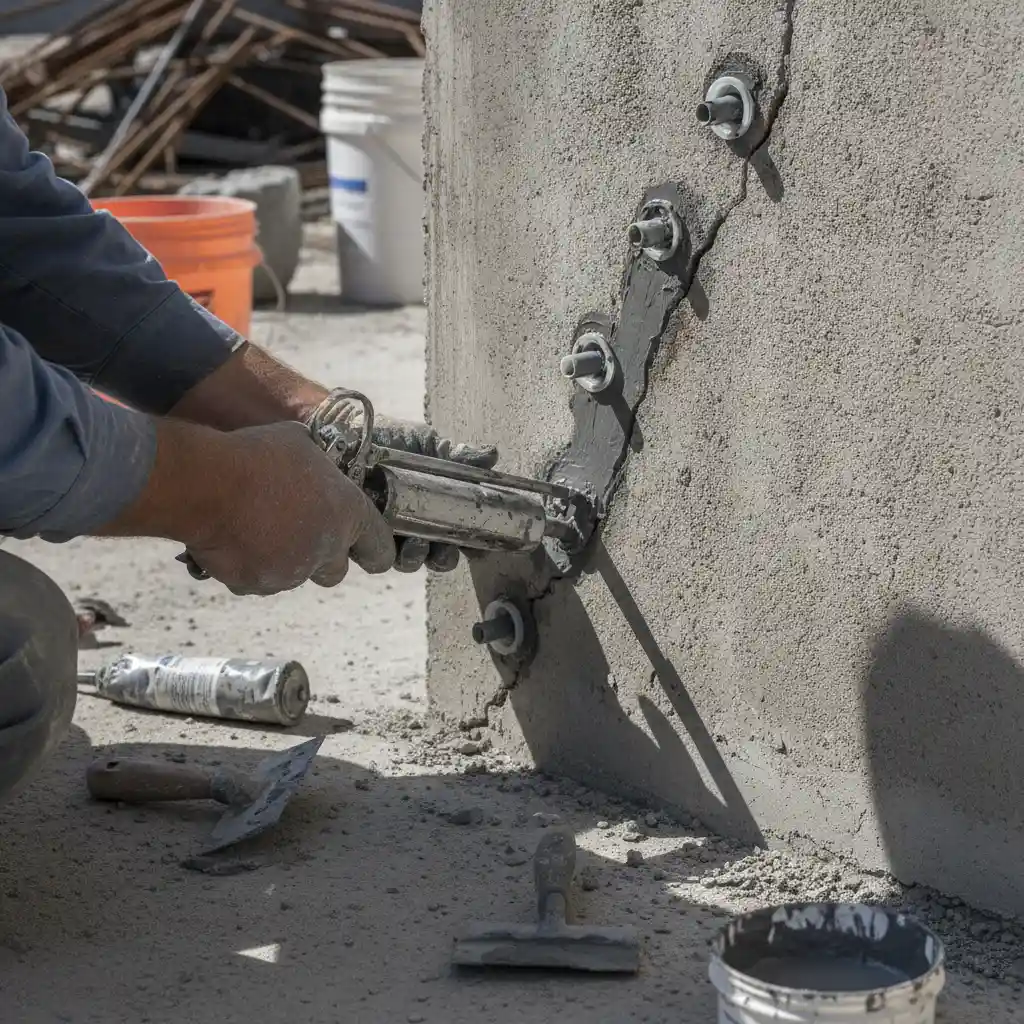
Our team in action — foundation-repair professionals serving Georgetown
Slab Leak Repair Methods Used in Georgetown, TX
Direct Access Excavation Repair
For pinhole leaks or isolated joint failures in accessible locations, we excavate through the slab at the confirmed leak point, repair or replace the damaged pipe section, and patch the concrete. This is the most common method for single-point supply line leaks in Georgetown homes built between 1990 and 2010, where copper pipe runs are generally well-documented and the leak is isolated to one location.
Pipe Rerouting (Tunneling or Overhead)
When a pipe is severely corroded over a long run, or when the leak location is beneath a load-bearing beam or critical structural element, rerouting the line entirely is often more cost-effective than excavating multiple access points. We can reroute lines through interior wall cavities overhead or tunnel beneath the slab perimeter to install new pipe without full interior demolition. This method is frequently the right choice for Georgetown homes in Teravista and Wolf Ranch that have open-plan great rooms with continuous slab runs beneath them.
Epoxy Pipe Lining
For smaller diameter lines where excavation is impractical, epoxy lining involves inserting a flexible liner coated with structural epoxy into the existing pipe and inflating it until the epoxy cures against the pipe wall, creating a pipe within a pipe. This method is well-suited for Georgetown’s older homes near the downtown square where original drain lines run beneath historic flooring that cannot easily be replaced.
Full Repipe
Homes with widespread pipe deterioration — particularly Georgetown homes built in the 1970s and 1980s with original copper supply systems showing multiple active or healed leaks — may benefit most from a full repipe using modern PEX flexible tubing. PEX is highly resistant to freeze-thaw damage, making it an excellent long-term solution given Georgetown’s exposure to winter storm events like Uri.
Ready for Slab Leaks? Get Your Free Estimate Today.
Round Rock Foundation Repair Group serves Georgetown and the surrounding area — we’ll be on-site within 24 hours.
📞 Call (512) 220-3502Slab Leak Repair Cost in Georgetown, TX
Slab leak repair costs in Georgetown vary significantly based on leak type, location, chosen repair method, and the extent of any secondary foundation damage. The following ranges reflect current market conditions in the Georgetown and greater Williamson County area.
- Electronic leak detection only: $250 to $600, depending on the complexity of the diagnostic process and number of zones tested
- Direct access single-point repair (supply line): $1,500 to $4,000, including concrete patching
- Pipe rerouting (partial): $2,500 to $6,500, depending on reroute length and access conditions
- Full repipe (supply lines, 2,000 sq ft home): $8,000 to $15,000
- Epoxy lining (drain line section): $2,000 to $5,000
- Foundation repair following slab leak damage: $3,500 to $20,000 or more, depending on severity of settlement Learn about structural foundation repair
Factors That Affect Your Georgetown Repair Cost
Georgetown’s hard water conditions frequently accelerate pipe interior corrosion, which can mean that what initially appears to be a single-point leak reveals additional compromised sections during repair. Homes in the San Gabriel floodplain may require additional soil remediation before concrete patching, adding $500 to $2,000 to project costs. Homes in established neighborhoods like Berry Creek with mature landscaping may incur additional costs if tunneling is required to protect tree root systems and hardscaping. Many standard homeowner’s insurance policies cover slab leak detection and repair when the leak is sudden and accidental — we can provide the documentation your insurance adjuster needs to process a claim.
Georgetown Neighborhoods We Serve
Wolf Ranch
One of Georgetown’s fastest-growing master-planned communities, Wolf Ranch features homes constructed primarily between 2016 and the present on post-tension slabs. The neighborhood’s position on the western side of Georgetown near State Highway 29 places it on soils transitioning between Blackland Clay and the thinner soils above the Edwards limestone. Slab leaks here frequently involve PVC drain lines and newer CPVC supply runs where improper sleeving through the slab is the root cause.
Teravista
Straddling the Georgetown and Round Rock city limits, Teravista’s homes date from 2003 to 2015 and sit on deep Blackland Clay. The community’s proximity to the Brushy Creek drainage corridor means seasonal moisture fluctuation is pronounced. Explore crawl space repair options for Teravista homes with multi-level construction.
Georgetown Village and Rivery Area
These established central Georgetown neighborhoods include homes from the 1980s and 1990s with original copper supply lines now reaching the end of their service life. Proximity to the San Gabriel River increases groundwater pressure seasonally, accelerating the timeline from first leak to visible foundation impact.
Historic Downtown Georgetown
Properties within the downtown square and surrounding residential blocks, many built between 1880 and 1940, present unique challenges including original clay sewer lines, mixed material plumbing from multiple renovation eras, and foundation types ranging from cut limestone piers to early concrete pads.
Slab Leak Prevention Tips for Georgetown Homeowners
- Monitor your water meter monthly. Record your meter reading, avoid all water use for two hours, and check again. Any movement indicates a leak somewhere in the system.
- Install a whole-home water softener. Georgetown’s high-mineral municipal water accelerates copper pipe corrosion. A softener or inline filter can meaningfully extend pipe lifespan.
- Maintain consistent soil moisture around your foundation year-round. During Georgetown’s summer drought periods, run soaker hoses at the foundation perimeter 2 to 3 times per week to prevent extreme soil shrinkage that stresses pipes.
- Know your water shut-off valve location. In a slab leak emergency, being able to cut water to the home within seconds limits damage dramatically.
- Schedule a plumbing inspection every 5 to 7 years if your home is more than 20 years old, particularly if you have original copper supply lines.
- Insulate exposed pipes before winter. Given Georgetown’s experience with Winter Storm Uri, wrap any pipes in unconditioned spaces and know how to drip faucets when temperatures are forecast below 28°F.
- Address foundation cracks promptly. Cracks in the slab create pathways for soil movement to stress buried pipes. Early foundation patching prevents a chain reaction. Learn about foundation patching
- Avoid planting large trees within 15 feet of the foundation. Live oak and cedar elm roots common in Georgetown landscapes can intrude on drain lines and displace soil supporting your slab.
Why Choose Round Rock Foundation Repair Group for Slab Leaks in Georgetown, TX
Round Rock Foundation Repair Group was built to serve the specific needs of Central Texas homeowners dealing with the region’s notoriously challenging expansive clay soils, hard water systems, and extreme weather cycles. Our team has hands-on experience with every neighborhood and soil type in Georgetown, from the limestone outcroppings near Lake Georgetown to the deep clay profiles of Teravista and the historic foundations of downtown.
We offer a fully integrated approach that no plumbing-only company can match: slab leak detection and repair coordinated with foundation inspection, stabilization, and restoration under one roof. When your slab leak has already caused soil erosion or differential settlement, we don’t hand you off to a separate contractor — we manage the entire repair process from pipe to pier. Commercial foundation repair services are also available for Georgetown’s growing business districts.
We serve Georgetown homeowners with the same urgency and thoroughness we would apply to our own homes. When you call (512) 220-3502, you reach a knowledgeable team member, not an answering service. We offer prompt on-site assessments, transparent written estimates, and clear communication throughout every project. Our work across Round Rock, Cedar Park, Pflugerville, and the greater Austin metro means we bring regional expertise and volume-backed resources to every Georgetown job.
Frequently Asked Questions About Slab Leaks in Georgetown, TX
How do I know if I have a slab leak or just a regular plumbing leak?
A key indicator that the leak is beneath your slab rather than in a wall or fixture line is that your water meter moves even when every faucet, toilet, and appliance in the home is turned off. Additionally, slab leaks often produce sounds that seem to come from the floor itself, or create warm spots on the floor surface. A qualified leak detection technician can confirm the location within a few hours using acoustic and thermal equipment.
How much does slab leak repair cost in Georgetown, TX?
Most residential slab leak repairs in Georgetown range from $1,500 to $6,500 for a single-point repair or reroute. Complex cases involving multiple leak points, significant foundation damage, or full pipe replacement can range from $8,000 to $20,000 or more. Georgetown’s hard water conditions and expansive soils can increase costs compared to markets without those challenges. We provide a written estimate before any work begins.
Will my homeowner’s insurance cover slab leak repair in Georgetown?
Texas homeowner’s insurance policies typically cover sudden and accidental water damage from slab leaks, including detection costs and resulting structural damage. However, they generally do not cover the pipe repair itself, and policies vary widely. We provide detailed documentation and repair reports to support your insurance claim and will work directly with your adjuster if needed.
How long does slab leak repair take?
Electronic detection typically takes two to four hours on the day of service. Repair timelines range from one day for a straightforward single-point excavation to five to seven days for a full repipe or complex rerouting project. We provide a specific timeline estimate in writing after detection is complete.
Can Georgetown’s expansive clay soils cause a slab leak to come back after repair?
Yes, if only the individual leak is repaired without addressing underlying foundation movement or pipe system deterioration, additional leaks can develop. This is especially true for Georgetown homes on deep Blackland Clay. When a home has experienced significant soil movement, we recommend combining slab leak repair with a foundation inspection and, if warranted, stabilization using pressed concrete piers or helical piers. Learn more about home foundation repair
Is slab leak detection in Georgetown destructive?
Modern electronic acoustic detection and thermal imaging are entirely non-invasive. We do not cut into floors or walls during the detection phase. Excavation only occurs after the leak is precisely located and a repair plan is approved by the homeowner.
Do you serve commercial properties in Georgetown with slab leaks?
Yes. We provide slab leak detection and repair for commercial buildings throughout Georgetown, including retail centers, office buildings, and light industrial properties. Commercial slab leaks often involve larger-diameter supply and drain lines and may require after-hours work to minimize business disruption. Contact us about commercial slab leak services
What is the risk of ignoring a small slab leak in Georgetown?
In Georgetown’s reactive clay soils, there is no such thing as a small slab leak that stays small. Even a pinhole leak releasing a fraction of a gallon per hour can saturate the subgrade soil beneath your slab within weeks, causing differential settlement, interior cracking, and door and window misalignment. The repair cost for a slab leak caught early is typically a fraction of the cost when foundation damage is already present. Early action is always the right financial decision.
Contact Round Rock Foundation Repair Group for Slab Leaks in Georgetown, TX
Don’t wait for a slow slab leak to become a major foundation crisis. Round Rock Foundation Repair Group is ready to help Georgetown homeowners and business owners identify and resolve slab leaks quickly, accurately, and affordably. Our team understands Georgetown’s soils, its water quality, its neighborhoods, and the unique pressures your foundation faces through every season.
Call us now at (512) 220-3502 to schedule your slab leak detection appointment. We serve Georgetown, Round Rock, Cedar Park, Austin, Pflugerville, Brushy Creek, and all surrounding communities throughout Williamson and Travis Counties. Prompt response. Transparent pricing. Expert results.
Request a foundation inspection today and take the first step toward protecting your home.