
Crawl Space Repair in Leander, TX
Fast, Reliable Crawl Space Repair in Leander, TX — Licensed & Insured
Need crawl space repair in Leander, TX? Round Rock Foundation Repair Group fixes moisture, piers & rot. Call (512) 220-3502 for a free inspection today.
- Licensed & Insured
- Locally Owned & Operated
- Free Inspection & Estimate
Request Your
Free EstimateCrawl space repair is the process of diagnosing, stabilizing, and restoring the structural integrity of the elevated foundation space beneath your home — a space that, when compromised, can silently threaten your entire property. In Leander, TX, the combination of expansive clay soils, dramatic seasonal moisture swings, and the region’s rapid residential growth has made crawl space problems increasingly common among homeowners across the city.
At Round Rock Foundation Repair Group, we bring deep familiarity with Leander’s unique geological and environmental conditions to every project we undertake. From the established neighborhoods near Hero Way to the newer subdivisions pushing toward Ronald Reagan Boulevard, we understand how local soil composition, drainage patterns, and construction practices affect crawl spaces specifically in this part of Williamson County. When you notice sagging floors, musty odors, or unexplained moisture beneath your home, our team is ready to deliver a thorough inspection and lasting repair solution tailored to Leander’s distinct challenges. Call us today at (512) 220-3502.
Understanding Crawl Space Repair
A crawl space is the shallow, unfinished area between the ground and the first floor of a home — typically ranging from 18 inches to 4 feet in height. Unlike slab-on-grade construction, homes with crawl spaces rely on a network of piers, beams, joists, and girders to support the structure above. When any element of this system weakens or shifts, the consequences ripple upward, affecting floors, walls, and even the roof line.
Crawl space repair encompasses a broad range of interventions, including sistering or replacing damaged floor joists, installing or reinforcing support piers, encapsulating the crawl space with heavy-duty vapor barriers, improving ventilation or transitioning to a sealed conditioned space, and addressing wood rot caused by prolonged moisture exposure. The discipline has evolved considerably since the mid-20th century, when open, unencapsulated crawl spaces were standard practice. Modern building science now recognizes that an uncontrolled crawl space acts as a significant source of moisture, allergens, and energy loss for the entire home above it.
In Leander and the broader Central Texas corridor, crawl space construction was particularly prevalent in homes built between the 1960s and the early 1990s, before slab foundations became the dominant choice for new residential construction. Many of Leander’s older neighborhoods — including sections near the original downtown corridor and properties along FM 2243 — feature pier-and-beam or block-and-beam foundations that include traditional crawl spaces. As these structures age, the interaction between Leander’s notoriously reactive soils, high summer temperatures, and periodic flash flooding creates an accelerated cycle of moisture intrusion and structural movement that demands professional attention.
Understanding that crawl space repair is not a single task but a comprehensive system of solutions is essential for Leander homeowners. Addressing only one symptom — for example, replacing a rotted joist without controlling the moisture source — typically leads to recurring problems within a few years. A holistic approach that accounts for Leander’s specific environment is the only path to a durable result.
Why Crawl Space Repair Is Needed in Leander, TX
Leander’s rapid transformation from a small railroad town into one of the fastest-growing cities in the United States has brought significant attention to its infrastructure — and its soils. The city sits atop and adjacent to the Austin Chalk and Taylor Marl formations, with large portions of residential development built directly over expansive Vertisol clay soils locally known as “black gumbo.” These clays can shrink by as much as 3 to 5 inches vertically during extended drought conditions and swell dramatically — sometimes exerting pressures exceeding 10,000 pounds per square foot — when rainfall returns. This cycle of expansion and contraction is the single greatest driver of crawl space damage in Leander.
The drought conditions that gripped Central Texas from 2010 through 2015, followed by catastrophic rainfall events such as the Memorial Day floods of May 2015 and the Halloween floods of October 2015, subjected Leander properties to extreme soil movement within a compressed timeframe. Homes in neighborhoods like Crystal Falls, located in the western elevation zones of Leander where drainage routes toward Lake Travis tributaries, experienced significant moisture infiltration beneath crawl spaces during these events. Similarly, properties in the Leander Heights area and along the Brushy Creek floodplain corridor saw repeated saturation of crawl space soils, accelerating wood rot and pier settlement.
Leander’s annual average rainfall of approximately 33 inches is delivered unevenly — often arriving in intense bursts during spring and fall while summers remain dry for 60 to 90 consecutive days. This feast-or-famine moisture pattern means crawl space vapor barriers and drainage systems face maximum stress precisely when they are most needed. Without proper encapsulation, relative humidity levels beneath Leander homes routinely exceed 80 percent during humid periods, creating ideal conditions for wood-destroying fungal growth and attracting termites and other pests common to Williamson County.
New construction in the Bryson, Block House Creek, and Leander Village communities has predominantly used slab foundations, but older stock in central Leander and properties along the original rail corridor near Bagdad Road frequently present crawl space challenges related to aging pier systems. Many of these piers were set in the 1970s and 1980s without the benefit of modern soil engineering data, leaving them undersized for the actual load-bearing demands of Leander’s reactive clays. As these piers settle unevenly, floors sag, interior doors stick, and structural beams begin to split or deflect beyond acceptable limits — issues that compound quickly if left unaddressed.
The combination of aggressive soil chemistry, periodic flooding, summer heat that drives moisture upward through the soil column, and an aging housing stock makes crawl space repair not merely a reactive maintenance task in Leander, but a proactive investment in long-term structural stability.
Signs You Need Crawl Space Repair in Leander
Structural Warning Signs
- Floors that bounce, sag, or feel noticeably soft underfoot — particularly in central rooms away from load-bearing walls
- Interior doors and windows that stick, fail to latch, or have developed visible gaps at their frames
- Diagonal cracks running from the corners of door and window openings upward toward the ceiling
- Visible separation between walls and ceilings, or between baseboards and the floor
Moisture and Environmental Warning Signs
- Persistent musty or earthy odor inside the home, especially near the floor level
- Visible mold or mildew on lower wall surfaces, carpeting, or hardwood flooring
- Standing water, soil erosion, or pooling observed in or near the crawl space opening
- Condensation forming on pipes or ductwork located beneath the first floor
- Unexplained increases in heating or cooling costs during Leander’s summer or winter extremes
Urgent Indicators Requiring Immediate Inspection
- Visibly leaning, cracked, or missing support piers beneath the structure
- Wood beams or joists showing dark discoloration, crumbling texture, or soft spots indicating advanced rot
- Pest or rodent activity beneath the home, which often accelerates structural degradation
If you observe any of these signs at your Leander property, scheduling a professional crawl space inspection promptly can prevent minor issues from escalating into major structural failures.
Our Crawl Space Repair Process in Leander
Comprehensive On-Site Inspection (Day 1 — 2 to 3 Hours)
Our certified inspector visits your Leander home and conducts a full assessment of the crawl space, measuring floor deflection, evaluating existing pier condition, identifying moisture intrusion sources, and documenting any wood damage. We use moisture meters calibrated for Central Texas humidity ranges and take soil core samples near the access point when differential settlement is suspected.
Customized Repair Plan and Written Estimate (Days 1–3)
Based on inspection findings, we develop a detailed scope of work specific to your property’s soil conditions, foundation type, and symptom severity. We present clear cost ranges and explain which repairs are structurally urgent versus preventative maintenance, giving Leander homeowners the information needed to make confident decisions.
Site Preparation and Access (Day of Work — 2 to 4 Hours)
Our crew prepares the work site, establishes safe crawl space access, and removes any standing water or debris. In Leander properties near the Brushy Creek drainage basin, we often install temporary sump pumping during this phase to ensure a dry working environment.
Structural Repairs (1 to 3 Days Depending on Scope)
This phase includes installation of new or supplemental support piers (using helical or concrete options suited to Leander’s clay soils), sistering of damaged joists, replacement of rotted beams, and re-leveling of settled sections. All materials meet or exceed Williamson County building code requirements.
Moisture Control Installation (1 Day)
We install a minimum 20-mil reinforced vapor barrier across the crawl space floor, seal seams with moisture-resistant tape, and address ventilation — either improving cross ventilation or transitioning to a fully sealed conditioned crawl space based on your home’s specific configuration.
Final Inspection and Documentation (Day of Completion — 1 to 2 Hours)
We conduct a post-repair walkthrough with the homeowner, document all work completed with photographs, and provide maintenance recommendations tailored to Leander’s seasonal moisture cycles.
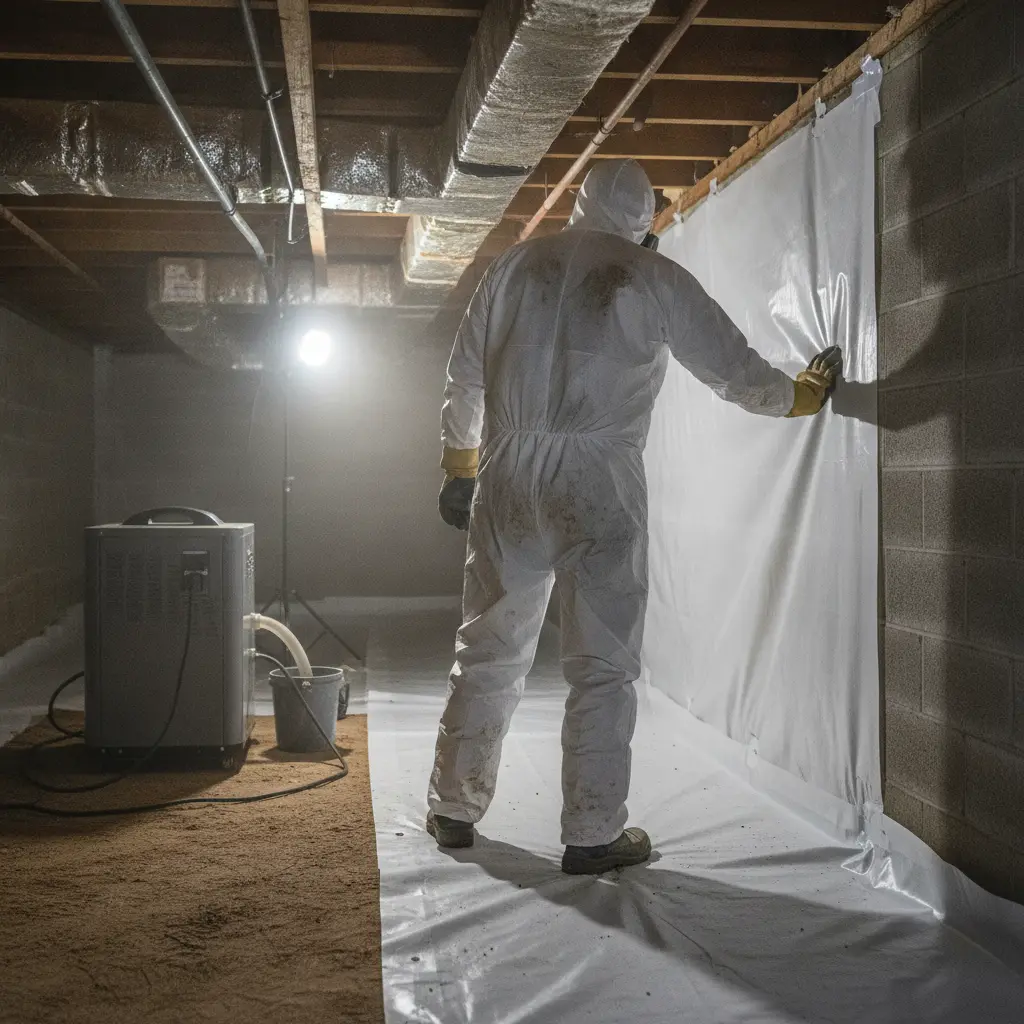
Our team in action — foundation-repair professionals serving Leander
Crawl Space Repair Methods and Approaches
Pier Installation and Reinforcement
When existing piers have settled due to Leander’s expansive clay movement, we install helical steel piers or reinforced concrete piers driven to stable load-bearing depth — typically 15 to 25 feet below grade in Williamson County soils. Helical piers are particularly effective where soil access is limited, as they can be installed with compact equipment suited to tight crawl spaces.
Floor Joist Sistering and Beam Replacement
Damaged or undersized joists are reinforced by fastening new dimensional lumber alongside existing members. In cases of severe rot — common in Leander properties that experienced repeated flooding — full beam or girder replacement using pressure-treated lumber rated for ground-contact exposure is performed.
Crawl Space Encapsulation
Full encapsulation with a reinforced vapor barrier system is our most recommended moisture solution for Leander homes due to the area’s extreme seasonal humidity swings. This method seals the crawl space from ground moisture, dramatically reducing relative humidity beneath the structure and inhibiting mold and wood rot.
Drainage and Sump Pump Systems
For Leander properties near floodplain zones or low-lying areas prone to water infiltration, we install interior French drain channels and sump pump systems within the crawl space to actively manage water intrusion during heavy rainfall events.
Ventilation Improvements
Where full encapsulation is not appropriate, we improve passive cross-ventilation by adding or enlarging foundation vents, ensuring compliance with the one-square-foot-per-150-square- foot-of-crawl-space standard required by current building codes in Texas.
Ready for Crawl Space Repair? Get Your Free Estimate Today.
Round Rock Foundation Repair Group serves Leander and the surrounding area — we’ll be on-site within 24 hours.
📞 Call (512) 220-3502Crawl Space Repair Cost in Leander, TX
Crawl space repair costs in Leander, TX vary significantly based on the scope of damage, the size of the crawl space, and the specific methods required. Below are general price ranges based on current market conditions in the Leander and greater Williamson County area:
- Basic moisture barrier installation: $1,500 – $4,000 for a standard single-story home with a crawl space up to 1,000 square feet
- Full crawl space encapsulation: $5,000 – $15,000 depending on square footage, access difficulty, and drainage requirements
- Individual pier repair or replacement: $500 – $1,500 per pier, with most Leander homes requiring between 3 and 10 pier interventions
- Joist sistering or beam replacement: $1,000 – $6,000 depending on linear footage of affected framing
- Comprehensive structural and moisture repair: $8,000 – $30,000 for extensive projects involving pier systems, wood replacement, and full encapsulation
Leander-specific pricing factors include the depth required to reach stable bearing soils (which can increase pier installation costs by 20 to 30 percent compared to areas with shallower stable layers), the cost of hauling debris along congested growth corridors like US-183A, and the premium for pressure-treated materials suited to Williamson County’s soil chemistry.
We provide written estimates at no charge following our inspection. For a personalized Crawl Space Repair in Leander, TX cost assessment, contact us at (512) 220-3502. Schedule a Free Inspection
Leander Neighborhoods We Serve
Crystal Falls
Located in western Leander along the elevated terrain near Crystal Falls Parkway, this master-planned community features homes built primarily from the early 2000s onward. While most use slab foundations, older sections and custom homes on larger lots occasionally feature crawl spaces with drainage challenges related to the area’s sloped topography and proximity to Lake Travis watershed tributaries.
Block House Creek
One of Leander’s more established planned communities, with construction dating to the late 1980s and 1990s. Homes here sit on soils with moderate-to-high clay content, and crawl space pier settlement is a documented issue among the community’s older pier-and-beam properties.
Central Leander / Historic Corridor
Properties along and near South Bagdad Road and FM 2243 include some of the city’s oldest housing stock, with homes dating to the 1950s through 1970s. These structures almost universally feature traditional crawl spaces with original concrete block piers that require evaluation and often reinforcement given their age and the movement of Leander’s reactive soils.
Bryson
A newer community in northern Leander near Ronald Reagan Boulevard, Bryson homes are predominantly slab construction, but the community’s position over active clay soils means moisture management beneath structures remains a concern for any pier-and-beam properties in adjacent transition zones.
Crawl Space Maintenance Tips for Leander Homeowners
- Inspect your crawl space twice annually — ideally in late spring after Leander’s rainy season and again in late fall before winter temperature drops. Look for standing water, condensation on surfaces, and any changes in pier or beam condition.
- Maintain consistent soil moisture around your foundation during Leander’s dry summers by using a soaker hose system set 18 inches from the foundation perimeter. This slows the dramatic soil shrinkage that destabilizes crawl space piers.
- Keep gutters and downspouts clear and direct downspout discharge at least 6 feet from the foundation to reduce saturation beneath the crawl space during spring storms typical to the Leander area.
- Ensure positive drainage grading around your home’s perimeter, sloping soil away from the foundation at a minimum 6-inch drop over the first 10 feet.
- Monitor interior humidity levels in rooms above the crawl space. Readings consistently above 55 percent during summer months may indicate vapor barrier failure or inadequate ventilation beneath the structure.
- Seal crawl space vents during extended drought periods to limit hot, dry air exchange that can accelerate wood shrinkage in framing members.
- Address plumbing leaks immediately. A slow drip beneath a Leander crawl space can saturate soils and trigger localized pier movement within a single season.
Why Choose Round Rock Foundation Repair Group for Crawl Space Repair in Leander
Round Rock Foundation Repair Group has built its reputation by developing deep expertise in the specific soil and climate conditions of Williamson County and the greater Central Texas region. We do not apply generic repair templates — every crawl space repair plan we develop for Leander homeowners reflects the actual conditions found beneath your specific property, from the clay content of your soil to the drainage patterns of your particular lot.
Our team is thoroughly familiar with Leander’s neighborhood-by-neighborhood construction history, the performance characteristics of materials used in local homes across different decades, and the seasonal patterns that most frequently trigger crawl space failures in this part of Texas. We carry full liability insurance and work in compliance with all applicable Williamson County building requirements.
We also serve homeowners throughout the broader region, including Cedar Park, Georgetown, Austin, Pflugerville, Brushy Creek, and the Avery Ranch and Anderson Mill communities. Wherever you are in our service area, you receive the same commitment to honest assessment, transparent pricing, and work quality that stands up to Leander’s demanding environment. Learn More About Our Crawl Space Services
Call us at (512) 220-3502 to schedule your inspection.
Frequently Asked Questions About Crawl Space Repair in Leander, TX
How much does crawl space repair cost in Leander, TX?
Costs range from approximately $1,500 for basic vapor barrier installation to $30,000 or more for comprehensive projects involving structural pier work, joist replacement, and full encapsulation. The average mid-range project for a Leander home with moderate pier settling and moisture intrusion typically falls between $6,000 and $14,000. We provide free written estimates after a thorough on-site inspection.
How long does crawl space repair take in Leander?
Most residential crawl space repair projects in Leander are completed within 1 to 4 days. Complex projects involving extensive pier installation or full encapsulation of a large crawl space may take up to one week. We provide a specific timeline estimate as part of your written repair plan.
Why are crawl space problems so common in Leander specifically?
Leander sits over highly expansive Vertisol clay soils that shrink and swell dramatically with moisture changes. Combined with the city’s feast-or-famine rainfall pattern — dry summers followed by intense spring storms — these soils place extraordinary stress on crawl space pier systems and allow moisture to accumulate beneath homes at rates higher than many other parts of Texas.
Can I encapsulate my crawl space myself?
While basic vapor barrier installation may seem straightforward, professional encapsulation in Leander requires accurate sealing of all penetrations, proper management of ventilation transitions, and selection of materials rated for the specific humidity and soil conditions present in Williamson County. Improper installation can trap moisture against wood framing, accelerating the very damage it is intended to prevent.
Will crawl space repair affect my homeowner’s insurance?
In most cases, professionally documented crawl space repairs — particularly encapsulation and structural improvements — can positively influence your home’s insurability and potentially reduce premiums related to moisture and structural risk. We provide full documentation of all work completed to support any insurance or home sale disclosure needs.
Do I need a permit for crawl space repair in Leander?
Structural repairs involving pier replacement or installation typically require a permit from the City of Leander’s Building Inspections department. Moisture control and vapor barrier work generally does not require a separate permit. Our team manages the permit application process as part of qualifying structural repair projects.
How do I find crawl space repair near me in Leander?
Round Rock Foundation Repair Group serves all of Leander, TX and surrounding communities throughout Williamson County and greater Austin. You can reach our local team directly at (512) 220-3502 to schedule an inspection at your property. View Our Full Service Area
How do I know if my crawl space repair is urgent?
Sagging or bouncing floors, visible pier damage, standing water beneath the structure, and strong musty odors that persist indoors are all indicators that inspection should occur within days rather than weeks. In Leander’s climate, delays during the humid spring season can result in significant additional wood damage within a single moisture cycle.
Schedule Your Crawl Space Inspection in Leander, TX Today
If you have noticed soft floors, musty odors, or any of the warning signs described above, do not wait for the problem to worsen through Leander’s next moisture cycle. Round Rock Foundation Repair Group is ready to dispatch a certified inspector to your Leander property, assess the full scope of your crawl space condition, and provide a clear, written repair plan with transparent pricing.
We serve all Leander neighborhoods as well as Cedar Park, Georgetown, Round Rock, Austin, Pflugerville, Brushy Creek, and surrounding communities throughout the region.
Call us now at (512) 220-3502 to speak with a local specialist and schedule your free crawl space inspection. Request a Free Estimate Online