
Wall cracks are one of the most visible and alarming signs that a home or commercial building may be experiencing foundation distress. Whether they appear as hairline fractures above doorways, diagonal gaps along staircase walls, or wide horizontal splits in basement or crawl space walls, these cracks communicate that the structural integrity of your property deserves immediate professional attention.
In Cedar Park, TX, the combination of expansive clay soils, frequent drought-and-rain cycles, and rapid residential growth over the past two decades creates conditions that put local homes under unique and persistent stress. Round Rock Foundation Repair Group has extensive experience diagnosing and resolving wall crack issues across Cedar Park and the greater Austin metropolitan area. Our team understands the local geology, the dominant building styles, and the seasonal patterns that drive foundation movement in this region.
If you have noticed new or worsening cracks in your walls, do not wait. Call us today at (512) 220-3502 for a thorough on-site evaluation. Schedule a Foundation Inspection
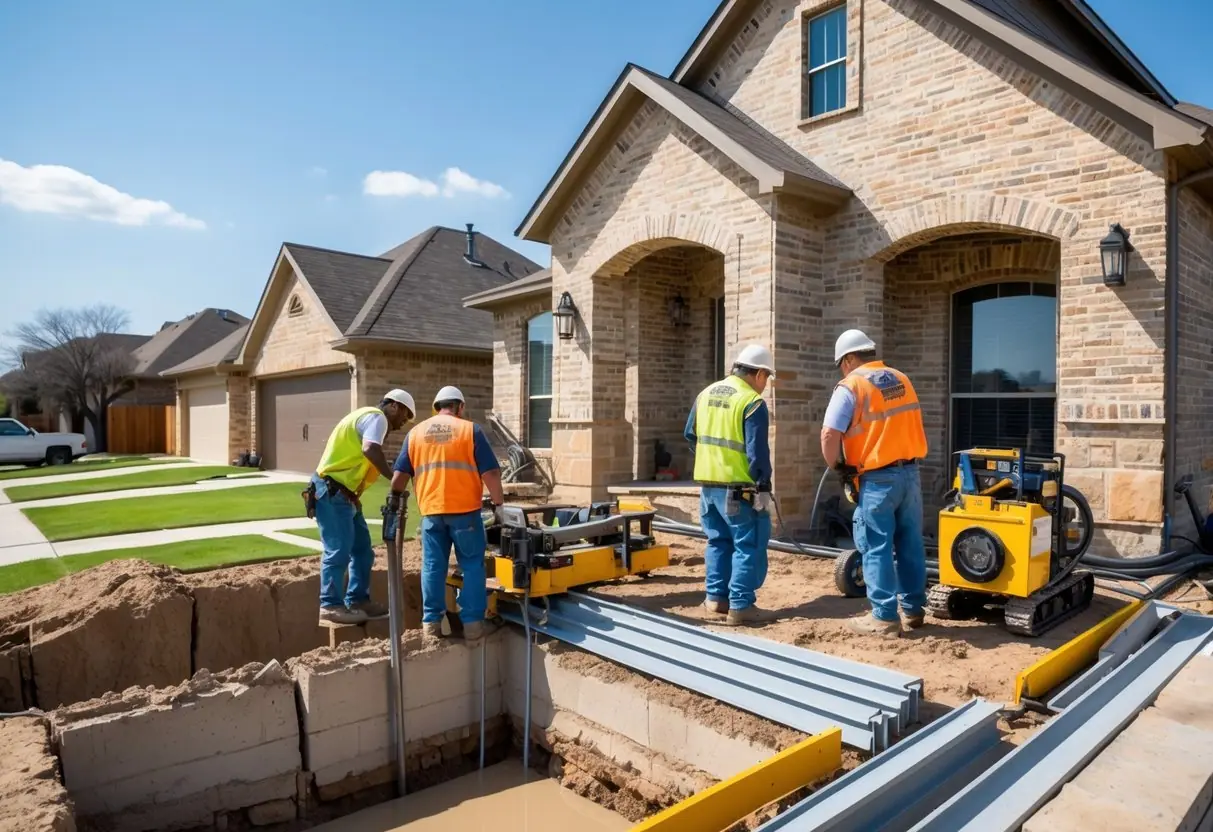
Understanding Wall Cracks and What They Mean for Your Home
Wall cracks are fractures that develop in interior drywall, plaster, brick veneer, concrete block, or poured concrete walls. While some minor cosmetic cracking is a normal byproduct of a building settling during its first few years of life, cracks that grow wider than 1/4 inch, run diagonally from window and door corners, appear in stair-step patterns along masonry, or are accompanied by doors and windows that stick or fail to close properly are strong indicators of a deeper structural problem.
Historically, wall cracks in residential construction were often dismissed as “settling cracks” and patched with joint compound without any investigation into the underlying cause. Modern structural engineering and geotechnical science have demonstrated that this approach is shortsighted. A crack that is patched without addressing the foundational movement causing it will reopen — often wider — within months. Over time, untreated foundation movement can compromise load-bearing walls, damage plumbing and HVAC systems routed through walls, and reduce a home’s resale value by tens of thousands of dollars.
Read moreShow less
In Cedar Park and the broader Williamson County area, the prevalence of wall crack issues is notably high compared to national averages. The Texas Real Estate Commission estimates that foundation-related disclosures appear in a significant percentage of home sales in Central Texas. The Texas A&M AgriLife Extension has documented that Williamson County’s dominant soil profile — predominantly Houston Black and Austin soils classified as Vertisols — shrinks dramatically during dry periods and swells with equal force after rain, generating lateral and vertical pressures on foundations that few building materials can indefinitely resist.
Cedar Park’s housing stock is predominantly single-family homes built between 1990 and the present, most on slab-on-grade concrete foundations. A smaller but meaningful portion of older homes and commercial buildings utilize pier-and-beam or crawl space construction. Both foundation types are susceptible to the region’s challenging soil dynamics, and both will eventually display wall cracks if foundation movement goes unaddressed.
Understanding the type of crack — its orientation, width, length, and location — is the first step toward an accurate diagnosis. Learn more about our professional foundation inspection process.
Why Wall Cracks Are a Persistent Problem in Cedar Park, TX
Expansive Clay Soils
The dominant soil type beneath Cedar Park is classified by the USDA Natural Resources Conservation Service as Houston Black clay and Heiden clay — both members of the Vertisol order. These soils contain high concentrations of smectite minerals, which absorb water molecules and expand by volume. During a wet season, Vertisol soils in the Cedar Park area can expand as much as 4 to 6 inches vertically. During a prolonged drought, that same soil shrinks and pulls away from foundation edges, creating voids that allow foundation slabs to shift, tilt, or crack. This expansion-and-contraction cycle repeats seasonally and is the single greatest driver of foundation movement — and therefore wall cracks — in the region.
Drought Conditions and the 2011 and 2022 Events
Texas experienced one of its most severe single-year droughts in recorded history in 2011, with Williamson County recording rainfall deficits exceeding 15 inches below the annual average of approximately 34 inches. The prolonged dryness caused dramatic soil shrinkage beneath thousands of Cedar Park foundations. A second significant drought event occurred in 2022, when Cedar Park recorded multiple consecutive months with less than 1 inch of rainfall, again triggering widespread soil movement. Many homeowners first noticed diagonal wall cracks, sticking doors, and sloping floors in the months following both of these events.
The Freeze Event of February 2021
Winter Storm Uri in February 2021 subjected Cedar Park to temperatures as low as 2°F — well outside the range the local infrastructure and soil profile are engineered to handle. Frozen ground and burst pipes introduced sudden, localized moisture into already-stressed foundations, accelerating existing movement patterns and initiating new cracking in walls throughout neighborhoods including Avery Ranch, Forest Creek, and Sendero Springs.
Topographical Variability
Cedar Park’s terrain includes both relatively flat limestone plateau areas near the 183A Toll Road corridor and gently rolling terrain toward the southwest near the Lake Travis watershed. Homes built on sloped lots — common in Cat Hollow and areas adjacent to Brushy Creek — experience differential settlement, where one side of the foundation moves at a different rate than the other. This differential movement is a primary cause of the diagonal and stair-step cracks most commonly seen in Cedar Park homes.
Drainage and Irrigation Patterns
Inconsistent moisture around foundations — whether from lawn irrigation that soaks one side of a slab, poor gutter drainage that pools water against a foundation, or maturing tree roots drawing moisture from beneath a slab — creates uneven soil moisture levels that amplify differential settlement. Cedar Park’s rapid development has left some neighborhoods with immature drainage infrastructure, compounding these effects.
Explore our structural foundation repair solutions for Cedar Park homes.
Free, no-obligation estimates
Talk to Round Rock Foundation Repair Group
Tell us what you need and we’ll take it from there.
Signs You Need Wall Crack Repair in Cedar Park
Visual Indicators
- Diagonal cracks running at 45-degree angles from corners of windows or door frames
- Horizontal cracks in brick veneer, concrete block, or poured concrete walls wider than 1/8 inch
- Stair-step cracking along mortar joints in brick or block exterior walls
- Vertical cracks in drywall that have grown or reappeared after previous patching
- Cracks wider than 1/4 inch in any wall material — interior or exterior
Functional Symptoms
- Doors and windows that stick, jam, or no longer latch properly
- Gaps between walls and ceilings or between walls and floors
- Floors that feel noticeably uneven or slope toward one side of the room
- Separation between brick veneer and wood trim on the exterior
Urgency Indicators
- Any crack accompanied by a wall bowing inward — seek immediate evaluation
- Cracks that have grown measurably within a matter of weeks
- Wall cracks discovered in combination with plumbing leaks beneath the slab
- New cracks appearing following significant rain after a prolonged dry period — a hallmark pattern in Cedar Park
Contact us for a same-week inspection if you recognize these warning signs.
Our process
Our Wall Crack Repair Process in Cedar Park
Round Rock Foundation Repair Group follows a methodical, multi-step process designed to address not just the visible crack but the underlying cause of movement. Every project in Cedar Park is adapted to local soil conditions, building construction type, and the specific pattern of distress identified during inspection.
- 01
Comprehensive On-Site Inspection (1–2 Hours)
Our licensed inspector visits your Cedar Park property, documents all visible cracks with photographs and measurements, assesses elevation differences across the foundation using a digital floor level survey, and evaluates exterior drainage, soil conditions, a
- 02
Soil and Site Analysis (1–3 Days)
Using publicly available USDA soil survey data combined with our own on-site observations, we characterize the soil profile beneath your property. For Cedar Park homes in the Houston Black clay zone, we factor in the documented shrink-swell potential of the lo
- 03
Custom Repair Plan and Proposal (1–2 Days)
We prepare a written repair plan that identifies the root cause of movement, recommends the most appropriate repair method, and provides transparent pricing. We explain our findings in plain language and answer all questions before any work begins.
- 04
Foundation Stabilization (1–5 Days Depending on Scope)
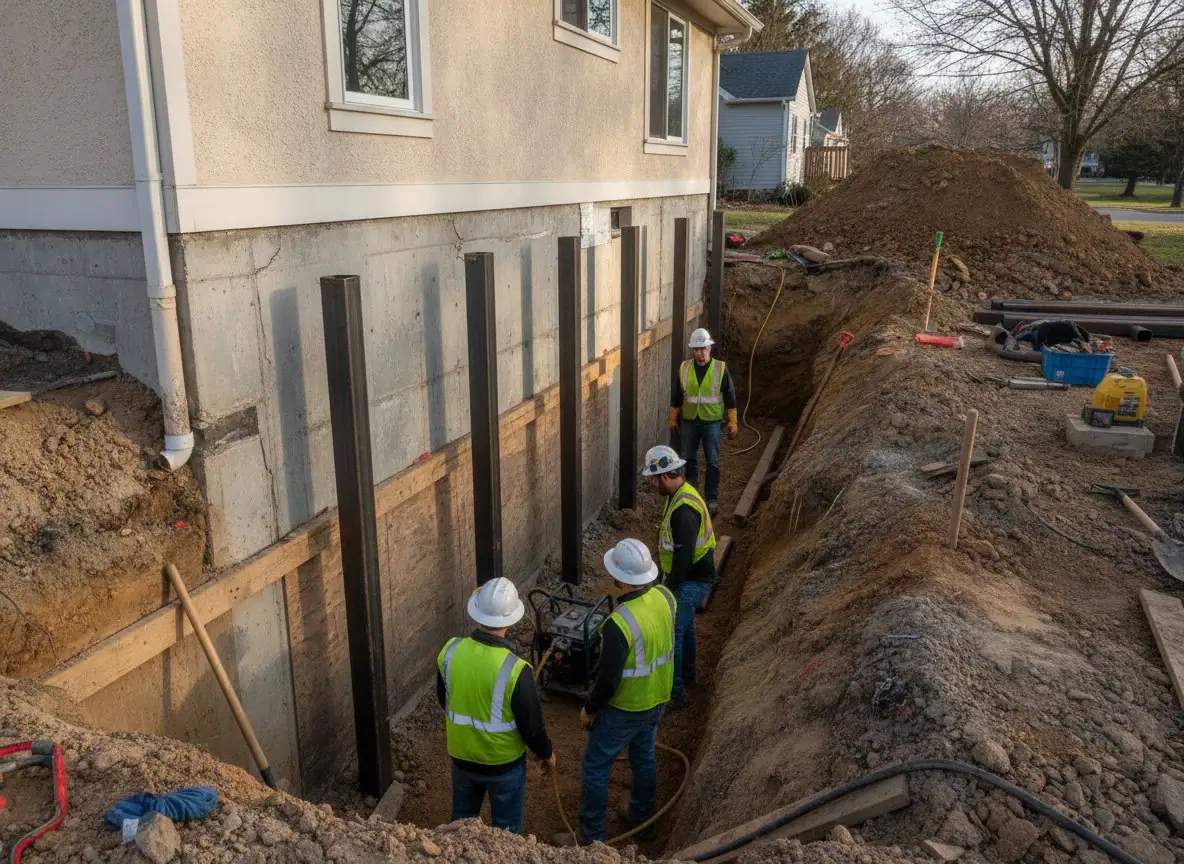
Before wall cracks can be permanently repaired, the foundation movement causing them must be stopped. This step may involve installation of steel piers, helical piers, pressed concrete piles, or internal drainage systems, depending on the specific diagnosis.
- 05
Wall Crack Remediation (1–2 Days)
Once the foundation is stabilized, we address the wall cracks directly using the appropriate method — epoxy injection, polyurethane foam, carbon fiber straps, or masonry tuckpointing — depending on crack type, width, and wall material.
- 06
Post-Repair Drainage and Moisture Management Recommendations
We provide written recommendations for grading, gutter extensions, and irrigation adjustments specific to your Cedar Park property to minimize future soil movement.
- 07
Final Inspection and Documentation
A final walkthrough confirms all work meets our quality standards. We provide documentation suitable for disclosure during a future home sale. Learn about our comprehensive foundation restoration services.
Wall Crack Repair Methods Used in Cedar Park
Epoxy Injection
Best suited for structural concrete cracks where the concrete has stopped moving and a rigid, load-bearing repair is required. Epoxy cures to a strength exceeding that of the surrounding concrete. Used primarily in Cedar Park’s poured concrete foundations and retaining walls.
Polyurethane Foam Injection
Ideal for active cracks where slight movement is expected to continue, and for cracks in areas prone to water intrusion. Polyurethane foam is flexible after curing and creates a watertight seal. Commonly used in crawl space walls and basement perimeter walls in older Cedar Park and Georgetown-area homes.
Carbon Fiber Straps and Wall Anchors
Applied to bowing or leaning walls — particularly horizontal cracks in block or poured concrete walls — where lateral soil pressure is pushing the wall inward. Carbon fiber straps are bonded to the wall surface and stabilize it against further inward movement without requiring excavation. This method is frequently specified for Cedar Park commercial properties and older residential structures.
Masonry Tuckpointing and Crack Stitching
Used for stair-step cracks in brick veneer and concrete block construction. Failed mortar joints are removed to a depth of approximately 3/4 inch and replaced with fresh, color-matched mortar. For structural stair-step cracks, helical crack stitching bars are embedded across the crack to knit the masonry together.
Interior Drywall and Plaster Repair
After structural causes are addressed, cosmetic wall repairs restore your interior finishes to pre-damage condition. See our foundation patching and cosmetic repair options.
Wall Crack Repair Cost in Cedar Park, TX
One of the most common questions we receive is: what does wall crack repair cost in Cedar Park? The honest answer is that cost depends heavily on the root cause of the cracking and the scope of foundation stabilization required. Below are general ranges based on our work throughout Williamson County and the greater Austin area.
Cedar Park Neighborhoods We Serve
Avery Ranch
One of Cedar Park’s largest master-planned communities, Avery Ranch features homes primarily built between 2002 and 2015 on slab foundations. The neighborhood’s position on gently rolling terrain with Vertisol clay soils makes differential settlement and diagonal wall cracking particularly common, especially in homes built on the community’s southern slopes.
Forest Creek
Situated near the Round Rock border, Forest Creek’s homes — built largely between 1995 and 2008 — have shown elevated rates of foundation distress since the 2011 drought. Stair-step brick veneer cracking and sticking doors are the most reported symptoms in this established neighborhood.
Sendero Springs
A newer planned community in northern Cedar Park, Sendero Springs homes built after 2005 sit on soils with significant clay content near seasonal drainage corridors. Poor lot-level drainage in some sections has accelerated differential settlement.
Cat Hollow and Brushy Creek
These adjacent communities along Brushy Creek feature homes on sloped lots with mixed soil profiles. The combination of topographic relief and clay soils creates persistent differential settlement challenges. Crawl space issues are also common in this area — learn about our crawl space repair services.
Preventing Wall Cracks: Maintenance Tips for Cedar Park Homeowners
- Maintain consistent soil moisture year-round. During Cedar Park’s hot, dry summers — when temperatures regularly exceed 100°F — run drip irrigation along your foundation perimeter to prevent dramatic soil shrinkage. Aim to keep soil within 18 inches of the foundation consistently moist but not saturated.
- Extend downspouts at least 4 to 6 feet from the foundation. Direct roof runoff well away from the building perimeter to prevent localized soil oversaturation on one side of the slab.
- Maintain positive grade around the perimeter. The soil surface should slope away from the foundation at a minimum of 1 inch per foot for the first 6 feet.
- Manage large trees. Live oaks and cedar elms common to Cedar Park landscaping draw significant moisture from the soil within their root zones. Plant large trees at least 15 feet from the foundation.
- Inspect caulking around windows and doors annually. Failed caulk allows water infiltration that can erode soils at the foundation edge.
- Monitor known cracks with pencil marks and dates. Documenting whether a crack is growing helps our inspectors assess urgency.
- Schedule a professional foundation inspection every 3 to 5 years, especially following significant drought events like those of 2011 and 2022. Book your inspection here.
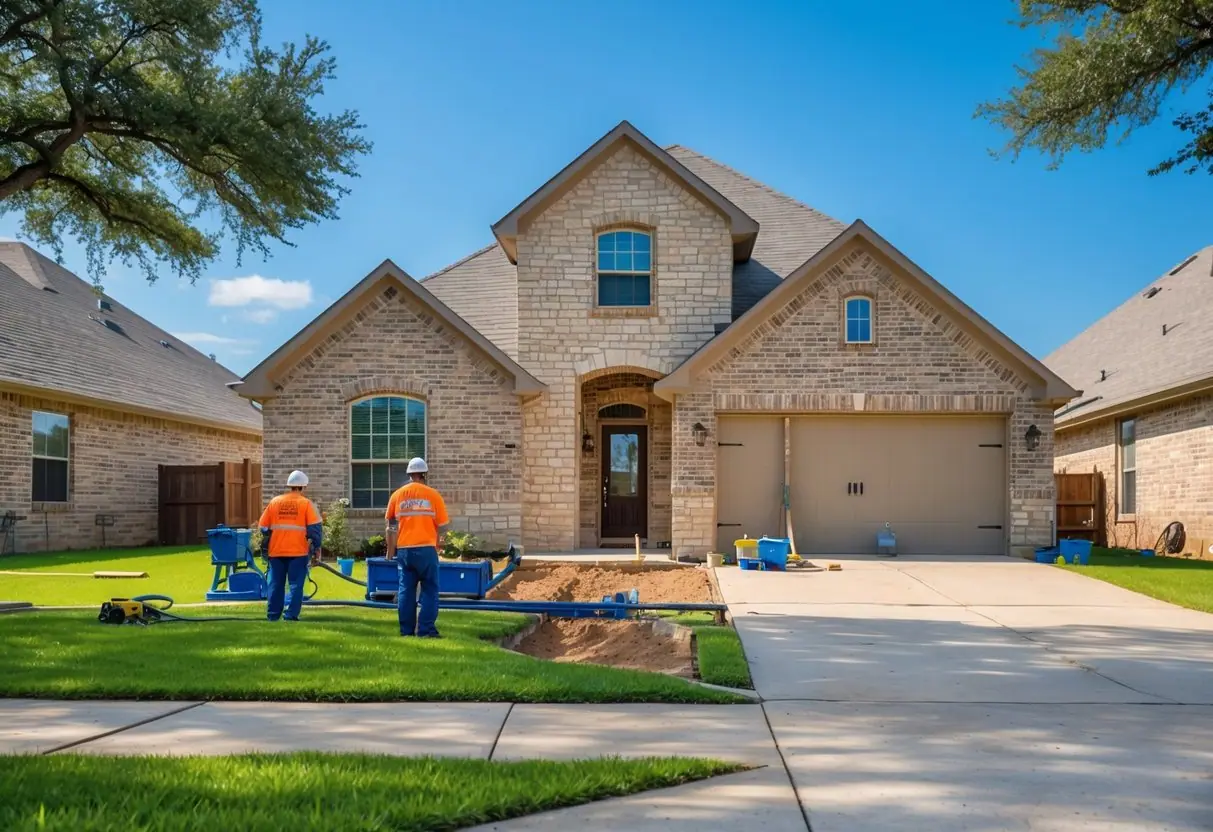
Why Choose Round Rock Foundation Repair Group for Wall Cracks in Cedar Park
Round Rock Foundation Repair Group has built its reputation on delivering honest, technically sound foundation repair across the Cedar Park, Round Rock, Georgetown, and greater Austin market. We are not a national franchise — we are a locally rooted team that understands the specific soil conditions, building vintages, and seasonal weather patterns that drive foundation distress in Williamson County.
Our crews have worked in virtually every Cedar Park neighborhood, from established communities like Forest Creek and Avery Ranch to newer developments in Sendero Springs and along the 183A corridor. We bring the same detailed diagnostic approach to a single wall crack in a 1,500-square-foot home as we do to a complex commercial foundation repair project.
Read moreShow less
We provide written, itemized estimates with no pressure and no hidden fees. Our work is documented thoroughly to support homeowners during real estate transactions. When you call us, you speak with a knowledgeable local representative — not a national call center.
Call (512) 220-3502 today or send us a message online to schedule your Cedar Park wall crack assessment. Learn more about our full home foundation repair services.
FAQ
Frequently Asked Questions About Wall Cracks in Cedar Park, TX
How do I know if a wall crack in my Cedar Park home is structural or cosmetic?
Cosmetic cracks are typically hairline fractures (less than 1/16 inch wide) that run vertically in drywall and do not correspond to any other symptoms. Structural cracks are wider than 1/8 inch, run diagonally, appear in stair-step patterns in masonry, or are accompanied by sticking doors, uneven floors, or gaps at wall-ceiling junctions. In Cedar Park, diagonal cracks at door and window corners following a significant drought or wet period are almost always structural in nature and warrant professional evaluation.
What does wall crack repair cost in Cedar Park, TX?
Cosmetic-only repairs may cost $300 to $800. When foundation stabilization is required — which is the case for most structural wall cracks — the total project investment typically ranges from $4,500 to $15,000 for residential properties. Call us at (512) 220-3502 for a free written estimate specific to your home.
How long does the repair process take?
Foundation stabilization for a typical Cedar Park slab-on-grade home takes 1 to 3 days. Wall crack injection or masonry repair adds 1 to 2 additional days. Most residential projects are completed within a single week from mobilization.
Will my wall cracks come back after repair?
If only the cosmetic crack is patched without addressing the underlying foundation movement, yes — the crack will return. Our process addresses the root cause first. When foundation movement is stopped and proper drainage management is implemented, recurrence is rare.
Do Cedar Park’s clay soils really affect my foundation that much?
Yes. The Houston Black and Heiden clay soils that underlie much of Cedar Park are among the most expansive soil types in North America. USDA data documents shrink-swell potential that can move foundations vertically by 4 to 6 inches over the course of a severe drought-to-rain cycle — enough to crack walls, jam doors, and damage plumbing.
My home was built in 2010 in Avery Ranch. Is it too new to have foundation problems?
Age is less relevant than soil behavior and moisture history. Homes in Avery Ranch built between 2002 and 2015 have experienced two major drought events (2011 and 2022) and a historic freeze event (2021). Many homes in this era and neighborhood have already shown foundation movement. A professional inspection is advisable if you have noticed any of the symptoms described on this page.
Can I repair wall cracks myself?
Cosmetic surface patching with joint compound or paintable caulk is within the capability of most homeowners and is fine for confirmed non-structural cracks. However, patching a structural crack without addressing the underlying cause is at best a temporary aesthetic fix and at worst a way to obscure a problem that will worsen. We recommend a professional assessment before any repair on a crack wider than 1/8 inch or one accompanied by functional symptoms.
Do you serve areas outside of Cedar Park?
Yes. In addition to Cedar Park, we serve Round Rock, Georgetown, Austin, Pflugerville, Tech Ridge, Brushy Creek, Jollyville, Wells Branch, and surrounding communities including Paloma Lake, Teravista, La Frontera, Great Hills, Mayfield Ranch, Anderson Mill, Behrens Ranch, and more. View our full service area map.
Contact Round Rock Foundation Repair Group for Wall Cracks in Cedar Park, TX
Wall cracks are your home’s way of telling you something important is happening beneath the surface. In Cedar Park’s challenging clay soil environment, ignoring that message can lead to accelerating structural damage, costly repairs, and complications when you are ready to sell. The sooner foundation movement is identified and stopped, the less extensive — and less expensive — the repair will be.
Round Rock Foundation Repair Group is ready to help. Call us today at (512) 220-3502 to speak with a local foundation specialist and schedule your on-site evaluation. We serve all Cedar Park neighborhoods and surrounding communities throughout the greater Austin and Round Rock area.
Request your free written estimate online or call now. Do not let wall cracks wait — your home’s foundation is worth protecting.
Get in touch
Find foundation repair help near you
Request a free estimate online or give us a call — our team will follow up quickly.
- Call us(512) 220-3502
- Visit1 Chisholm Trail Rd suite 450 room j, Round Rock, TX 78681
- HoursMon-Sat: 7:00 am – 7:00 pm