Sinking Foundation in Cedar Park, TX
Structural Sinking Foundation Specialists Serving Cedar Park, TX
Is your Cedar Park home sinking? Round Rock Foundation Repair Group offers expert sinking foundation repair in Cedar Park, TX. Call (512) 220-3502 for a free inspection.
- Licensed & Insured
- Locally Owned & Operated
- Free Inspection & Estimate
Request Your
Free EstimateA sinking foundation is one of the most serious structural threats a property owner can face. When your home or commercial building begins to settle unevenly into the ground, the consequences range from cosmetic cracking to catastrophic structural failure. Sinking foundations occur when the soil beneath a structure can no longer adequately support its weight, causing downward or lateral movement that compromises the entire building above.
Cedar Park, TX presents a unique set of environmental and geological challenges that make sinking foundations more common here than in many other parts of the country. The region’s expansive clay soils, dramatic seasonal moisture swings, and rapid population-driven construction have created conditions where foundation movement is nearly inevitable without proper intervention.
At Round Rock Foundation Repair Group, we specialize in diagnosing and correcting sinking foundations across Cedar Park and the greater Austin metro area. Our team understands the local geology, soil behavior, and construction history that drive foundation problems in this region. If you suspect your foundation is sinking, call us today at (512) 220-3502 for a professional assessment.
Understanding Sinking Foundations
A sinking foundation, also referred to as foundation settlement or foundation subsidence, occurs when the soil beneath a structure compresses, shifts, erodes, or loses its load-bearing capacity. Unlike uniform settlement — where a structure settles evenly and gradually over time without causing significant damage — sinking foundations typically involve differential settlement, meaning one portion of the foundation sinks more than another. This uneven movement places enormous stress on walls, beams, floors, and connections throughout the building.
Foundations sink for a variety of interconnected reasons. Poorly compacted fill soil placed during construction can compress under load over months or years. Expansive clay soils swell when wet and shrink dramatically when dry, creating cyclical movement that destabilizes footings and slabs. Underground water erosion can wash away supporting soil, creating voids that cause sudden or gradual sinking. Tree root systems draw moisture from the soil near foundations, accelerating shrinkage. Plumbing leaks beneath a slab can soften soil and trigger localized sinking.
Historically, Central Texas construction boomed significantly after World War II, with another major wave of development beginning in the 1980s and accelerating dramatically through the 2000s and 2010s. Cedar Park itself grew from a small community of roughly 5,000 residents in 1990 to over 85,000 by the early 2020s. This explosive growth meant that enormous numbers of homes and commercial structures were built quickly, sometimes on marginal soils with insufficient geotechnical preparation. Many properties built during the 1990s and early 2000s construction booms are now entering the age range — 20 to 35 years — when deferred foundation problems become undeniable.
Both residential and commercial structures in Cedar Park are susceptible. Slab-on-grade foundations — the dominant construction type in Texas — are particularly vulnerable to differential settlement because the entire structure rests on a single concrete plane with limited ability to flex. Pier-and-beam foundations found in older Cedar Park homes face different but equally serious risks, including beam rot, pier deterioration, and soil movement beneath the crawl space.
Understanding the mechanics of foundation sinking is essential for every Cedar Park property owner. Early recognition and professional intervention dramatically reduce repair costs and prevent escalating structural damage.
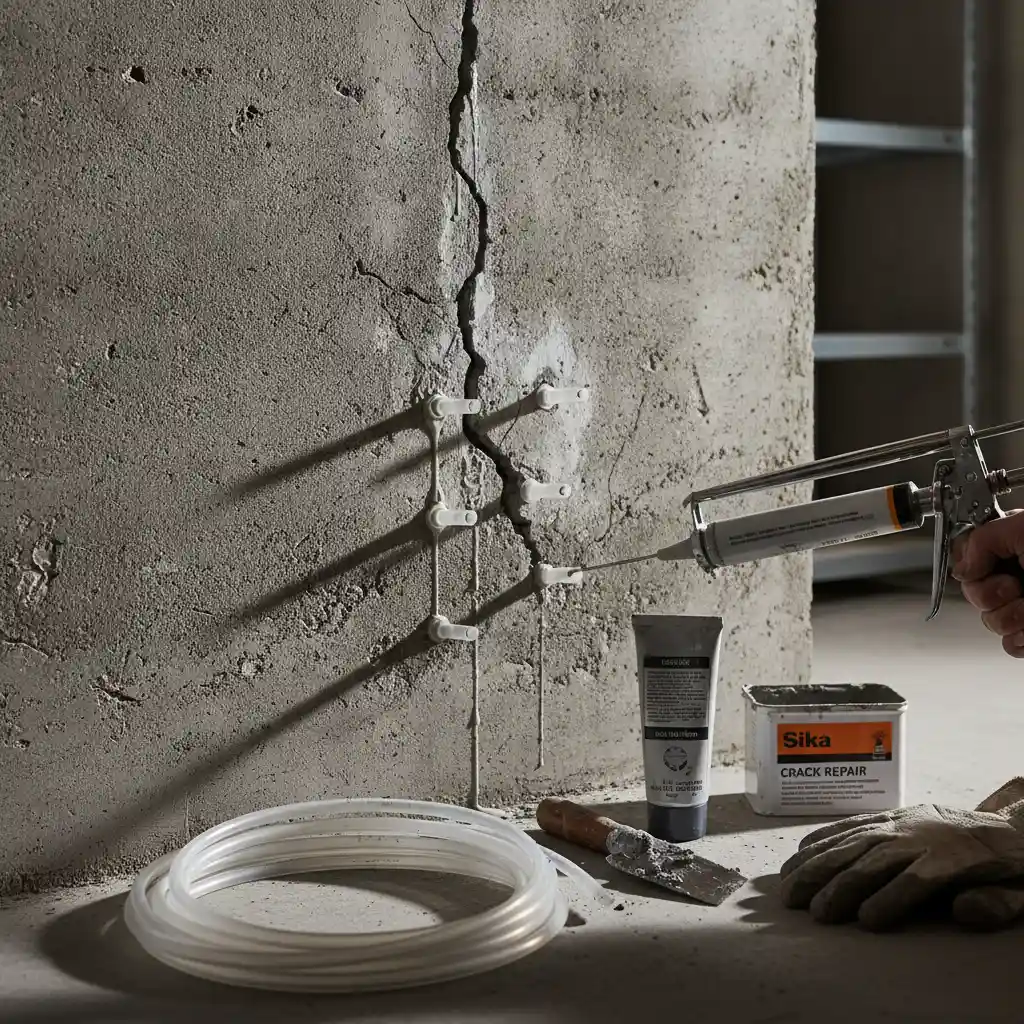
Our team in action — foundation-repair professionals serving Cedar Park
Why Sinking Foundations Are a Serious Problem in Cedar Park, TX
Taylor Clay and Expansive Soil Conditions
The dominant soil type across much of Cedar Park and the broader Williamson County area is Taylor Black Clay, a highly expansive Vertisol soil classified by the USDA as having very high shrink-swell potential. This soil can expand by as much as 30% in volume when saturated and shrink dramatically — sometimes by 15% or more — during dry conditions. Cedar Park receives an average of approximately 32 to 35 inches of rainfall annually, but that rainfall is distributed unevenly across the year. Extended dry periods in July, August, and September — when temperatures routinely exceed 100°F for weeks at a time — cause the clay to contract sharply beneath foundations. When fall and winter rains return, rapid re-expansion occurs. This seasonal cycling creates repetitive stress on foundations that compounds year over year.
The 2011 Drought and Its Lasting Legacy
The Texas drought of 2011 remains the single most damaging weather event in recent memory for Cedar Park foundations. That year, Williamson County experienced record-low rainfall — less than 12 inches for the full year compared to the 33-inch average — combined with an unprecedented string of days above 100°F. Soil moisture levels dropped to historic lows. Thousands of Cedar Park foundations settled significantly during that period, and many property owners who did not address the damage at the time are still experiencing worsening consequences today. The differential settlement triggered by the 2011 drought continues to manifest in cracking, sticking doors, and sloping floors across neighborhoods that were most affected.
Rapid Development on Marginal Land
Cedar Park’s explosive growth during the 2000s and 2010s pushed development onto less-than-ideal sites. Subdivisions including Buttercup Creek, Walsh Ranch, and Twin Creeks were built on soils with variable bearing capacity. Fill material used to level sloped terrain in neighborhoods like Lakeline and Brushy Creek Road corridors was not always adequately compacted or engineered, creating conditions ripe for post-construction settlement. Commercial corridors along Whitestone Boulevard and FM 1431 have seen similar issues, particularly in strip centers and office buildings constructed rapidly during peak development years.
Drainage and Impervious Cover
Cedar Park’s continued development has significantly increased impervious cover — roads, rooftops, and parking lots — that concentrates stormwater runoff. Poor lot grading and inadequate drainage infrastructure direct water toward foundations rather than away from them. Concentrated moisture intrusion softens and destabilizes supporting soils, accelerating sinking on one side of a structure while the opposite side remains dry and contracted. This is a primary driver of the differential settlement seen in Cedar Park homes built between 1998 and 2012.
Proximity to the Balcones Fault Zone
The Balcones Escarpment, the geological boundary separating the Texas Hill Country from the Blackland Prairie, runs through and near Cedar Park. Properties near this zone can experience additional soil variability, with rock-to-clay transitions occurring over short horizontal distances. When a foundation spans both rock and clay, differential movement is virtually guaranteed as soil conditions respond differently to moisture changes.
Signs You Need Sinking Foundation Repair in Cedar Park
Interior Warning Signs
- Diagonal cracks originating from the corners of door frames or window frames, typically running at 45-degree angles
- Doors and windows that stick, jam, or no longer latch properly — particularly when this develops gradually over months
- Floors that slope, bounce, or feel uneven underfoot, measurable with a simple level
- Cracks in drywall, especially stair-step cracks running diagonally across multiple drywall panels
- Gaps developing between walls and ceilings or walls and floors
- Cabinets pulling away from walls in kitchens or bathrooms
Exterior Warning Signs
- Stair-step cracking in brick veneer or masonry, a classic indicator of differential settlement
- Visible gaps between the brick and window or door frames
- Cracks in the concrete slab perimeter where it meets the soil
- Chimney separation or tilting away from the main structure
- Garage door frames that are visibly out of square
Urgency Indicators
Seek professional inspection immediately if cracks are wider than 1/4 inch, if you notice rapid progression of cracking over days or weeks, or if doors that previously closed properly suddenly jam shut. These are signs of active and accelerating foundation movement.
Sinking Foundation Repair Methods Used in Cedar Park
Steel Push Piers
The most common method used for sinking slab foundations in Cedar Park, steel push piers are hydraulically driven through the unstable clay soil to reach competent load-bearing strata or bedrock at depth. Each pier is rated to support specific loads, and multiple piers are installed along the affected foundation segment. This method is particularly effective for the Taylor Clay conditions prevalent across Cedar Park and is our go-to solution for homes in neighborhoods like Buttercup Creek and Twin Creeks where soils are deep and variable.
Helical Piers
Helical piers — steel shafts with helical plates that screw into the soil — are used when push pier installation is not feasible due to access limitations, lighter structural loads, or variable soil conditions. They are commonly used for additions, porches, smaller commercial structures, and interior applications where overhead clearance is limited.
Concrete Pressed Pilings
Pressed concrete pilings are a cost-effective option for appropriate soil conditions. Small concrete cylinders are hydraulically pressed into the ground in sequence. This method works well for standard residential slab foundations in stable clay areas of Cedar Park.
Slab Void Fill and Mudjacking
For areas where the slab has lost contact with the underlying soil due to drying and shrinkage — creating voids beneath the concrete — slab void fill using polyurethane foam injection or traditional mudjacking with cement slurry restores support. This is frequently needed in Cedar Park after dry summers strip moisture from clay soils beneath interior slab areas.
Pier-and-Beam Repair
Older Cedar Park homes with crawl space pier-and-beam foundations require specialized repair including replacement of deteriorated wood piers, installation of new concrete or steel piers, sistering of damaged beams, and improved crawl space drainage and moisture management.
Ready for Sinking Foundation? Get Your Free Estimate Today.
Round Rock Foundation Repair Group serves Cedar Park and the surrounding area — we’ll be on-site within 24 hours.
📞 Call (512) 220-3502Sinking Foundation Repair Cost in Cedar Park, TX
One of the most common questions Cedar Park property owners ask is: how much does sinking foundation repair cost? While every project is unique, we can provide realistic ranges based on our experience working throughout Cedar Park and Williamson County.
Typical Cost Ranges
- Minor slab leveling or void fill (mudjacking/foam injection): $500 – $2,500
- Residential pier installation (per pier): $350 – $700 per pier installed
- Full residential slab foundation repair (8–15 piers, typical Cedar Park home): $4,500 – $15,000
- Severe differential settlement requiring 15+ piers: $12,000 – $30,000+
- Pier-and-beam foundation repair: $3,000 – $10,000 depending on extent of damage
- Commercial foundation repair: $20,000 – $100,000+ depending on building size and severity
Factors That Influence Your Cedar Park Repair Cost
Several location-specific factors influence the final price. The depth required to reach stable bearing stratum in Cedar Park’s clay-heavy soils directly affects pier cost — deeper installations in areas like Walsh Ranch or Brushy Creek require more material and labor. Foundation accessibility around landscaping, fencing, and decking adds cost. The number of elevation points requiring correction and the severity of differential settlement both scale costs significantly.
Cost of Waiting
Delaying repairs consistently increases final costs. A $6,000 repair today may become a $20,000 repair in two years as settlement progresses and secondary structural damage accumulates. Contact us at (512) 220-3502 for a free, no-obligation estimate specific to your Cedar Park property. Schedule Your Free Foundation Inspection
Cedar Park Neighborhoods We Serve
Buttercup Creek
One of Cedar Park’s established neighborhoods, with homes primarily built between 1985 and 2005. Buttercup Creek properties frequently display the effects of two to three decades of seasonal clay soil cycling. Stair-step brick cracking and sticking interior doors are common complaints we address here.
Twin Creeks
Built largely during Cedar Park’s growth surge of the early 2000s, Twin Creeks homes sit on soils with variable profiles. The 2011 drought hit many Twin Creeks properties hard, and we continue to see deferred settlement repairs needed throughout this community.
Walsh Ranch / Grandview Hills Adjacent
Homes in this corridor were built during the late 2000s and early 2010s on terrain that required significant cut-and-fill grading. Fill soil settlement is a recurring issue, and pier depths here often exceed 20 feet to reach competent material.
Lakeline Area (Near FM 1431 and Lakeline Boulevard)
Both residential and commercial properties in this high-density area face drainage-related foundation challenges. Concentrated runoff from surrounding impervious cover creates localized soil saturation that drives differential settlement.
View All Cedar Park Service Areas
Foundation Maintenance Tips for Cedar Park Homeowners
Preventing or slowing foundation movement in Cedar Park’s challenging clay soil environment requires consistent, year-round attention. Follow these location-specific maintenance practices:
- Maintain consistent soil moisture year-round. During Cedar Park’s hot, dry summers (June through September), use a soaker hose system placed 12 to 18 inches from the foundation perimeter to prevent extreme clay shrinkage. Run it 2 to 3 times per week during peak heat.
- Ensure positive lot drainage. Grade soil around your foundation so that water flows away at a minimum slope of 6 inches over the first 10 feet. This is especially critical in Cedar Park neighborhoods with flat lots.
- Keep gutters and downspouts functional. Direct downspout discharge at least 4 feet from the foundation to prevent concentrated moisture intrusion during Central Texas thunderstorm season.
- Control tree and shrub placement. Plant large trees at least 20 feet from the foundation. Root systems from live oaks and cedar elms — common in Cedar Park landscaping — draw significant moisture from foundation soils.
- Inspect crawl spaces annually. For pier-and-beam homes, check for moisture intrusion, wood deterioration, and pier movement every spring.
- Monitor and repair plumbing leaks promptly. A slow slab leak can erode supporting soil within months. Annual plumbing pressure tests are a worthwhile investment.
- Have your foundation inspected every 3 to 5 years — or immediately after unusually dry summers like those Cedar Park experienced in 2011, 2022, and 2023. Request a Professional Inspection
Why Choose Round Rock Foundation Repair Group for Cedar Park Sinking Foundations
When your Cedar Park home or business is showing signs of foundation sinking, choosing the right repair partner matters enormously. Round Rock Foundation Repair Group brings deep, specific knowledge of Central Texas geology, soil behavior, and construction to every project we undertake.
We have worked throughout Cedar Park, Williamson County, and the greater Austin metro area, giving us firsthand experience with the Taylor Clay soils, the Balcones Fault zone’s influence on local soil profiles, and the specific settlement patterns that have emerged from the 2011 drought, rapid 2000s-era development, and Cedar Park’s ongoing growth.
Our team uses professional-grade survey equipment to document foundation elevations before and after every repair, providing you with objective, measurable evidence that your foundation has been correctly addressed. We use only high-quality, load-rated steel pier systems and proven repair methods appropriate for Cedar Park’s specific conditions.
We serve residential homeowners, commercial property managers, and real estate investors throughout Cedar Park and surrounding communities. We approach every project with transparent communication, honest assessments, and solutions designed to provide lasting stability — not temporary fixes.
Call us at (512) 220-3502 to speak with a Cedar Park foundation repair specialist today. Contact Our Cedar Park Team
Frequently Asked Questions About Sinking Foundations in Cedar Park, TX
How do I know if my Cedar Park foundation is sinking or just experiencing normal settling?
All new construction experiences some initial settlement, but normal settling is minimal (typically less than 1 inch) and stops within the first few years. If you are seeing new or growing cracks, sticking doors, or sloping floors in a home more than 5 years old, that is not normal settling — it is active sinking that requires professional evaluation. In Cedar Park, any visible diagonal cracking at window or door corners warrants an inspection.
How much does sinking foundation repair cost in Cedar Park, TX?
Most residential sinking foundation repairs in Cedar Park range from $4,500 to $15,000 for typical homes requiring 8 to 15 piers. Smaller repairs using mudjacking or foam injection may cost $500 to $2,500. Severe cases requiring extensive pier systems can reach $25,000 to $30,000. Cedar Park’s clay soil depths and required pier lengths affect pricing. We provide free, detailed estimates for every property. Learn More About Foundation Repair Costs
How long does sinking foundation repair take in Cedar Park?
Most residential repair projects in Cedar Park are completed in one to three days once work begins. The inspection, engineering review, and permitting phase typically takes 5 to 10 days prior to the start of physical work. Large commercial projects may require one to two weeks of active construction.
Will my homeowner’s insurance cover sinking foundation repair in Cedar Park?
Standard Texas homeowner’s insurance policies typically exclude foundation damage caused by soil movement, settling, or shrinkage — which covers most Cedar Park cases. Coverage may exist if foundation damage results from a sudden, covered event such as a burst pipe. Review your specific policy and consult your insurance agent. We can provide documentation to support any claim you file.
Can sinking foundation damage in Cedar Park be reversed?
In most cases, yes. Modern pier systems allow our crews to lift and re-level a sinking foundation to near its original elevation, correcting slope and relieving stress on the structure above. However, cosmetic damage — drywall cracks, gaps at trim, damaged tile — must be separately repaired after the foundation is stabilized. The earlier intervention occurs, the more complete the recovery.
Is sinking foundation repair in Cedar Park disruptive to my daily life?
Most of our Cedar Park residential repairs are performed from the exterior of the home, requiring minimal interior disruption. Interior work, when necessary, involves small floor penetrations that are patched after pier installation. Landscaping near the foundation perimeter may be temporarily disturbed but is restored after backfilling.
Does the 2011 Texas drought still affect Cedar Park foundations today?
Yes. Many Cedar Park homeowners who experienced foundation movement during the historic 2011 drought either did not address repairs at the time or only partially repaired the damage. Ongoing seasonal clay cycling has continued to worsen differential settlement in those properties over the subsequent decade. If your Cedar Park home showed symptoms in 2011 or 2012 and you deferred repairs, a current inspection is strongly recommended.
Do you serve areas near Cedar Park in addition to Cedar Park itself?
Absolutely. Round Rock Foundation Repair Group serves Cedar Park and all surrounding communities including Round Rock, Georgetown, Austin, Pflugerville, Brushy Creek, Jollyville, Avery Ranch, Great Hills, Anderson Mill, Behrens Ranch, Forest Creek, Sendero Springs, Teravista, Paloma Lake, Wells Branch, and more. See Our Full Service Area
Contact Round Rock Foundation Repair Group for Sinking Foundation Repair in Cedar Park, TX
A sinking foundation will not repair itself — and in Cedar Park’s expansive clay soil environment, delays consistently make problems worse and repairs more expensive. Whether you have noticed a sticking door, a diagonal crack in your drywall, or a visibly sloping floor, now is the time to act.
Round Rock Foundation Repair Group is ready to assess your Cedar Park property, explain your options in plain language, and provide a detailed, honest estimate with no obligation. Our team knows Cedar Park’s soils, neighborhoods, and construction history — and we bring that local expertise to every project.
Call us now at (512) 220-3502 to schedule your free foundation inspection. You can also submit a contact form online and a Cedar Park foundation specialist will respond promptly.
Don’t let a sinking foundation put your Cedar Park home or business at risk. Contact Round Rock Foundation Repair Group today.