
Understanding the true cost of slab foundation repair in Cedar Park, TX is essential for every homeowner and property manager in this rapidly growing Central Texas community. Slab foundation repair refers to the professional process of diagnosing, correcting, and stabilizing concrete slab foundations that have shifted, cracked, or settled due to soil movement, moisture changes, or structural stress.
Cedar Park’s unique combination of expansive clay soils, dramatic seasonal moisture swings, and explosive residential growth over the past two decades creates conditions that routinely challenge even well-built foundations. The cost of repair varies widely depending on severity, method, and property type — and knowing what to expect before you call a contractor puts you in a far stronger position.
Read moreShow less
At Round Rock Foundation Repair Group, we serve Cedar Park and the greater Austin metro with transparent pricing, detailed inspections, and proven repair methods tailored to local soil and climate conditions. Call us today at (512) 220-3502 for a comprehensive foundation evaluation.
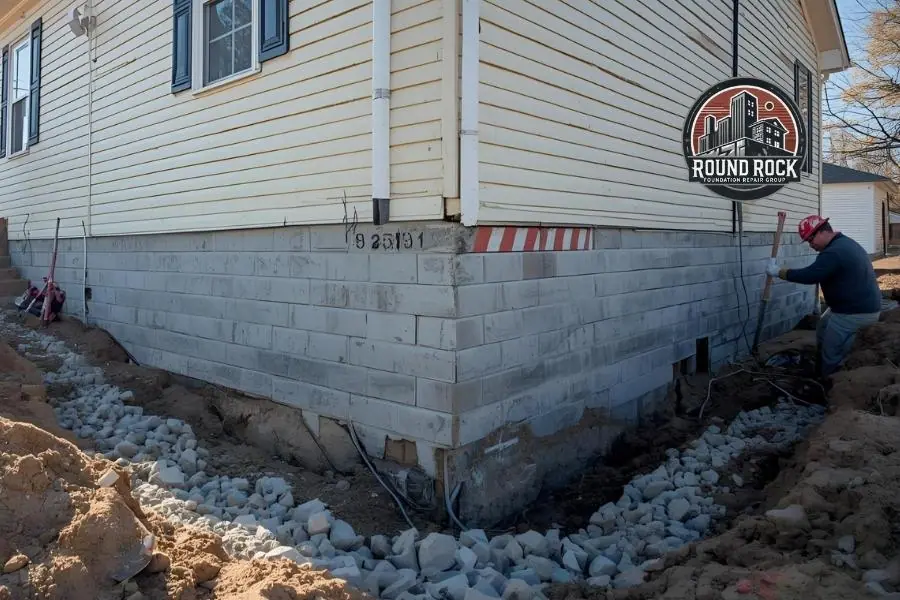
Understanding Slab Foundation Repair in Cedar Park, TX
A slab foundation — also called a concrete slab or post-tension slab — is the most common foundation type used in Cedar Park and throughout Central Texas. Rather than a raised crawl space or full basement, homes are built directly on a poured concrete pad that sits on and within the soil. This design is cost-effective and well-suited to the Texas climate, but it is not without vulnerabilities.
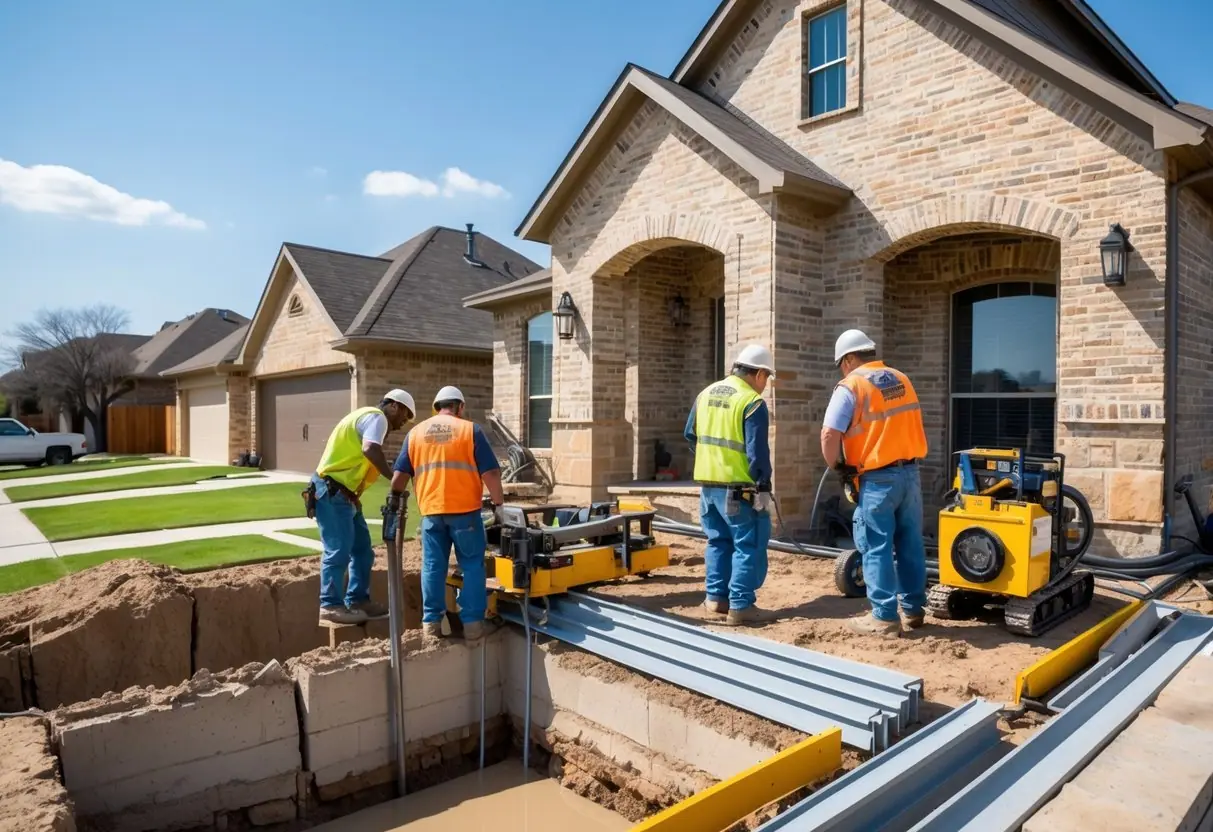
Slab foundation repair encompasses a broad range of interventions. At the minor end, repair may involve injecting polyurethane foam beneath a settled section or patching isolated surface cracks. At the major end, repair can require installing multiple steel piers driven 15 to 20 feet into stable bedrock to lift and re-level an entire structure. The scope — and therefore the cost — depends entirely on what the foundation assessment reveals.
Read moreShow less
Cedar Park’s housing stock spans several distinct eras. The older neighborhoods near Buttercup Creek and Twin Creeks, developed in the 1980s and 1990s, feature slab foundations designed under older building codes that predated modern understanding of expansive clay behavior. Subdivisions built in the 2000s and 2010s, including neighborhoods like Lakeline Ranch and Cypress Creek, often include post-tension cable systems, which introduce their own set of repair considerations and costs. The newest developments along Whitestone Boulevard and near 1890 Ranch are built under updated IBC codes but face the same relentless soil pressure as every other home in the area.
Historically, Cedar Park was a rural and agricultural area where expansive soils were well known but rarely caused structural problems for the modest structures of the era. The suburban boom that began in earnest in the mid-1990s brought thousands of homes onto this difficult soil profile, and the resulting foundation repair industry has grown proportionally. Today, foundation repair is one of the most commonly sought home improvement services in Williamson County, with Cedar Park representing a significant portion of annual repair volume across the region.
Whether your home is a 1,400-square-foot bungalow off Cypress Creek Road or a 4,000-square-foot executive home near Anderson Mill Road, understanding the basics of slab repair helps you evaluate contractor proposals intelligently and avoid overpaying — or underpaying and leaving problems unresolved.
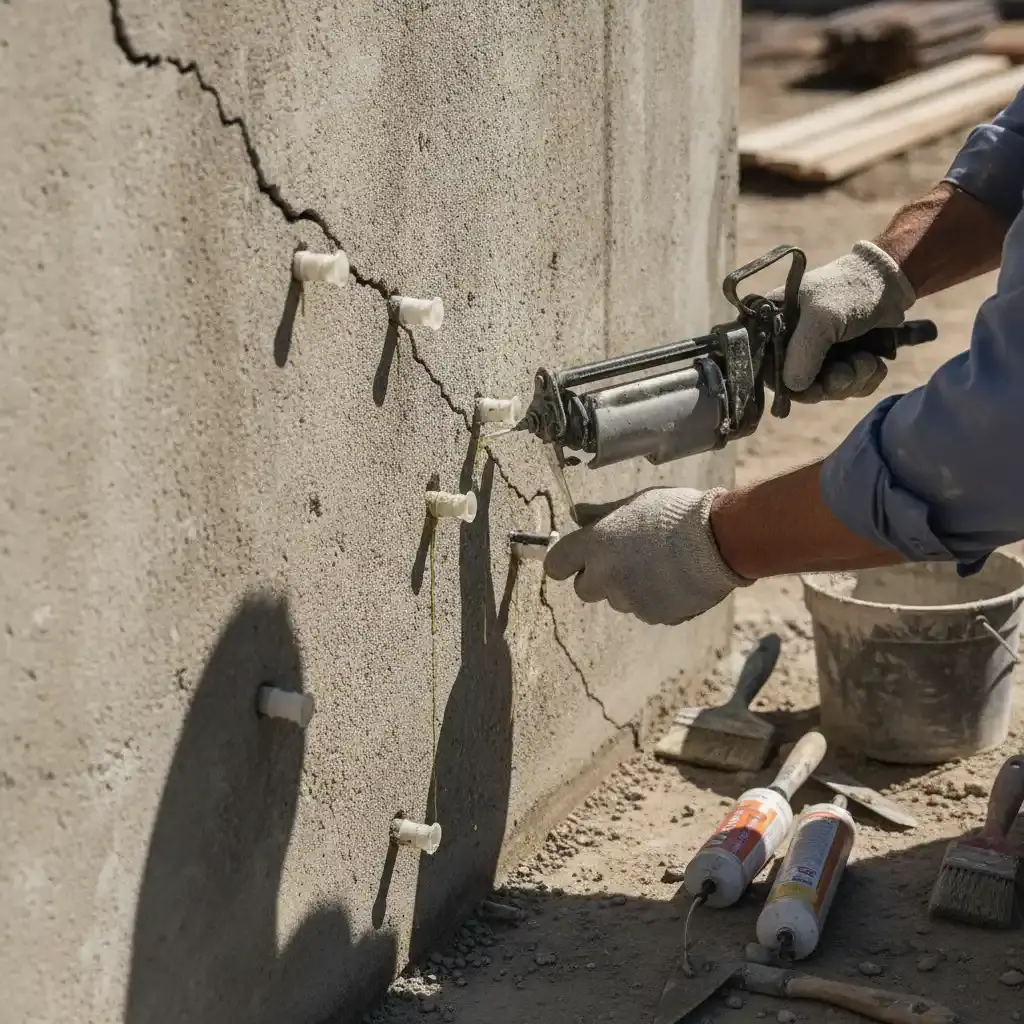
Why Slab Foundation Repair Is Needed in Cedar Park, TX
Cedar Park sits primarily on the Austin Chalk formation overlaid by thick deposits of Houston Black clay and Taylor clay — two of the most expansive soil types on Earth. These soils have a plasticity index (PI) commonly measured between 40 and 60 in Williamson County, meaning they expand and contract dramatically as moisture content changes. When wet, these clays can swell by as much as 10 to 15 percent in volume. When dry, they shrink and crack, leaving voids beneath slabs that cause differential settlement and structural movement.
Central Texas rainfall patterns make this problem cyclical and unavoidable. Cedar Park averages approximately 32 inches of annual rainfall, but that precipitation is extremely uneven. Extended drought periods — like the historic 2011 drought when Cedar Park recorded less than 12 inches of precipitation for the year and temperatures exceeded 100°F for 90-plus consecutive days — cause soil moisture to plummet and clay to contract severely beneath foundations. The subsequent return of normal or above-normal rainfall, such as the record flooding events of May 2015 when Williamson County received over 11 inches in a single weekend, causes rapid soil re-saturation and re-expansion. This repeated shrink-swell cycle is the primary driver of foundation movement in Cedar Park.
Read moreShow less
The geography of Cedar Park compounds the problem. The area’s natural topography includes gentle slopes and limestone outcroppings that create localized drainage patterns. Neighborhoods built on filled land or in low-lying areas, including portions of Brushy Creek and areas near Lake Creek, experience higher subsurface moisture variation than properties on elevated lots. Improper grading — a common issue in the rapid-build subdivisions of the 2000s — allows water to pool against foundations instead of draining away, accelerating the moisture cycle that damages slabs.
Tree roots are another major Cedar Park-specific factor. Live oak, cedar elm, and the ornamental trees common throughout neighborhoods like Twin Creeks and Avery Ranch draw enormous amounts of moisture from the soil, creating dry zones directly beneath adjacent foundations. A mature live oak tree can extract hundreds of gallons of water per day from surrounding soil, pulling clay away from the underside of a slab and triggering settlement directly in line with the tree’s root zone.
Plumbing failures beneath slab foundations are also a statistically significant cause of foundation damage in Cedar Park. Many homes built in the 1990s used polybutylene pipes — a material prone to premature failure — and the chlorinated water supplied by the City of Cedar Park’s water system accelerated deterioration. Slab leaks from corroded or cracked supply and drain lines introduce concentrated moisture beneath specific sections of a foundation, causing localized heaving or settlement that presents as differential movement rather than uniform settling.
Finally, Cedar Park’s sustained population growth — the city grew from approximately 26,000 residents in 2000 to over 80,000 by 2020 — means ongoing nearby construction activity. Vibration from heavy equipment, changes to neighboring lot grading, and alterations to natural drainage patterns during development all affect established foundations in adjacent properties.
Free, no-obligation estimates
Talk to Round Rock Foundation Repair Group
Tell us what you need and we’ll take it from there.
Signs You Need Slab Foundation Repair
Interior Warning Signs
- Diagonal cracks running from the corners of door frames and window frames, typically at 45-degree angles
- Doors and windows that stick, bind, or no longer close flush with their frames — particularly interior doors that previously operated smoothly
- Visible gaps between walls and ceilings, or between walls and floors
- Uneven or sloping floors detectable by placing a marble or level on the surface — slopes exceeding 1 inch per 8 feet warrant immediate inspection
- Cracks in drywall, especially stair-step cracks along mortar joints in brick interior walls
- Visible separation at baseboards or crown molding
Exterior Warning Signs
- Stair-step cracking in brick veneer or mortar joints on the exterior facade
- Visible gaps between the slab edge and the surrounding soil, indicating soil pullback
- Cracks in the concrete slab itself, particularly cracks wider than 1/4 inch or cracks that are uneven in elevation across the gap
- Separation between attached garage slabs and the main foundation
Urgency Indicators
Contact a foundation repair specialist immediately if you observe rapidly widening cracks (more than 1/16 inch per month), hear creaking or popping sounds from the structure, notice sudden plumbing pressure loss suggesting a slab leak, or see any leaning or bowing in load-bearing walls.
Foundation Repair Methods Used in Cedar Park, TX
Steel Push Piers
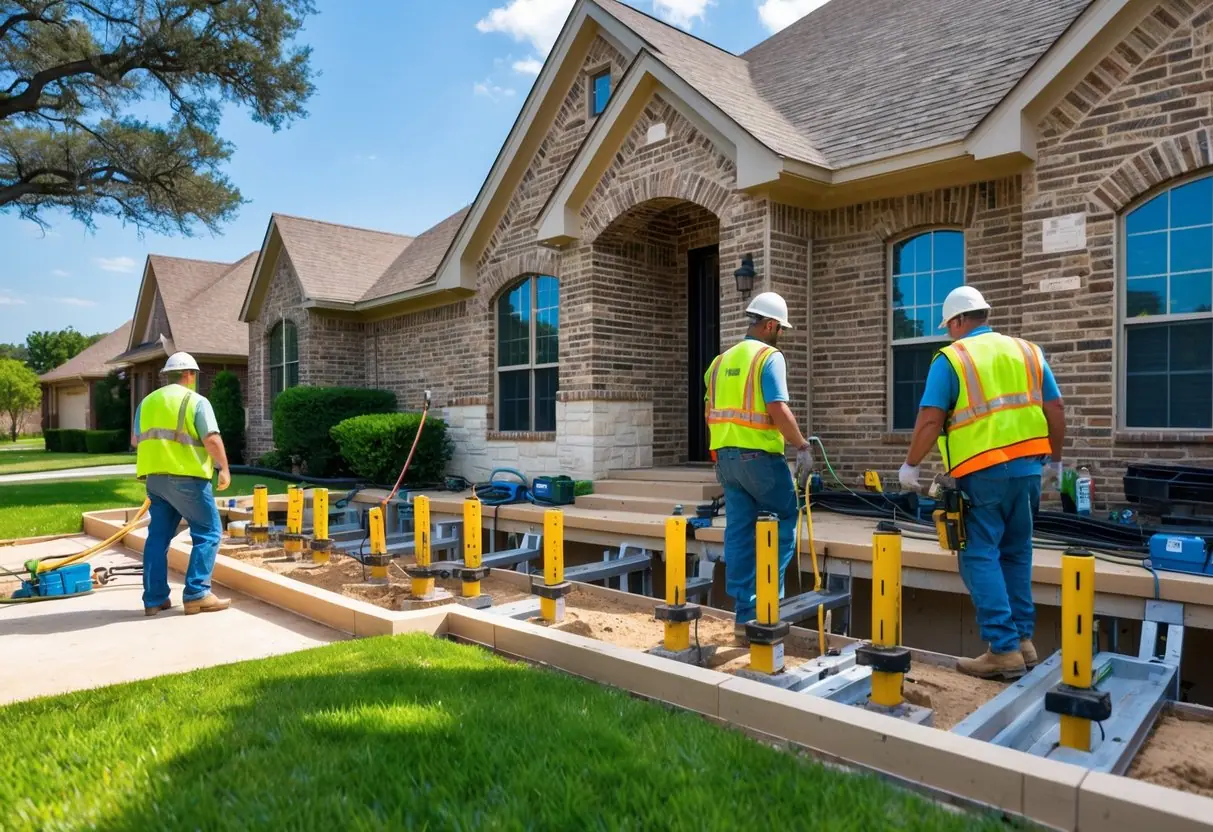
Steel push piers are driven hydraulically through the slab and soil until they reach load-bearing bedrock or competent stratum — typically the Austin Chalk formation found 15 to 25 feet below grade in most Cedar Park locations. This method is the most reliable long-term solution for significant differential settlement and is the preferred approach for heavier structures. Cost per pier typically ranges from $1,200 to $1,800 installed.
Helical Piers
Helical piers use a screw-like design that is rotated into the soil rather than driven. They are ideal for lighter structures, additions, porches, and situations where access is limited — common in the older, tightly landscaped lots in Buttercup Creek and Twin Creeks. Helical piers are also used where vibration from driving must be minimized. Cost per pier ranges from $1,400 to $2,000 installed.
Polyurethane Foam Lifting (PolyLevel)
For sections of slab that have settled uniformly due to void formation — particularly common near plumbing lines in Cedar Park’s 1990s-era homes — expanding polyurethane foam is injected through small ports drilled in the slab. The foam fills voids and gently lifts the concrete. This method is faster and less invasive than pier installation. Cost typically ranges from $800 to $2,500 depending on the area treated.
Crack Stitching and Epoxy Injection
Surface and structural cracks are stabilized using carbon fiber stitching straps and high-strength epoxy injection. This method addresses existing crack damage and prevents water infiltration but does not correct underlying settlement. It is typically used in conjunction with pier installation. Cost ranges from $300 to $800 per crack location.
Drainage Correction and Root Barriers
Given Cedar Park’s rainfall patterns and tree canopy, correcting surface drainage and installing root barriers around problematic trees is often prescribed alongside structural repairs to address the root cause of moisture-driven movement.
Slab Foundation Repair Cost in Cedar Park, TX: What to Expect
Foundation repair costs in Cedar Park vary based on the severity of damage, the repair method required, the size of the structure, and site-specific conditions. Below are realistic cost ranges based on current Cedar Park market pricing:
- Minor crack repair and epoxy injection: $500 – $1,500 for isolated cracks with no structural movement
- Polyurethane foam lifting (small area): $800 – $2,500 for localized void-fill and slab lifting
- Partial pier installation (4–8 piers): $4,000 – $12,000 for moderate corner or edge settlement common in Cedar Park tract homes
- Full perimeter pier installation (10–20+ piers): $12,000 – $30,000+ for significant whole-house settlement
- Drainage correction and grading: $1,500 – $5,000 as a standalone service or add-on
- Slab leak detection and rerouting: $2,000 – $6,000, often required before structural repair in 1990s Cedar Park homes
Read moreShow less
Several Cedar Park-specific factors affect pricing. Homes built on lots with significant slope — common near Brushy Creek and the Lake Creek corridor — require additional excavation depth and sometimes retaining work. Post-tension cable slabs, prevalent in neighborhoods built after 2000, require specialized cutting and repair procedures that add 10 to 20 percent to standard pier costs. Homes with mature live oaks requiring root barriers add $500 to $1,500 to total project cost.
Most reputable Cedar Park contractors offer free or low-cost inspections. Be cautious of estimates provided without a physical on-site inspection or without a written, itemized proposal. Schedule Your Free Foundation Inspection
Cedar Park Neighborhoods We Serve
Buttercup Creek
One of Cedar Park’s oldest established neighborhoods, Buttercup Creek features homes built primarily from the mid-1980s through the late 1990s. These structures sit on conventional (non-post-tension) slabs and have experienced three-plus decades of soil shrink-swell cycling. Stair-step brick cracking and sticking doors are extremely common here. Many homes also have mature trees planted close to foundations during original landscaping.
Lakeline Ranch and Cypress Creek
Built largely in the 2000s during Cedar Park’s first major growth surge, homes in these subdivisions typically feature post-tension slabs and were constructed quickly on lots with variable fill quality. Drainage issues are frequently reported in lower-lying sections near the Lakeline Boulevard corridor.
Twin Creeks
This master-planned community straddles the Cedar Park–Austin boundary and includes homes from the late 1990s through mid-2000s. The neighborhood’s wooded lots with numerous heritage oaks create significant root-driven soil moisture competition, making foundation monitoring an ongoing need for homeowners here.
1890 Ranch
Among Cedar Park’s newer large subdivisions, 1890 Ranch homes are built under updated codes but still face the same expansive clay conditions. Newer homes here benefit from better drainage design but are not immune to movement during severe drought cycles like 2022, when Williamson County issued Stage 3 water restrictions.
Foundation Maintenance Tips for Cedar Park Homeowners
- Maintain consistent soil moisture year-round. During Cedar Park’s dry summer months (typically June through September), use soaker hoses placed 12 to 18 inches from the foundation perimeter to prevent clay shrinkage. Run them 30 to 45 minutes, three times per week during drought conditions.
- Correct negative grade immediately. Soil should slope away from your foundation at a minimum of 6 inches over the first 10 feet. Re-grade low spots that allow water to pool against the slab — a critical step given Cedar Park’s heavy clay soils.
- Clean gutters and extend downspouts. Downspout extensions should discharge water at least 5 feet from the foundation. Clogged gutters create concentrated moisture release directly against slabs.
- Monitor large trees near the foundation. Maintain a minimum planting distance of one-half the mature canopy width for any new trees. Consider root barriers for existing oaks and cedars within 15 feet of your slab.
- Test for plumbing leaks annually. Have a licensed plumber perform a slab leak test, especially if your Cedar Park home was built before 2000 and still has original supply lines.
- Avoid excessive irrigation near the foundation. Over-watering landscape beds adjacent to the slab introduces as much moisture-related risk as drought does.
- Schedule periodic foundation elevation checks. An annual or biennial elevation survey by a qualified contractor establishes a baseline and catches movement early — before minor settling becomes major repair.
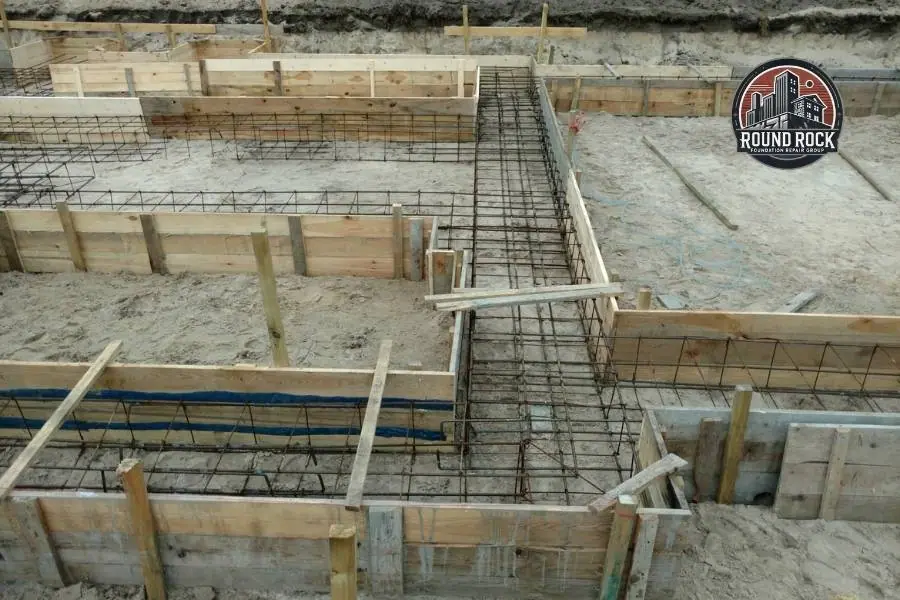
Why Choose Round Rock Foundation Repair Group in Cedar Park
Round Rock Foundation Repair Group has built its reputation serving communities across the greater Austin metro, with deep expertise in the specific soil conditions, construction eras, and climate patterns that define Cedar Park. Our crews understand the difference between a post-tension slab in a 2005 Lakeline Ranch home and a conventional slab in an 1980s Buttercup Creek bungalow — and they apply the right method for each.
We provide fully transparent, itemized written estimates so you know exactly what you are paying for and why. We never use high-pressure sales tactics or manufacture urgency around findings that can be monitored rather than immediately repaired.
Our service area covers Cedar Park in its entirety, from Whitestone Boulevard to Anderson Mill Road, and extends to Round Rock, Georgetown, Austin, Pflugerville, Brushy Creek, and surrounding communities. When you call us, you speak with someone who knows Cedar Park — not a national call center.
For expert slab foundation repair cost evaluation in Cedar Park, TX, contact us today at (512) 220-3502. Request a Free Foundation Estimate
FAQ
Frequently Asked Questions: Slab Foundation Repair Cost in Cedar Park, TX
How much does slab foundation repair typically cost in Cedar Park, TX?
Most Cedar Park homeowners pay between $4,500 and $15,000 for slab foundation repair involving pier installation. Minor crack repairs may cost as little as $500, while extensive whole-house pier systems on larger Cedar Park homes can reach $25,000 to $35,000. The specific geology of your lot and the number of piers required are the biggest cost variables.
Does Cedar Park’s soil type make foundation repair more expensive than other areas?
Cedar Park’s expansive Houston Black and Taylor clay soils can add to repair complexity, particularly because piers must often be driven deeper — 18 to 25 feet — to reach the Austin Chalk bedrock below the active clay zone. This depth requirement increases material and labor costs compared to areas with more stable shallow soils.
How long does slab foundation repair take in Cedar Park?
Most residential pier projects in Cedar Park are completed in one to three days. Larger homes requiring 15 or more piers may take four to five days. Polyurethane foam lifting jobs are often completed in a single day. Permit processing, if required by the City of Cedar Park, may add one to two weeks before work can begin.
Will my homeowner’s insurance cover foundation repair in Cedar Park?
Standard homeowner’s insurance policies in Texas typically exclude foundation damage caused by soil movement or settling — the most common cause in Cedar Park. Slab leaks that cause foundation damage may be partially covered depending on your policy language. We recommend contacting your insurer before scheduling repairs and can provide documentation to support a claim if applicable.
Should I be concerned about the 2022–2023 drought’s effect on my Cedar Park foundation?
Yes. The 2022 drought was one of the most severe on record for Williamson County, with many Cedar Park monitoring stations recording less than 60 percent of normal annual precipitation. This level of soil moisture depletion causes significant clay contraction. Many homeowners are now observing delayed foundation movement symptoms as soils re-wet in subsequent seasons. If your home showed no symptoms during the drought but is now developing cracks or sticking doors, soil re-expansion heaving may be occurring.
How do I know if my Cedar Park home has a post-tension slab?
Post-tension slabs are typically identified by small plastic caps visible at the slab edge (at grade level) spaced 3 to 6 feet apart around the perimeter, or by documentation in your home’s original builder records. Homes built in Cedar Park after approximately 1995 are more likely to have post-tension systems. This matters significantly because drilling through post-tension cables during pier installation requires specialized equipment and expertise.
Are there financing options for foundation repair in Cedar Park?
Yes. We work with several financing partners to offer payment plans for Cedar Park homeowners facing major repair costs. Options include 12-month same-as-cash plans and longer-term fixed-rate financing. Contact us at (512) 220-3502 to discuss available options.
How do I compare foundation repair quotes from different Cedar Park contractors?
Ensure each quote is based on a physical on-site inspection, specifies the number and type of piers proposed, identifies pier depth targets, and includes a written warranty on both materials and labor. Avoid quotes that specify a fixed number of piers before inspecting your property, as pier count should be determined by engineering assessment, not sales targets.
Get Your Slab Foundation Repair Cost Estimate in Cedar Park Today
If you’ve noticed cracks in your walls, sticking doors, uneven floors, or any of the warning signs described above, don’t wait. Foundation issues in Cedar Park’s expansive clay soils worsen with every seasonal moisture cycle — and early intervention is almost always significantly less expensive than delayed repair.
Round Rock Foundation Repair Group serves all Cedar Park neighborhoods, from Buttercup Creek to 1890 Ranch, with honest assessments and transparent pricing. We also serve Round Rock, Georgetown, Austin, Pflugerville, Brushy Creek, and surrounding communities throughout the greater Austin metro.
Call us now at (512) 220-3502 to schedule your foundation inspection. Request a Free Written Estimate Online — our team responds within one business day.
Get in touch
Find foundation repair help near you
Request a free estimate online or give us a call — our team will follow up quickly.
- Call us(512) 220-3502
- Visit1 Chisholm Trail Rd suite 450 room j, Round Rock, TX 78681
- HoursMon-Sat: 7:00 am – 7:00 pm