Understanding the foundation inspection cost in Cedar Park, TX is the first step toward protecting your most valuable asset — your home or commercial property. A foundation inspection is a professional assessment in which a licensed structural engineer or foundation specialist evaluates your property’s foundation for signs of movement, cracking, settlement, or structural compromise. In Cedar Park, where expansive clay soils, seasonal drought cycles, and rapid residential growth create unique ground conditions, a thorough foundation inspection is not a luxury — it is a necessity.
At Round Rock Foundation Repair Group, we serve Cedar Park and the greater Greater Austin metro with comprehensive foundation evaluations backed by deep local knowledge. Our team understands the specific geological and climate pressures that affect Cedar Park properties, from newer subdivisions along Whitestone Boulevard to established neighborhoods near Ranch at Brushy Creek. Whether you own a single-family home, a commercial building, or a crawl space structure, we provide transparent, detailed inspection reports so you know exactly what you’re dealing with — and what it will cost to fix it. Call us today at (512) 220-3502 to schedule your inspection.
Understanding Foundation Inspection Cost in Cedar Park, TX
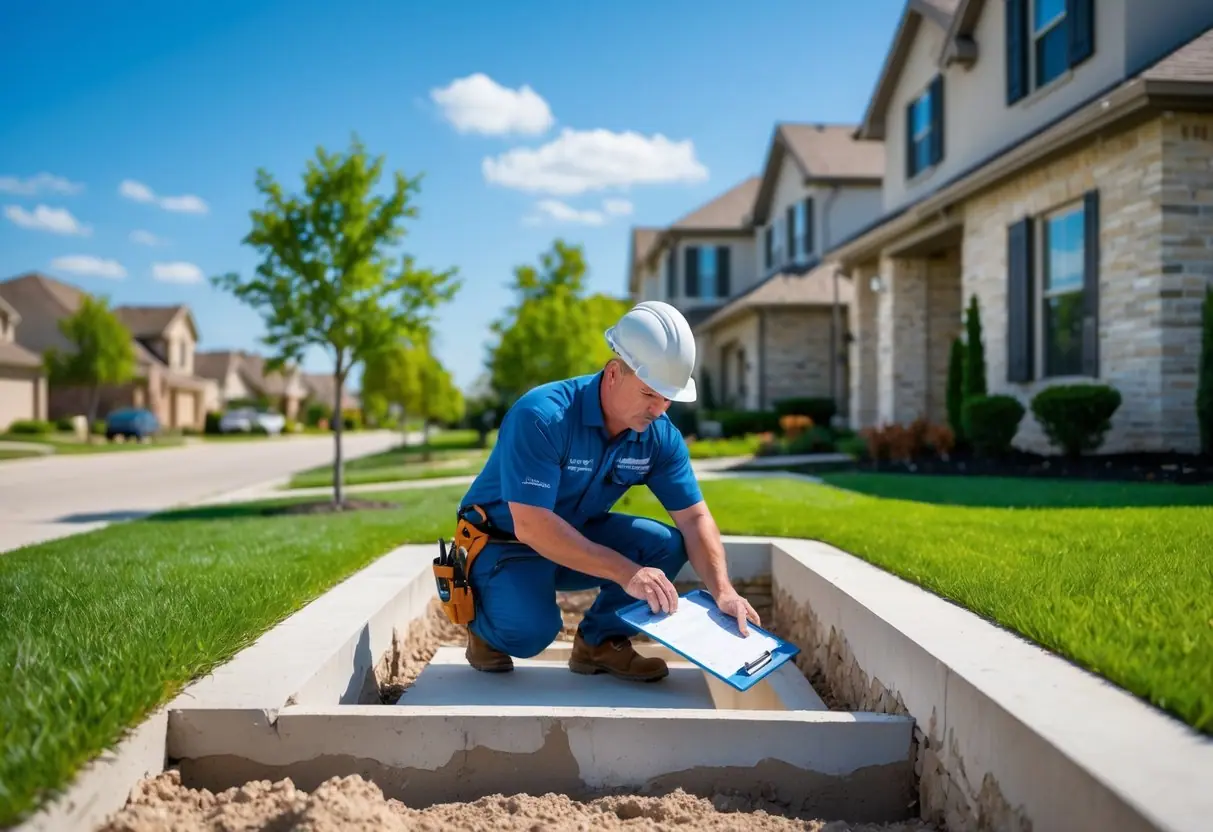
A foundation inspection is a systematic, on-site evaluation conducted by a qualified foundation specialist to determine the structural integrity of a building’s base. During the inspection, professionals measure floor levelness using digital manometers, examine interior and exterior cracks, assess drainage patterns, review the performance of piers or beams, and document any evidence of differential settlement. The resulting report guides homeowners and property managers toward the most appropriate and cost-effective repair strategy.
Historically, Cedar Park was a small farming community incorporated in 1973. Over the past two decades, it has evolved into one of the fastest-growing cities in the United States, repeatedly appearing on national “fastest-growing” lists throughout the 2010s and early 2020s. This explosive growth means thousands of homes were constructed rapidly across previously undisturbed clay-heavy terrain. Builders worked on tight schedules, and proper soil preparation was not always prioritized. As a result, Cedar Park has a statistically higher rate of foundation movement complaints compared to cities built on more stable bedrock, such as much of Central Austin’s older core.
Read moreShow less
Building types in Cedar Park vary widely. You’ll find post-tension slab foundations dominant in neighborhoods developed after the 1990s, such as Twin Creeks and Buttercup Creek. Older homes near the Cedar Park Historic District may rest on conventional reinforced concrete slabs or even pier-and-beam systems. Commercial properties along US-183A and Lakeline Mall Drive often feature thicker commercial-grade slabs with deeper footings, yet they are still vulnerable to the region’s soil volatility. Each building type carries its own inspection checklist and associated cost considerations.
Foundation inspections in Cedar Park typically range from a complimentary visual assessment offered by repair contractors to a paid structural engineering report costing $300 to $800 or more. Understanding this spectrum — and knowing which type of inspection your situation warrants — is essential before committing to any repair expenditure. Learn more about our foundation inspection services
Why Foundation Inspection Cost Is a Worthwhile Investment in Cedar Park, TX
Cedar Park sits atop a geological layer known as the Austin Chalk formation, but much of the surface soil is a Vertisol-type expansive clay — locally referred to as “black cotton soil” or Taylor Clay — that can expand up to 30% in volume when wet and shrink dramatically during dry periods. The Texas Cooperative Extension has documented shrink-swell cycles in Williamson County soils that exert uplift pressures exceeding 10,000 pounds per square foot on shallow foundations. This soil volatility is the single greatest driver of foundation movement in Cedar Park and the primary reason that foundation inspections here are not optional for conscientious property owners.
Cedar Park’s climate amplifies this soil behavior. The city averages approximately 32 inches of annual rainfall, but precipitation is highly irregular. Extended droughts — such as the severe 2011 drought that set Texas records, and the 2022–2023 dry period that caused widespread foundation cracking across Williamson County — cause the clay to desiccate and contract, pulling away from foundation edges. Gaps as wide as 3 to 4 inches have been documented along exterior foundation perimeters in neighborhoods such as Buttercup Creek and Forest Oaks during peak drought summers. When rains return, rapid re-expansion causes heaving that can crack interior drywall, misalign door frames, and fracture plumbing lines beneath slabs.
Read moreShow less
The pace of Cedar Park’s development has also introduced infrastructure-related risks. The construction of the 183A Toll Road corridor and associated utility trenching disturbed subsurface soil compaction in areas like Lakeline and Twin Creeks between 2003 and 2007. Backfilled trenches adjacent to residential lots have since settled unevenly, placing lateral stress on nearby foundations. Additionally, the rapid build-out of master-planned communities such as Ranch at Brushy Creek and Avery Ranch (which straddles the Cedar Park–Austin border) meant that many lots were graded without adequate time for soil consolidation before construction began.
Cedar Park’s tree canopy adds another layer of complexity. Live oaks, cedar elms, and the invasive Ashe junipers that dominate the area draw enormous amounts of moisture from the soil during summer months. Tree roots extending 20 to 30 feet from mature specimens in neighborhoods like Buttercup Creek and Deer Creek can create localized desiccation zones directly beneath slab edges, triggering differential settlement — where one corner of the home sinks while others remain stable, causing diagonal staircase cracks and sloping floors.
All of these factors — expansive clay soils, erratic rainfall, construction-era soil disturbance, infrastructure development, and aggressive root systems — make Cedar Park one of the highest-risk foundation environments in Central Texas. A professional foundation inspection quantifies exactly how much movement has occurred, identifies the cause, and prevents property owners from either over-spending on unnecessary repairs or under-investing until minor issues become catastrophic failures.
Free, no-obligation estimates
Talk to Round Rock Foundation Repair Group
Tell us what you need and we’ll take it from there.
Signs You Need a Foundation Inspection in Cedar Park
Structural Warning Signs
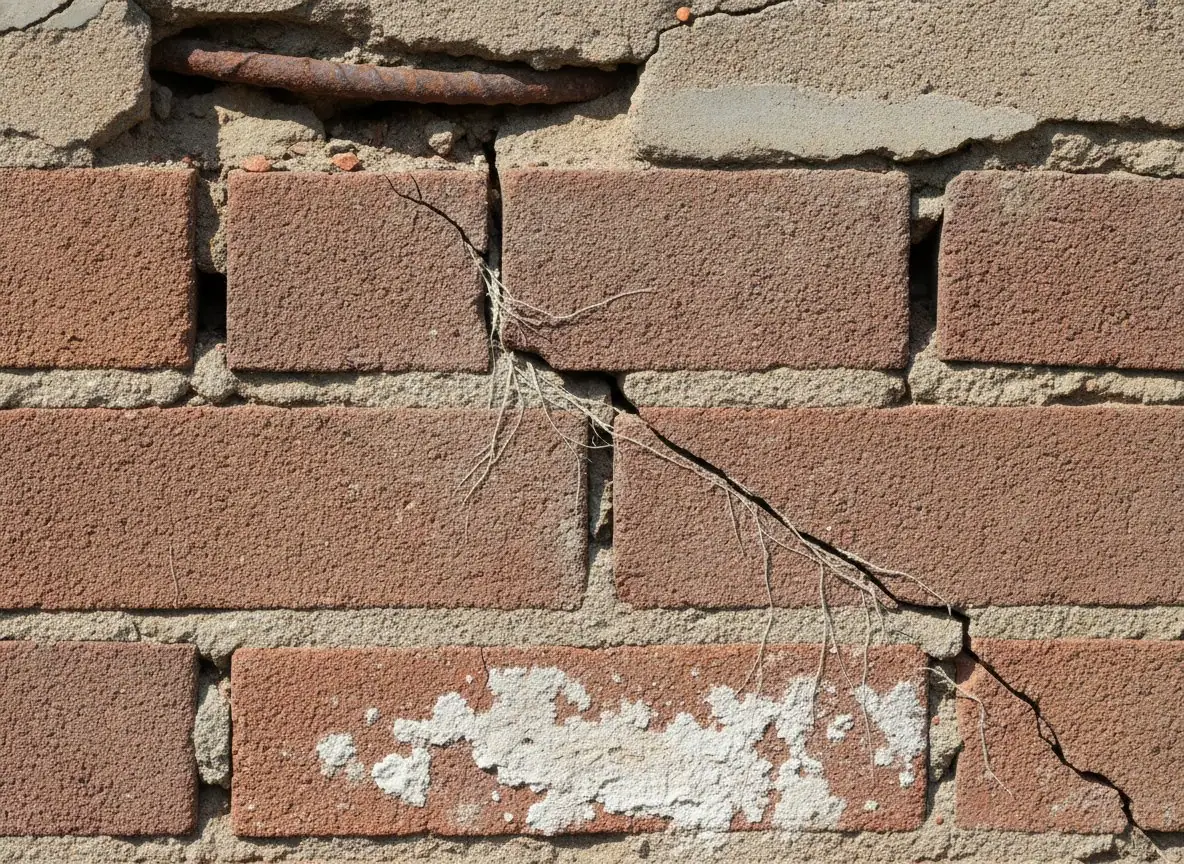
- Diagonal cracks running from window or door corners at 45-degree angles
- Horizontal cracks along brick mortar joints on exterior walls
- Vertical cracks wider than 1/4 inch in interior drywall or exterior stucco
- Visible gaps between the foundation slab edge and exterior brick veneer
- Bowing or leaning interior walls
Functional Warning Signs
- Doors and windows that stick, jam, or no longer close flush — especially interior doors in the center of the home
- Floors that feel noticeably sloped when walking from one room to another
- Gaps appearing between walls and ceilings or between baseboards and floors
- Cabinets pulling away from walls in kitchens or bathrooms
Urgent Indicators Requiring Immediate Inspection
- Sudden appearance of multiple new cracks following a prolonged dry period or heavy rain event
- A slab crack accompanied by a detectable odor — possible indication of a broken sewer line beneath the foundation
- Visible separation between the chimney and the main structure
- Water pooling against the foundation perimeter after rain events near Cedar Park creeks or drainage easements
If you observe two or more of these symptoms simultaneously, schedule a professional foundation inspection immediately. Early intervention consistently results in lower repair costs. Explore all warning signs of foundation damage
Our process
Our Foundation Inspection Process in Cedar Park, TX
Round Rock Foundation Repair Group follows a structured, multi-step inspection protocol adapted specifically for Cedar Park’s soil and climate conditions. Here is what you can expect:
- 01
Initial Phone Consultation (15–30 Minutes)
Before arriving on-site, our team conducts a detailed phone intake. We ask about the age of your home, any recent drought or flooding events in your neighborhood, visible symptoms, and prior repair history. For Cedar Park properties, we specifically note proxi
- 02
Exterior Perimeter Assessment (30–45 Minutes)
Our inspector walks the full exterior perimeter, documenting crack patterns, measuring foundation exposure above grade, examining weep screed alignment, and assessing drainage slope away from the structure. In Cedar Park, we pay particular attention to soil mo
- 03
Interior Floor Level Survey (45–60 Minutes)
Using a calibrated digital manometer, we measure floor elevation at a grid of points throughout the home — typically every 6 to 8 feet. Industry standards consider differential movement exceeding 1 inch across a 20-foot span as structurally significant. For Ce
- 04
Structural Component Inspection (20–30 Minutes)
We examine all interior walls, door and window frames, ceiling-to-wall junctions, and visible plumbing penetrations. For crawl space properties — more common in older Cedar Park homes near the historic downtown area — we physically enter the crawl space to ass
- 05
Drainage and Grading Review (20 Minutes)
Improper drainage is among the top causes of foundation movement in Cedar Park. We assess gutters, downspout extensions, surface grade slope, and proximity to impervious cover. Cedar Park’s clay soils require at least a 6-inch drop in grade over the first 10 f
- 06
Report Preparation and Findings Review (Same Day or Next Business Day)
We compile all measurements, photographs, and observations into a written report. We review findings with you in detail, explaining what is normal settling versus actionable movement, and presenting repair options with associated cost estimates — all without p
- 07
Repair Planning and Prioritization (As Needed)
For properties requiring repair, we outline a phased plan that addresses the most structurally critical areas first. We coordinate with you on timing relative to Cedar Park’s seasonal soil moisture cycles, as repairs performed during moderate moisture conditio
Foundation Inspection Methods and Approaches Used in Cedar Park
Digital Elevation Mapping
The most precise interior assessment tool we use is digital floor elevation mapping with a self-leveling manometer. This method captures elevation readings accurate to 1/100th of an inch across an entire floor plan, generating a topographic map of your slab’s current position. In Cedar Park’s post-tension slab homes — the predominant foundation type in subdivisions built after 1995 — this method distinguishes between normal long-term settling and active, progressive movement requiring urgent intervention.
Visual Crack Documentation and Classification
Not all cracks indicate structural failure. Our inspectors classify cracks by width, orientation, location, and apparent age. Cracks wider than 3/16 inch, horizontal cracks in masonry, and staircase cracks in brick — common in Cedar Park’s brick-veneer construction — are flagged as high-priority findings. We photograph and measure each crack for inclusion in the inspection report.
Soil Moisture Probing
For Cedar Park properties showing signs of active movement, we use soil moisture probes along the foundation perimeter to identify desiccation zones — areas where the clay has dried out and contracted. This tool is particularly valuable for diagnosing drought-related settlement versus plumbing leak-induced heaving, two conditions that require entirely different repair approaches.
Crawl Space Physical Assessment
For pier-and-beam homes in older Cedar Park neighborhoods, our inspectors physically enter crawl spaces equipped with moisture meters and structural flashlights to assess wood rot, pier settlement, beam deflection, and vapor barrier condition. Cedar Park’s periodic flooding events — including flash flooding near Brushy Creek tributaries — can introduce chronic moisture into crawl spaces that compromises wood subfloor integrity over time.
Plumbing Leak Correlation Review
Because slab plumbing leaks are a significant cause of foundation heaving in Cedar Park, we review water bill history with homeowners and note the location of any active or suspected leaks during the inspection. We coordinate with licensed plumbers for hydrostatic pressure testing when indicated. Learn about our concrete foundation repair solutions
Foundation Inspection Cost in Cedar Park, TX: What to Expect
The cost of a foundation inspection in Cedar Park, TX depends on the type of inspection, property size, and who performs it. Here is a realistic breakdown:
- Contractor Visual Assessment: $0 to $150. Many foundation repair companies, including Round Rock Foundation Repair Group, offer complimentary visual inspections. These are appropriate for homeowners who want a general opinion and repair estimate but do not require a stamped engineering report.
- Independent Structural Engineering Inspection: $300 to $800 for residential properties under 3,000 square feet. A licensed structural engineer provides a stamped letter or full report suitable for real estate transactions, insurance claims, or permit applications. For Cedar Park homes in active real estate transactions, sellers and buyers commonly invest in this level of inspection.
- Commercial Foundation Inspection: $800 to $2,500 or more, depending on building square footage, foundation complexity, and report requirements. Commercial properties along US-183A and Whitestone Boulevard corridors typically require full engineering reports with repair specifications.
- Crawl Space Inspection Add-On: $75 to $200 additional for homes with pier-and-beam foundations requiring physical crawl space entry and documentation.
Read moreShow less
Factors That Influence Cedar Park Inspection Costs
- Home size — larger floor plans require more elevation data points and longer inspection time
- Accessibility — tight crawl spaces or steeply graded lots common in western Cedar Park add complexity
- Report type required — real estate and insurance-grade reports demand more documentation time
- Urgency — same-day or next-day appointments during peak seasons (post-drought, late summer) may carry premium scheduling fees
Remember: the cost of a foundation inspection is a fraction of the cost of delayed repairs. Average foundation repair projects in Cedar Park range from $4,500 for minor crack patching to $18,000 or more for full pier installation on significantly settled homes. View detailed foundation repair cost information
Cedar Park Neighborhoods We Serve
Buttercup Creek
One of Cedar Park’s older established neighborhoods, Buttercup Creek features homes primarily built between the mid-1980s and late 1990s on conventional reinforced concrete slabs. The mature live oak and cedar elm trees throughout this neighborhood are a leading cause of localized differential settlement. Foundation inspections here frequently reveal moisture-extraction patterns aligned with tree drip lines.
Twin Creeks
Developed predominantly between 2000 and 2010, Twin Creeks is a master-planned community where post-tension slabs are universal. The neighborhood’s proximity to Brushy Creek’s tributary drainage system creates seasonal moisture fluctuation. Homes along the greenbelt edges show higher rates of edge moisture intrusion and associated perimeter settlement.
Ranch at Brushy Creek
This large subdivision, developed in phases from 2005 through 2015, includes homes on sloping terrain that required significant cut-and-fill grading. Inspections in Ranch at Brushy Creek frequently reveal settlement on the fill side of lots, where compacted soil has consolidated unevenly over time. Homes here built between 2005 and 2008 — the rapid growth phase — show disproportionately high inspection call rates.
Whitestone Corridor Commercial District
Commercial properties along Whitestone Boulevard and the US-183A frontage road range from early-2000s strip retail to newer mixed-use developments. Expansive parking lots and impervious cover alter subsurface drainage, concentrating moisture along building perimeters and accelerating edge settlement. Explore our commercial foundation repair services
Foundation Maintenance Tips for Cedar Park Homeowners
Proactive maintenance can significantly reduce the frequency and severity of foundation movement in Cedar Park’s challenging soil environment. Follow these location-specific tips:
- Maintain consistent soil moisture year-round. Install a soaker hose system 12 to 18 inches from the foundation perimeter and run it during Cedar Park’s dry summer months (typically June through September) to prevent clay desiccation and shrinkage.
- Extend downspouts at least 6 to 10 feet from the foundation. Cedar Park’s intense storm events can dump 2 to 3 inches of rain in under an hour, and concentrated downspout discharge directly against clay soil causes rapid, localized swelling.
- Maintain proper grading. The ground should slope away from your foundation at a minimum 6-inch drop over 10 feet. Cedar Park’s clay soils compact over time, causing reverse grading that directs runoff toward the structure.
- Install root barriers near large trees. If mature live oaks or cedar elms exist within 20 feet of your foundation, install 24- to 36-inch deep polypropylene root barriers to redirect moisture-seeking roots.
- Monitor your water bill for unexplained increases. A sudden spike in water usage may indicate a slab plumbing leak — a common foundation heave trigger in Cedar Park homes built in the 1990s with copper or cast-iron drain lines.
- Inspect caulking and expansion joints annually. Post-tension slab homes have perimeter expansion joints that can open during dry seasons, allowing water infiltration during subsequent rains.
- Schedule a professional foundation check every 3 to 5 years. Given Cedar Park’s soil volatility, periodic professional monitoring catches developing issues before they become structural emergencies.
Why Choose Round Rock Foundation Repair Group in Cedar Park, TX
Round Rock Foundation Repair Group is a locally rooted foundation specialist serving Cedar Park and the Greater Austin metro area with a service footprint that spans Williamson and Travis counties. Unlike national franchise operations that apply generic repair templates, our team has direct, hands-on experience with Cedar Park’s specific soil profiles, neighborhood construction eras, and drainage patterns. We know the difference between a post-tension slab in Twin Creeks and a conventional slab in Buttercup Creek — and we tailor every inspection and repair recommendation accordingly.
We offer comprehensive services including structural foundation repair, foundation restoration, crawl space repair, foundation patching, and home foundation repair — giving Cedar Park property owners a single, accountable partner for every foundation need.
Read moreShow less
Our inspection reports are detailed, jargon-free, and designed to empower you with the information needed to make confident decisions. We do not use high-pressure sales tactics. Our goal is your foundation’s long-term health — and a relationship built on transparency. Call us at (512) 220-3502 to speak directly with a Cedar Park foundation specialist.
FAQ
Frequently Asked Questions: Foundation Inspection Cost in Cedar Park, TX
How much does a foundation inspection cost in Cedar Park, TX?
Foundation inspection costs in Cedar Park range from free (contractor visual assessments) to $300–$800 for an independent structural engineering inspection. Commercial properties may pay $800 to $2,500 or more. The right level of inspection depends on your purpose — routine monitoring, pre-purchase due diligence, or an insurance or permit requirement.
Do I need a structural engineer or can a foundation repair company inspect my home?
For general assessment and repair estimation, a qualified foundation repair contractor’s inspection is typically sufficient. However, if you are buying or selling a home in Cedar Park, filing an insurance claim, or need documentation for a city permit, a licensed structural engineer’s stamped report is usually required. Round Rock Foundation Repair Group can advise you on which level is appropriate and refer you to trusted local engineers when needed.
How long does a foundation inspection take for a typical Cedar Park home?
For an average Cedar Park home between 1,800 and 3,000 square feet, expect the on-site inspection to take 1.5 to 2.5 hours. Larger homes, crawl space properties, or those with extensive cracking requiring detailed documentation may take 3 hours or more. Report preparation typically follows within 24 to 48 hours.
Why are foundation problems so common in Cedar Park specifically?
Cedar Park sits on expansive Taylor Clay soils that swell and shrink dramatically with moisture changes. Combined with erratic Central Texas rainfall patterns — including the record-setting 2011 drought and the dry 2022–2023 season — rapid subdivision development that disturbed natural soil stability, and aggressive root systems from native trees, Cedar Park has one of the highest rates of foundation movement in the Greater Austin area. Williamson County, where Cedar Park is located, consistently ranks among Texas counties with the highest foundation repair activity per capita.
What is the best time of year to schedule a foundation inspection in Cedar Park?
Spring (March–May) and fall (October–November) are ideal times for Cedar Park foundation inspections. Soil moisture levels during these seasons are typically more moderate, providing a baseline reading that is more representative of normal conditions than readings taken during peak drought or immediately after heavy rain events. That said, if you observe sudden symptoms — multiple new cracks, sticking doors — schedule immediately regardless of season.
Will my homeowner’s insurance cover the cost of a foundation inspection or repairs in Cedar Park?
Most standard homeowner’s insurance policies in Texas do not cover foundation damage caused by soil movement, settling, or shrinkage — the most common causes in Cedar Park. Coverage may apply if damage results from a sudden, covered event such as a burst pipe. We recommend reviewing your policy and requesting a clarification letter from your insurer before assuming coverage. Our inspection report can support insurance claims where applicable.
How do I know if my Cedar Park home needs repairs after an inspection, or just monitoring?
During your inspection report review, we classify findings by severity. Differential floor movement under 3/4 inch across the home, with no active progression, often warrants monitoring and maintenance adjustments rather than immediate pier installation. Movement exceeding 1 to 1.5 inches, active crack growth, or compromised plumbing are indicators that repair should proceed promptly. We provide clear thresholds and honest recommendations — never repair upsells for stable conditions.
Do you serve areas outside Cedar Park?
Yes. Round Rock Foundation Repair Group serves Round Rock, Georgetown, Austin, Pflugerville, Wells Branch, Brushy Creek, Jollyville, Avery Ranch, Great Hills, Anderson Mill, Forest Creek, Behrens Ranch, Sendero Springs, Teravista, La Frontera, Paloma Lake, Cat Hollow, Mayfield Ranch, and Tech Ridge. View our full service area
Schedule Your Foundation Inspection in Cedar Park, TX Today
Don’t let Cedar Park’s expansive soils and unpredictable weather silently damage your foundation. Whether you’ve noticed the first hairline crack or you’re preparing to buy or sell a home, Round Rock Foundation Repair Group is ready to provide a thorough, honest, and professionally documented foundation inspection.
Our Cedar Park service team is available Monday through Saturday. We offer flexible scheduling to accommodate working homeowners and commercial property managers. Same-week appointments are typically available for non-emergency assessments.
Call us now at (512) 220-3502 to speak with a local foundation specialist, or use our online contact form to request your inspection appointment. Protect your Cedar Park property — before small cracks become costly repairs.
Request Your Foundation Inspection Appointment
Get in touch
Find foundation repair help near you
Request a free estimate online or give us a call — our team will follow up quickly.
- Call us(512) 220-3502
- Visit1 Chisholm Trail Rd suite 450 room j, Round Rock, TX 78681
- HoursMon-Sat: 7:00 am – 7:00 pm