Foundation Repair Methods in Pflugerville, TX
Fast, Reliable Foundation Repair Methods in Pflugerville in Pflugerville, TX — Licensed & Insured
Need foundation repair methods in Pflugerville, TX? Round Rock Foundation Repair Group offers steel piers, helical piers & more. Call (512) 220-3502 today.
- Licensed & Insured
- Locally Owned & Operated
- Free Inspection & Estimate
Request Your
Free EstimateFoundation repair methods encompass the full range of engineering techniques used to stabilize, lift, and restore a building’s structural base — from steel pier installation and slab underpinning to pressed concrete piling and drainage correction. In Pflugerville, TX, these solutions must be calibrated to one of the most challenging soil environments in Central Texas: expansive Blackland Prairie clay that swells dramatically during wet seasons and shrinks and cracks during drought cycles, placing constant stress on residential and commercial slabs alike.
Round Rock Foundation Repair Group brings focused expertise to Pflugerville homeowners and business owners who are navigating foundation movement caused by local soil conditions, aging infrastructure, and the area’s rapid suburban growth. Our team understands the specific soil profiles, drainage patterns, and building eras found across Pflugerville’s neighborhoods — from established subdivisions near FM 685 to the newer developments pushing east toward Stone Oak Ranch Road. Call us today at (512) 220-3502 to schedule a professional foundation inspection.
Understanding Foundation Repair Methods in Pflugerville
Foundation repair is not a single technique but rather a discipline that draws from structural engineering, geotechnical science, and decades of field experience. The goal of any foundation repair method is to arrest active movement, restore the structure to a safe and functional level, and prevent recurrence by addressing the underlying cause — whether that is poor drainage, soil shrinkage, tree root intrusion, or erosion beneath a slab.
Historically, Central Texas builders adapted to the region’s challenging clay soils by pouring thick concrete slabs and using post-tensioned cable systems designed to flex with minor soil movement. In the 1970s and 1980s, Pflugerville’s earliest subdivisions — many of them concentrated along Kelly Lane and Pecan Street — were built on conventional slab-on-grade foundations that were adequate for the rainfall patterns of that era. As population growth accelerated through the 1990s and into the 2000s, builders pushed into drier, thicker clay belts east of SH-130, where soil plasticity indices routinely exceed 40, a threshold that engineers associate with high-risk swell-shrink behavior.
Modern foundation repair methods used in Pflugerville include driven steel piers, helical piers, pressed concrete pilings, mudjacking (slab lifting with pressurized grout), and polyurethane foam injection. Each method is selected based on soil bearing capacity at depth, the structure’s load requirements, the extent of movement recorded during inspection, and the budget of the property owner.
Residential properties in Pflugerville range from single-story ranch-style homes to two-story brick veneers in master-planned communities like Pfennig Farm and Falcon Pointe. Commercial structures along East Pflugerville Parkway present different load demands, requiring engineered pier systems designed to support heavier dead loads. Understanding the building type, age, and specific soil profile beneath each structure is the starting point for selecting the most appropriate and cost-effective repair method available.
Schedule a Foundation Inspection in Pflugerville
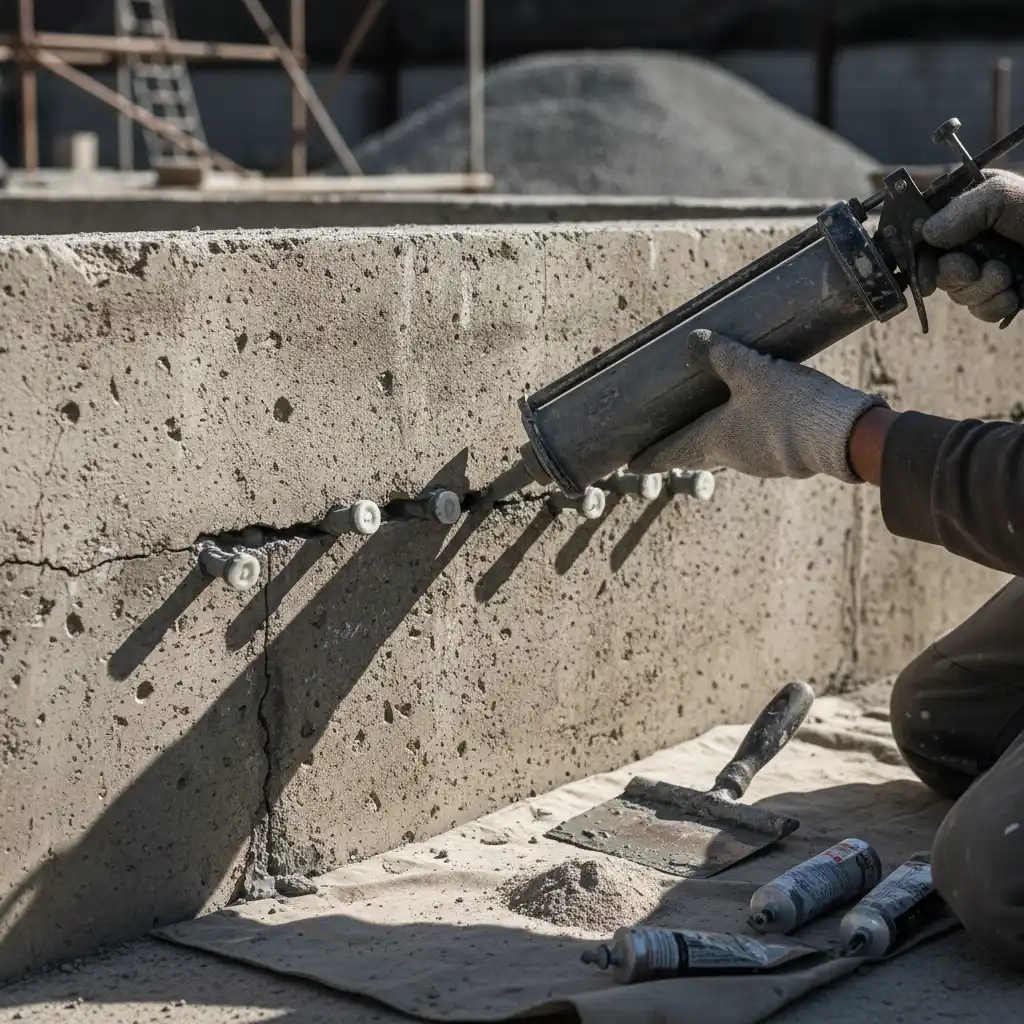
Our team in action — foundation-repair professionals serving Pflugerville
Why Foundation Repair Methods Are Needed in Pflugerville, TX
Pflugerville’s foundation challenges are among the most pronounced in the greater Austin metropolitan area, and the reasons are rooted in geology, hydrology, and climate — not construction quality. The city sits squarely within the Austin Chalk and Taylor Marl geological transition zone, overlain by the Blackland Prairie’s characteristic Houston Black clay series. This soil type has a liquid limit commonly measured above 60 and a shrink-swell potential that can generate vertical movement of 3 to 6 inches in unprotected slabs during a single dry season.
The Central Texas drought of 2011 — one of the most severe on record, with Pflugerville recording less than 12 inches of rainfall for the calendar year compared to a normal average of approximately 34 inches — caused widespread foundation distress across the city. Neighborhoods like Windermere, Yorkshire, and Villages of Hidden Lake saw dramatic increases in foundation repair calls as clay soils desiccated and contracted beneath slabs that had been stable for decades. That single weather event alone caused measurable settlement of 2 to 4 inches in dozens of properties along Pecan Street Extension and Wells Branch Parkway.
Drainage is a compounding factor. Much of Pflugerville’s older residential grid was developed before modern drainage codes required positive slope grading away from foundations. Properties in Pflugerville’s pre-2000 subdivisions — particularly those in the 78660 zip code near Colorado Sand Drive and Dessau Road — frequently experience ponding within 5 feet of their foundation perimeter, which causes differential soil saturation and the uneven heaving that creates diagonal cracking in walls and sticking doors.
Tree root intrusion is another Pflugerville-specific concern. Live oaks, cedar elms, and pecan trees — all common in Pflugerville’s residential landscapes — send root systems 20 to 40 feet from their trunks in search of moisture. When those roots reach the desiccated clay beneath a slab, they accelerate drying and localized settlement. The tree canopy density in established neighborhoods like Cele and the Bohls Junction area means this problem affects a significant share of pre-1995 homes.
The rapid pace of construction near the SH-130 toll corridor has also contributed to foundation issues in newer areas. Subdivisions built quickly on previously undisturbed land — including Teravista and Forest Creek on the Round Rock–Pflugerville border — sometimes feature fill material that was not adequately compacted before slabs were poured, leading to early settlement within the first 5 to 10 years of occupancy. Additionally, Pflugerville’s proximity to the Gilleland Creek watershed means that periodic flooding events — including those associated with Tropical Storm Hermine in 2010 and record rains in May 2015 — can cause erosion beneath perimeter beams, especially in properties within 1,000 feet of the creek corridor.
Learn About Structural Foundation Repair in Pflugerville
Signs You Need Foundation Repair in Pflugerville
Interior Warning Signs
- Diagonal cracks running from door and window corners at 45-degree angles — a hallmark of differential settlement in Pflugerville’s clay-heavy soils
- Interior doors that stick, drag along the floor, or no longer latch despite no history of swelling
- Sloping or bouncy floors, particularly noticeable when walking from one room to another
- Separation between crown molding and the ceiling, or between baseboards and the floor
- Cracks in ceramic tile, especially in hallways and bathrooms where slab movement concentrates stress
Exterior Warning Signs
- Stair-step cracking in brick veneer, commonly seen on the south and west elevations of Pflugerville homes exposed to peak sun and drying winds
- Gaps appearing between the brick facade and window or door frames
- Visible cracks in the concrete slab visible in garage floors or at the perimeter beam
- Separation between the porch, driveway, or walkway and the main structure
Urgent Indicators Requiring Immediate Action
- Cracks wider than 1/4 inch anywhere in the foundation or exterior masonry
- Leaning or bowing exterior walls
- Sudden appearance of multiple new cracks after a prolonged dry period (common in Pflugerville summer months)
- Doors or windows that have become impossible to open or close within a short timeframe
Request an Emergency Foundation Inspection in Pflugerville
Foundation Repair Methods We Use in Pflugerville
1. Driven Steel Pier Installation
Steel piers are hydraulically driven through unstable clay to reach competent bearing strata — typically Austin Chalk bedrock at depths of 18 to 30 feet beneath Pflugerville properties. This method is the most common choice for settlement caused by soil shrinkage and is particularly effective for homes in Windermere, Yorkshire, and the older sections of Pflugerville near Pecan Street, where deep clay columns underlie the slab. Steel piers provide permanent, load-transferred support and are the preferred solution for structures experiencing more than 2 inches of differential settlement.
2. Helical Pier Installation
Helical piers are screwed into the ground rather than driven and are ideal for interior access points, additions, or situations where vibration must be minimized — such as homes adjacent to Gilleland Creek where soil is saturated near the surface. They reach bearing depth faster in sandy transition zones found along Pflugerville’s eastern growth corridors.
3. Pressed Concrete Pilings
Cylindrical concrete sections pressed hydraulically to refusal are a cost-effective solution commonly used in Pflugerville’s mid-range residential market. They are appropriate when soil bearing capacity is reached within 10 to 15 feet and are frequently selected for homes in Pfennig Farm and Villages of Hidden Lake.
4. Polyurethane Foam Injection (Slab Lifting)
High-density foam injected through small drill holes expands beneath the slab to fill voids and lift settled concrete sections. This non-invasive method is ideal for garage floors, interior slab sections, and commercial parking areas along Pflugerville Parkway where minimal disruption is required.
5. Drainage Correction and Root Barrier Installation
Often used in conjunction with pier systems, drainage correction redirects surface water away from the foundation perimeter. Root barriers are installed along property lines adjacent to mature live oaks — one of the most common contributing factors to foundation problems in Pflugerville‘s established residential areas.
Learn More About Concrete Foundation Repair Methods
Ready for Foundation Repair Methods? Get Your Free Estimate Today.
Round Rock Foundation Repair Group serves Pflugerville and the surrounding area — we’ll be on-site within 24 hours.
📞 Call (512) 220-3502Foundation Repair Methods Cost in Pflugerville, TX
The cost of foundation repair in Pflugerville varies significantly based on the method selected, the number of support points required, soil depth to bearing strata, and the overall extent of structural movement. Below are representative price ranges based on work performed in the Pflugerville market:
- Foundation Inspection: $200 to $500 for a full elevation-reading inspection with written report. Some companies offer free inspections, though independent paid inspections provide unbiased documentation.
- Pressed Concrete Pilings: $1,200 to $1,800 per pier, with most residential jobs in Pflugerville requiring 8 to 20 piers. Total project costs typically range from $9,600 to $36,000.
- Driven Steel Piers: $1,500 to $2,500 per pier. For average Pflugerville homes requiring 10 to 16 piers, total costs range from $15,000 to $40,000.
- Helical Piers: $1,800 to $3,000 per pier, typically used in smaller quantities for targeted problem areas. Expect $10,000 to $25,000 for most residential applications.
- Polyurethane Foam Injection: $800 to $2,500 for localized slab lifting in garages or interior sections. Larger commercial applications on Pflugerville Parkway may reach $5,000 to $15,000.
- Drainage Correction: $1,500 to $8,000 depending on yard size, grading requirements, and French drain footage — a common add-on for Pflugerville properties with negative grading toward the foundation.
Pflugerville-specific pricing factors include the greater depth required to reach Austin Chalk bedrock in the city’s eastern zones (which increases pier material costs), permitting fees through the City of Pflugerville Building Division, and the logistics of working in higher-density newer subdivisions with limited equipment access. Most reputable contractors offer financing options. Always request a written, itemized estimate before committing to any repair plan.
Get a Detailed Foundation Repair Cost Estimate in Pflugerville
Pflugerville Neighborhoods We Serve
Windermere and Yorkshire (Built 1978–1995)
These are among Pflugerville’s oldest residential subdivisions, with conventional slab-on-grade homes that predate post-tensioned cable systems. Decades of Blackland clay shrink-swell cycles have created significant cumulative settlement in many properties. We frequently work here using driven steel piers reaching 20 to 25 feet to achieve stable bearing.
Falcon Pointe (Built 2004–2015)
Located in east Pflugerville near FM 685, Falcon Pointe features two-story brick-veneer homes on post-tensioned slabs. Despite being newer, many properties have experienced early settlement tied to inadequate lot drainage and fill soil compaction issues. Helical piers and drainage correction are common repair combinations here.
Pfennig Farm (Built 1998–2008)
A mid-size subdivision near Pflugerville Middle School, Pfennig Farm homes show classic diagonal cracking patterns associated with moderate differential settlement. Pressed concrete pilings are frequently the most cost-effective solution for this building era and construction type.
Villages of Hidden Lake (Built 2000–2012)
Situated near Gilleland Creek, this neighborhood carries above-average risk from both soil saturation during flood events and extreme drying during drought. We adapt repair designs here to account for variable soil moisture conditions at depth, often using steel piers with broader bracket systems.
View All Pflugerville and Central Texas Service Areas
Foundation Maintenance Tips for Pflugerville Homeowners
- Maintain Consistent Soil Moisture: During Pflugerville’s hot, dry summers — when temperatures routinely exceed 100°F from June through September — use a soaker hose placed 18 inches from your foundation perimeter to prevent clay desiccation and shrinkage beneath the slab.
- Ensure Positive Drainage Grading: The ground around your home should slope away from the foundation at a minimum of 1 inch per foot for the first 6 feet. This is especially important for pre-2000 Pflugerville homes where original grading has settled.
- Clean Gutters and Extend Downspouts: Discharge downspouts at least 5 feet from the foundation. Clogged gutters are a leading cause of concentrated perimeter saturation in Pflugerville’s wet spring seasons.
- Monitor Tree Proximity: Keep large live oaks and pecan trees — common in Pflugerville landscapes — at least 15 to 20 feet from the foundation, or install root barriers to prevent moisture depletion beneath the slab.
- Inspect Foundation Annually: Walk the perimeter each spring and fall looking for new cracks, gaps, or changes in brick veneer alignment — ideally after Pflugerville’s rainy season and after the summer drought cycle.
- Repair Plumbing Leaks Promptly: Slab leaks introduce localized soil saturation that can cause heaving in isolated slab sections. If you notice unexplained increases in water bills, schedule a plumbing leak detection test.
- Avoid Overwatering Landscaping Adjacent to the Foundation: While moisture maintenance is important, excessive irrigation immediately adjacent to the slab can cause heaving in already-saturated clay soils, particularly in spring months.
Why Choose Round Rock Foundation Repair Group for Foundation Repair in Pflugerville
Round Rock Foundation Repair Group was built to serve the specific soil and structural conditions of the Central Texas region, and Pflugerville is a primary part of our service footprint. We understand that Pflugerville’s Blackland Prairie clay behaves differently from soils found in Georgetown’s limestone belt or Austin’s fill zones — and our repair recommendations reflect that granular local knowledge.
Our team performs thorough elevation readings at every inspection rather than offering visual-only estimates, giving you precise data to understand the scope of your foundation’s movement before any repair decision is made. We work across the full range of Pflugerville’s building stock — from 1980s conventional slabs in Windermere to post-tensioned two-story homes in Falcon Pointe and commercial slabs along East Pflugerville Parkway.
We are fully transparent with pricing, providing written, itemized proposals with no hidden fees. Our repair methods are chosen to match the specific conditions of each property — not to maximize pier counts. We serve Pflugerville homeowners, property managers, real estate professionals, and commercial operators throughout the 78660 and 78691 zip codes. Call (512) 220-3502 to speak with a local expert today.
Learn More About Round Rock Foundation Repair Group
Frequently Asked Questions About Foundation Repair Methods in Pflugerville, TX
How much does foundation repair cost in Pflugerville, TX?
Foundation repair costs in Pflugerville typically range from $9,000 to $40,000 for full pier systems, depending on the method used and the number of piers required. Smaller projects using foam injection for a settled garage floor may cost $1,500 to $4,000. Pflugerville’s deeper clay columns — often 15 to 25 feet before reaching Austin Chalk — tend to make steel pier projects slightly more expensive than comparable jobs in areas closer to the surface limestone found in Georgetown.
How long does foundation repair take in Pflugerville?
Most residential pier installations in Pflugerville are completed in 1 to 3 days of active on-site work. The full process — from initial inspection through permitting and repair — typically spans 2 to 4 weeks. Larger commercial jobs or projects requiring extensive drainage correction may take 5 to 10 business days of on-site work.
What foundation repair method is best for Pflugerville’s soil type?
Driven steel piers are generally the most reliable long-term solution for Pflugerville’s deep Blackland Prairie clay because they transfer structural load past the active clay zone to stable Austin Chalk bedrock. For properties with shallower clay profiles in Pflugerville’s western areas, pressed concrete pilings offer a cost-effective alternative. The right method depends on your specific soil profile, which our inspection will determine.
Does the 2011 drought still affect Pflugerville foundations?
Yes. The cumulative soil shrinkage caused by the 2011 drought — during which Pflugerville received under 12 inches of rainfall — set a new baseline for clay void volume beneath many slabs. Properties that experienced settlement during that period and were not repaired continue to show progressive movement. Even properties that appeared to recover with subsequent rainfall may have residual void spaces that increase vulnerability to future drought cycles.
Is foundation repair covered by homeowner’s insurance in Pflugerville?
Standard homeowner’s insurance policies in Texas generally do not cover foundation settlement caused by soil movement, drought, or normal settling — which are the most common causes in Pflugerville. However, if foundation damage is caused by a covered peril such as a plumbing slab leak, partial coverage may apply. We recommend reviewing your policy and consulting your insurer before assuming coverage.
Do I need a permit for foundation repair in Pflugerville?
The City of Pflugerville requires building permits for most structural foundation repair work, including pier installation. Round Rock Foundation Repair Group handles all permit applications and scheduling with the Pflugerville Building Inspection Division as part of our project management process.
Can trees near my Pflugerville home damage my foundation?
Yes. Live oaks, cedar elms, and large pecans — all prevalent in Pflugerville’s residential landscapes — can draw moisture from the clay beneath your slab through root systems extending 20 to 40 feet from the trunk. This accelerated drying creates localized settlement, particularly on south-facing elevations with the greatest sun exposure. Installing root barriers and maintaining proper irrigation near the foundation can mitigate this risk.
How do I know if I need foundation repair or just cosmetic patching?
Cosmetic cracks — hairline fractures less than 1/16 inch wide that do not change over time — may require only patching. However, cracks wider than 1/4 inch, diagonal cracks at door corners, multiple concurrent symptoms (sticking doors, sloping floors, exterior stair-step cracks), or any crack showing progressive growth over time indicate active structural movement that requires a professional foundation inspection and likely repair. Never rely solely on patching when active movement is present.
View More Foundation Repair FAQs for Pflugerville Homeowners
Get Expert Foundation Repair in Pflugerville, TX — Call Today
If you have noticed cracks, sticking doors, uneven floors, or any of the warning signs described on this page, do not wait. Foundation movement in Pflugerville’s expansive clay soils is progressive — the longer active settlement continues, the more costly and complex the repair becomes. Round Rock Foundation Repair Group is ready to provide a thorough, honest assessment of your property and a clear, itemized repair plan tailored to Pflugerville’s unique soil conditions.
Call us now at (512) 220-3502 to schedule your foundation inspection in Pflugerville. We serve Windermere, Yorkshire, Falcon Pointe, Pfennig Farm, Villages of Hidden Lake, and all surrounding Pflugerville communities. We also serve Round Rock, Cedar Park, Georgetown, Austin, Brushy Creek, and neighborhoods throughout Central Texas.
Request a Free Foundation Repair Estimate Online