
If you’re a homeowner in Leander, TX and you’ve noticed cracks in your walls, sticking doors, or uneven floors, you may be wondering: does insurance cover foundation repair in Leander, TX? The answer is nuanced and depends heavily on the cause of the damage. Standard homeowners insurance policies typically cover foundation damage caused by sudden, accidental events — such as a burst pipe or a covered peril — but they generally exclude damage caused by soil settlement, drought-related shrinkage, or gradual deterioration, all of which are extremely common in the Leander area.
At Round Rock Foundation Repair Group, we specialize in helping Leander homeowners understand their coverage options, document damage for insurance claims, and complete professional foundation repairs that restore structural integrity. Our team has deep experience with the unique soil conditions, clay-heavy geology, and weather patterns that make foundation issues so prevalent throughout Leander and the greater Williamson County region. Call us today at (512) 220-3502 to schedule your inspection.
Understanding Foundation Repair Insurance Coverage
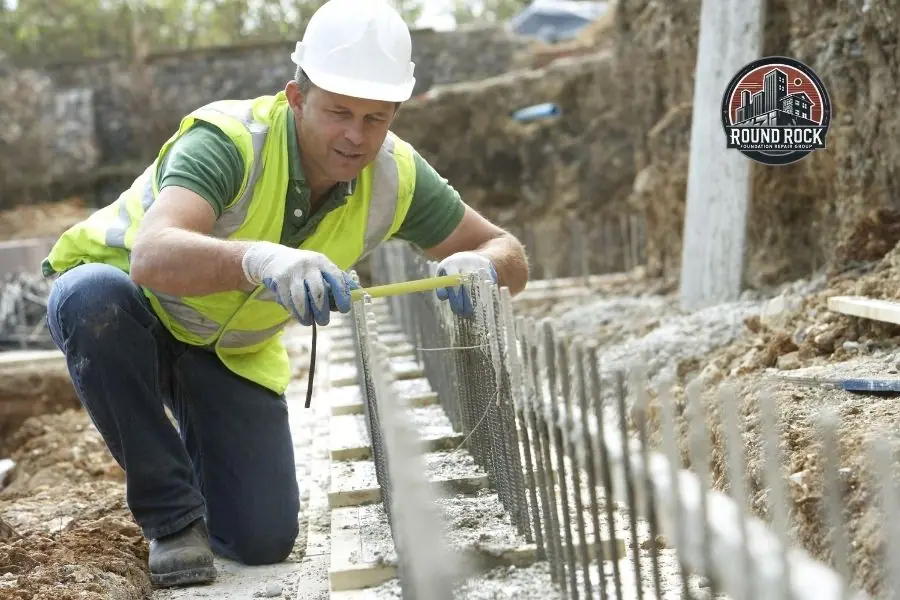
Foundation repair insurance coverage is one of the most misunderstood topics in homeownership. When a homeowner files a claim for foundation damage, the insurance company will investigate the root cause of the problem — and that root cause determines whether the claim is approved or denied.
Homeowners insurance is designed to protect against sudden and accidental losses. If a water line beneath your slab bursts and causes the soil beneath your foundation to erode, leading to settlement and cracking, that damage may be covered because a covered peril (plumbing failure) caused it. Similarly, if a vehicle strikes your foundation wall or an explosion damages your structure, those events may trigger a valid claim.
Read moreShow less
However, the vast majority of foundation issues in Leander and across Central Texas stem from gradual causes: expansive clay soils that shrink during droughts and swell during wet seasons, poor original drainage design, root intrusion from trees, and slow soil settlement over years or decades. These are specifically excluded under standard HO-3 homeowners policies.
Some specialty policies and add-on endorsements do offer broader coverage. Earth movement riders, sewer and drain backup endorsements, and service line protection plans can each play a role in offsetting foundation repair costs under the right circumstances. It is essential to review your policy declarations page carefully and consult with both your insurance agent and a licensed foundation repair contractor before assuming coverage exists or does not exist.
Leander was incorporated in 1978 and has experienced explosive residential growth since the mid-2000s, with thousands of homes built across developments like Crystal Falls, Bryson, and Mason Hills. Many of these homes were constructed on expansive Blackland Prairie soils with minimal post-construction drainage planning, creating a large population of structures that are now reaching the age where foundation movement becomes apparent. Understanding the insurance landscape is not just a financial concern — it is a critical part of responsible homeownership in this region.
Round Rock Foundation Repair Group offers professional foundation inspections that include detailed documentation suitable for insurance claim submission, giving you the best possible foundation for a successful claim.
Why Foundation Insurance Questions Are So Prevalent in Leander, TX
Expansive Clay Soils (Austin Chalk and Blackland Prairie)
The dominant soil type beneath much of Leander is a highly expansive Vertisol clay, colloquially known as “black gumbo” or Blackland Prairie soil. This soil has a plasticity index (PI) that commonly ranges from 30 to 60, meaning it expands significantly when wet and contracts dramatically when dry. During the severe drought of 2011 — one of the worst single-year droughts in Texas history, with Williamson County recording less than 14 inches of rainfall against a 32-inch annual average — foundations across Leander shifted downward by as much as 2 to 4 inches in some neighborhoods as the underlying soil desiccated and shrank. Homes in Crystal Falls and the older sections of Mason Hills were particularly hard hit during this period.
The Boom-Bust Rainfall Cycle
Central Texas weather follows an extreme wet-dry cycle that is uniquely destructive to foundations. In October 2018, Williamson County recorded over 15 inches of rainfall in a single month, causing rapid soil expansion after a prolonged dry period. This sudden volumetric change in soil exerts upward pressure — called heave — on slab foundations, sometimes lifting them by 1 to 3 inches in localized areas. Homes in Bryson and Larkspur that experienced heave in late 2018 showed interior wall cracking and door frame distortion by early 2019.
Rapid Development and Disturbed Soils
Leander’s population grew from approximately 7,596 in 2000 to over 75,000 by 2023 — nearly a ten-fold increase in two decades. This explosive growth meant thousands of homes were built on previously undisturbed or recently graded land. Construction disturbance loosens native soil, and newly placed fill soil under and around foundations can settle unevenly for the first 5 to 15 years after construction. Many Leander homes built between 2005 and 2015 are now entering that settlement window.
Tree Root Intrusion Near Older Structures
Texas Live Oaks and Cedar Elms — both common in established Leander neighborhoods like Trails of Leander and Devine Lake — have root systems that extend 2 to 3 times the canopy diameter. These roots extract moisture from the soil directly beneath slabs, creating localized desiccation zones that mirror drought effects on a smaller scale, often in areas that receive adequate rainfall everywhere except directly below a tree.
Plumbing Failures Under Post-Tension Slabs
A significant portion of Leander homes built after 1990 use post-tensioned slab construction. When PVC drain lines beneath these slabs leak — a common failure mode after 15 to 25 years of service — the escaping water saturates soil and causes differential heave. Plumbing-related foundation damage is one of the few categories that may be covered by insurance, making proper diagnosis by a qualified structural foundation repair expert critically important.
Free, no-obligation estimates
Talk to Round Rock Foundation Repair Group
Tell us what you need and we’ll take it from there.
Signs You May Need Foundation Repair (and an Insurance Claim) in Leander
Structural Warning Signs
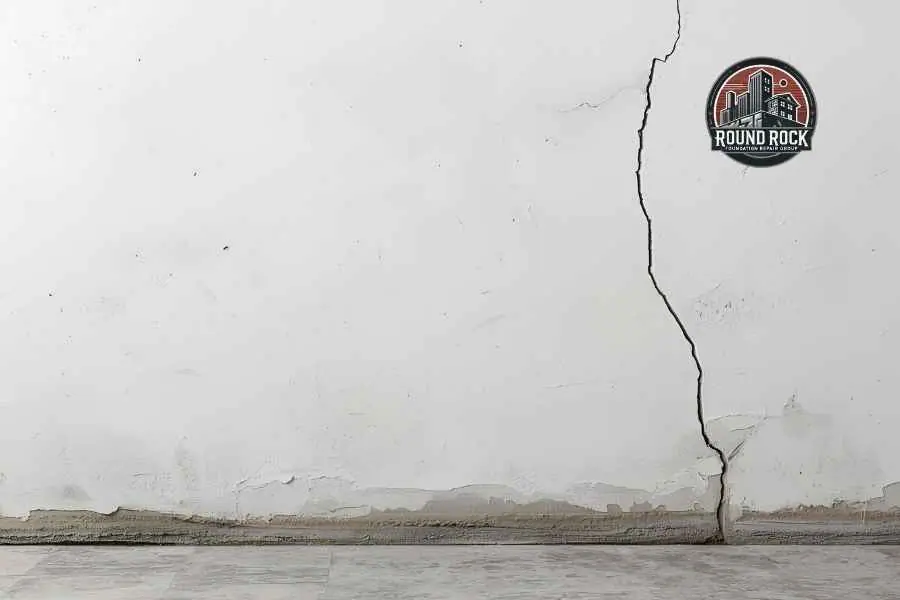
- Diagonal cracks running from the corners of door frames or window frames at 45-degree angles — a classic sign of differential settlement
- Horizontal cracks in brick veneer or concrete block walls, indicating lateral pressure from expansive soils
- Stair-step cracking in brick mortar joints along exterior walls
- Visible gaps between interior walls and the ceiling or floor
Interior Symptoms
- Doors and windows that suddenly stick, bind, or no longer latch properly
- Floors that feel spongy, bounce, or have a noticeable slope (greater than 1 inch per 8 feet is typically considered actionable)
- Cracks in ceramic tile, particularly diagonal or in a radiating pattern
- Separation between baseboards and the floor or wall
Exterior Warning Signs
- Gaps appearing between the foundation and the exterior brick or siding
- Water pooling within 6 feet of the foundation after rain
- Chimney leaning or separating from the main structure
Urgency Indicator: If you notice multiple symptoms appearing simultaneously or worsening rapidly after a significant weather event — especially after a prolonged drought breaks with heavy rain, which is common in Leander — contact a foundation professional immediately. Rapid change may indicate active movement that can be documented for insurance purposes.
Foundation Repair Methods We Use in Leander, TX
Pressed Concrete or Steel Pier Installation
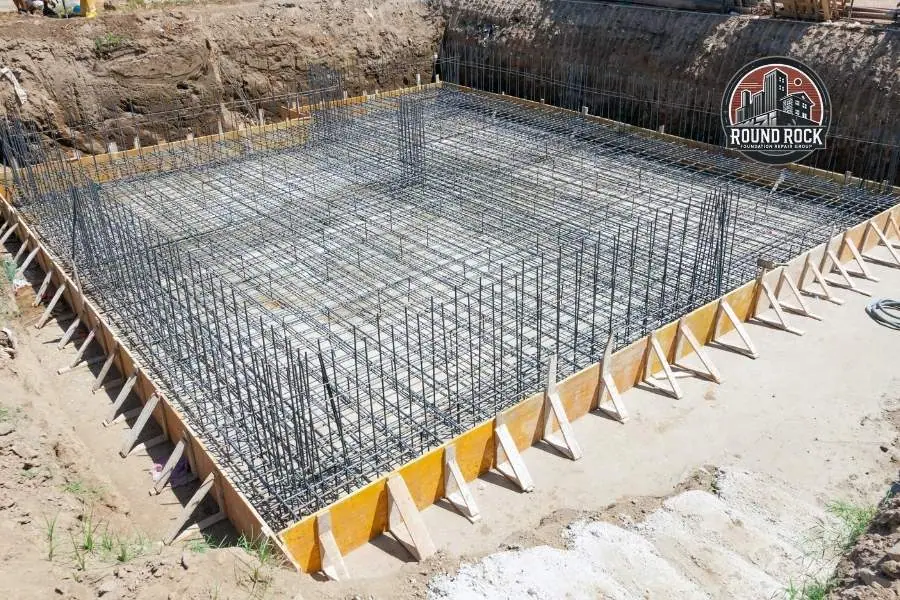
The most common repair method for settled Leander slab foundations. Steel push piers or pressed concrete cylinders are driven through unstable expansive clay to reach load-bearing bedrock or competent soil — typically at depths of 12 to 22 feet in the Leander area, depending on proximity to the Austin Chalk formation. Best used for foundations that have settled downward due to soil shrinkage or erosion. Concrete foundation repair using this method typically restores elevation within 1 to 2 days of pier installation.
Mudjacking and Polyurethane Foam Lifting
For smaller sections of settled concrete — such as garage aprons, sidewalks, or isolated interior slab panels — mudjacking (pumping a cement-soil slurry beneath the slab) or polyurethane foam injection can lift and stabilize the concrete without full pier installation. This is a cost-effective option for minor, localized settlement in Leander’s newer subdivisions where deep movement has not yet occurred.
Interior Drainage and Moisture Management Systems
When foundation movement in Leander is driven by moisture imbalance — particularly from irrigation over-watering or poor drainage — we install interior moisture management systems combined with root barriers and surface drainage corrections to stabilize the soil environment and prevent future movement.
Crawl Space Repair and Encapsulation
For the smaller number of Leander homes built over crawl spaces — primarily older structures near downtown Leander and in some custom home areas — crawl space repair including beam and pier replacement, moisture vapor barriers, and structural sistering addresses both structural and moisture-related failures.
Learn moreFoundation Patching and Crack Injection
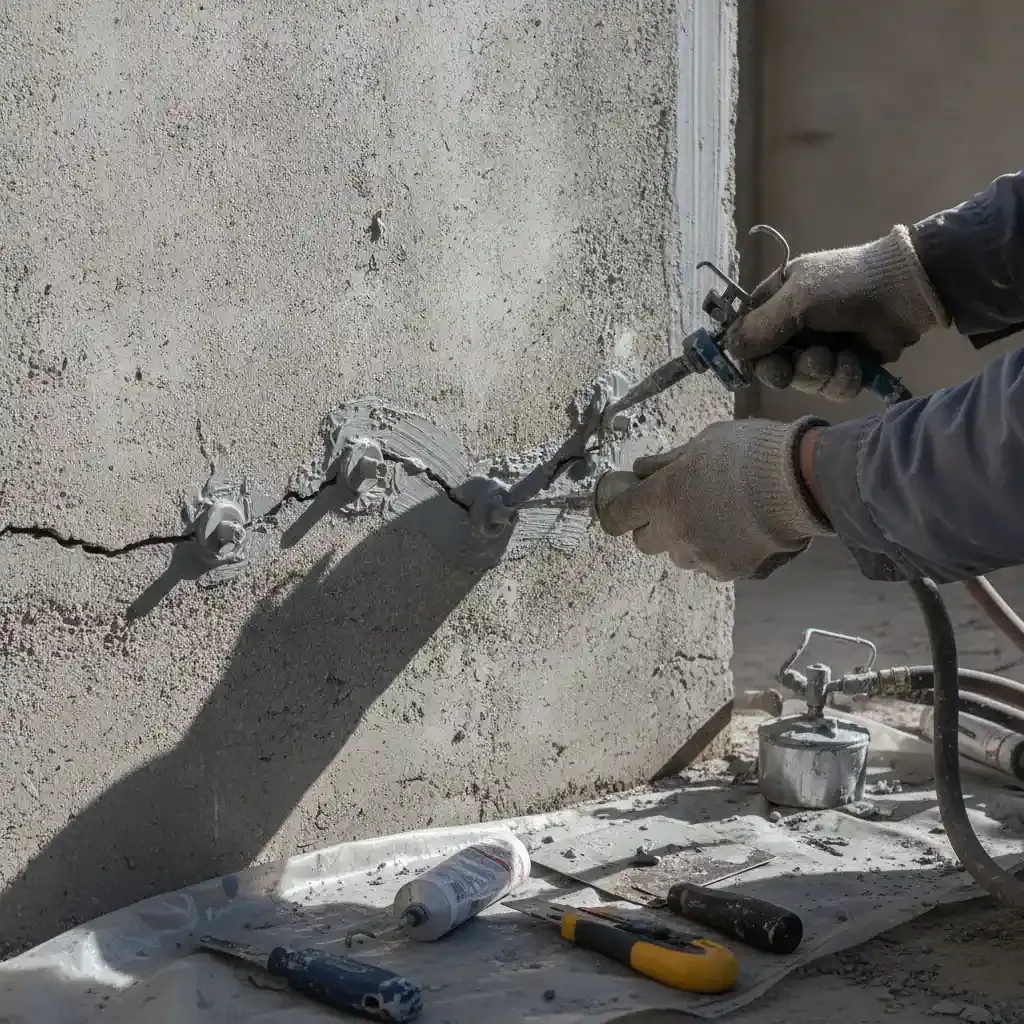
Foundation patching using epoxy injection or polyurethane foam sealing addresses non-structural cracks, waterproofs the foundation perimeter, and documents pre-repair crack conditions — which is particularly useful when preparing an insurance claim file.
Foundation Repair Cost in Leander, TX: What to Expect
Understanding the cost of foundation repair in Leander helps you evaluate your insurance settlement offer, budget for out-of-pocket expenses, and make informed decisions. Costs vary significantly based on the extent of movement, the repair method required, and access conditions on your property.
Typical Cost Ranges
- Foundation Inspection: $300 to $750 for a comprehensive inspection with full documentation package suitable for insurance submission
- Polyurethane Foam Lifting (minor areas): $800 to $2,500 depending on the number of injection points required
- Pressed Steel Pier Installation: $1,200 to $1,800 per pier installed; most Leander homes require 8 to 20 piers for full perimeter stabilization, putting total costs in the $12,000 to $32,000 range for comprehensive repairs
- Interior Drainage and Moisture Management: $3,000 to $8,000 depending on system length and complexity
- Crawl Space Repair: $5,000 to $15,000 depending on extent of beam and pier replacement needed
- Foundation Patching and Crack Injection: $500 to $3,000 for cosmetic and waterproofing work
Read moreShow less
Insurance Reimbursement Considerations
When a claim is approved — most commonly for plumbing-leak-caused damage in Leander — insurance reimbursement typically covers the repair minus your deductible (commonly $1,000 to $5,000 on Leander policies) and minus any depreciation applied by the adjuster. Understanding these deductions in advance helps you avoid surprises at settlement.
Home foundation repair costs in Leander have increased approximately 18% since 2021 due to material and labor cost inflation, making timely action — and successful insurance claims — more financially important than ever.
Leander Neighborhoods We Serve
Crystal Falls
One of Leander’s largest master-planned communities, with homes built primarily between 2002 and 2016 on heavily expansive Blackland Prairie soils. Many Crystal Falls homes are reaching the 10 to 20-year mark where post-tension slab cable corrosion and long-term soil cycling become significant concerns. Drainage from the community’s elevation changes also creates concentrated water exposure along some lot lines.
Bryson
A newer community with construction concentrated from 2015 to present. Bryson homes are largely within the initial settlement window for fill soils placed during mass grading. Foundation movement here is often driven by settlement rather than drought shrinkage, and insurance documentation for construction-related issues may require specific engineering reports.
Trails of Leander
An established neighborhood with homes dating to the 1990s and early 2000s. Mature Live Oak trees throughout this community create significant soil desiccation concerns, and older PVC plumbing is reaching failure age — making plumbing-related insurance claims more common here than in newer areas.
Mason Hills
Perched on elevated terrain with thin soil profiles over Austin Chalk bedrock in some areas, Mason Hills homes experience a different failure mode: limited pier depth options and rock-interface drainage issues that concentrate surface water beneath slabs during heavy rain events.
Preventative Maintenance Tips for Leander Homeowners
- Maintain Consistent Soil Moisture Year-Round: Use a soaker hose system placed 12 to 18 inches from your foundation perimeter and run it 2 to 3 times per week during Leander’s dry summers (May through September) to prevent the extreme soil shrinkage that causes settlement.
- Grade Your Yard Properly: Ensure the soil slopes away from your foundation at a minimum rate of 1 inch per foot for the first 6 feet. Leander’s clay soils do not drain quickly, making surface grading critical.
- Clean and Maintain Gutters Seasonally: Leander’s cedar and oak trees clog gutters rapidly. Clean gutters twice per year (March and October) to prevent downspout overflow that saturates foundation soils.
- Direct Downspouts Away from the Foundation: Extend downspout discharge at least 6 feet from the foundation — 10 feet is preferable given Leander’s clay soil drainage characteristics.
- Monitor and Test Under-Slab Plumbing Every 10 Years: Schedule a plumbing pressure test after your home reaches 15 years of age to identify slow leaks before they cause significant foundation movement.
- Manage Tree Placement: Plant large trees (Live Oak, Pecan, Cedar Elm) no closer than 15 to 20 feet from the foundation. Remove volunteer cedar trees that frequently sprout near Leander foundations.
- Document Your Foundation Condition Annually: Photograph crack locations each spring. Year-over-year comparison is your best early warning system — and invaluable documentation for future insurance claims.
Why Choose Round Rock Foundation Repair Group for Your Leander Foundation Insurance and Repair Needs
Round Rock Foundation Repair Group brings specialized knowledge of Central Texas soil conditions, Williamson County construction practices, and the specific insurance coverage landscape that affects Leander homeowners. We understand the difference between the Blackland Prairie clay found in Crystal Falls, the transitional soils in Bryson, and the shallow-bedrock conditions in Mason Hills — and we design repair solutions accordingly rather than applying a one-size-fits-all approach.
Our team has helped hundreds of homeowners across Leander, Cedar Park, and Round Rock navigate the insurance documentation process, and we are experienced in preparing claim packages that clearly communicate cause of loss in the language insurance adjusters need to approve claims.
Read moreShow less
We offer commercial foundation repair services in addition to residential work, serving Leander’s growing commercial corridor along US-183 and Crystal Falls Parkway. Whether your concern is a single-family home, a retail building, or a multi-family structure, our team has the equipment and expertise to assess and resolve the issue.
Contact us at (512) 220-3502 to schedule your foundation inspection and insurance consultation today.
FAQ
Frequently Asked Questions: Foundation Repair Insurance in Leander, TX
Does standard homeowners insurance cover foundation repair in Leander, TX?
Standard homeowners insurance (HO-3 policies, which are the most common in Leander) generally does NOT cover foundation damage caused by soil expansion and contraction, drought-related settlement, or gradual deterioration. These are the most common causes of foundation damage in Leander. Coverage MAY apply if the damage was caused by a sudden, covered peril such as a burst pipe, accidental water discharge, or another listed event in your policy.
My foundation cracked after the drought — will insurance pay for it?
Unfortunately, drought-related settlement and soil shrinkage are specifically excluded under virtually all standard homeowners policies issued in Texas. The Texas Department of Insurance has confirmed that earth movement — including soil shrinkage from drought — is a standard exclusion. This is one of the most common disappointments Leander homeowners face. We recommend reviewing your policy for any earth movement endorsements that may have been added.
How much does foundation repair cost in Leander if insurance doesn’t cover it?
Out-of-pocket foundation repair costs in Leander typically range from $5,000 to $32,000 depending on severity. Minor mudjacking or foam lifting jobs run $800 to $2,500. Full perimeter pier stabilization — the most common comprehensive repair for Leander homes — typically costs $15,000 to $28,000. We provide detailed, itemized estimates and can discuss financing options to help make repairs accessible.
How do I know if my foundation damage might be covered by insurance?
The key question is whether a covered peril caused the damage. If you’ve had a plumbing leak, a sewer backup, or another sudden event prior to noticing foundation problems, coverage may exist. We recommend calling your insurance agent first, then scheduling our foundation inspection so we can document the cause of loss accurately. Do not attempt repairs before your adjuster has inspected the damage.
How long does the foundation repair process take in Leander?
The inspection and documentation phase typically takes 5 to 7 business days. If an insurance claim is involved, adjuster scheduling can add 1 to 4 weeks to the timeline. Actual repair work — pier installation and slab lifting — typically takes 1 to 3 days for most Leander residential properties. Total time from first contact to completed repair is commonly 3 to 8 weeks when insurance is involved.
Can a plumbing leak under my slab be covered by insurance and cause foundation damage?
Yes — this is one of the most important situations in Leander. A leaking sewer line or water supply line beneath your post-tension slab can saturate the clay soil and cause differential heave. If the leak is a sudden and accidental discharge from a covered plumbing system, the resulting foundation damage may be covered. A pressure test of your under-slab plumbing is the first step in establishing this cause of loss. We regularly coordinate with licensed plumbers to document this scenario for insurance purposes.
Do you serve areas around Leander, including Cedar Park and Round Rock?
Yes. Round Rock Foundation Repair Group serves Leander, Cedar Park, Georgetown, Round Rock, Austin, Pflugerville, Brushy Creek, Wells Branch, Avery Ranch, Behrens Ranch, Sendero Springs, Forest Creek, Anderson Mill, and all surrounding communities. Our service area encompasses the full range of soil conditions and construction eras found across Williamson and Travis Counties.
What should I do right now if I think I have a foundation problem?
First, document everything with photographs, noting dates and any recent weather events (heavy rain, prolonged dry spell). Second, review your homeowners insurance policy for covered perils and exclusions. Third, call Round Rock Foundation Repair Group at (512) 220-3502 to schedule an inspection before making any repairs. Repairing before documentation can eliminate your ability to file an insurance claim successfully.
Get Your Foundation Inspection and Insurance Consultation Today
If you’re asking “does insurance cover foundation repair in Leander, TX?” — you need expert answers specific to your home, your soil conditions, and your policy. Round Rock Foundation Repair Group provides thorough foundation inspections, complete insurance documentation packages, and professional repairs using methods proven in Leander’s challenging Blackland Prairie clay environment.
Don’t let uncertainty about insurance coverage delay action on a problem that worsens with every wet-dry cycle. Our team is ready to inspect your property, document your damage, and guide you through the insurance process from start to finish.
Call us now at (512) 220-3502 to schedule your foundation inspection in Leander, TX. We serve Crystal Falls, Bryson, Trails of Leander, Mason Hills, and all surrounding communities throughout Williamson and Travis Counties.
Get in touch
Find foundation repair help near you
Request a free estimate online or give us a call — our team will follow up quickly.
- Call us(512) 220-3502
- Visit1 Chisholm Trail Rd suite 450 room j, Round Rock, TX 78681
- HoursMon-Sat: 7:00 am – 7:00 pm