You need foundation fixes that actually work in Round Rock’s clay soil and shifting seasons.
Helical piers, slab piers, and pier-and-beam stabilization are the methods contractors most often recommend for Round Rock homes because they anchor your foundation to stable soil and stop further movement.
Knowing which method fits your house and budget helps you avoid recurring cracks and costly repairs.
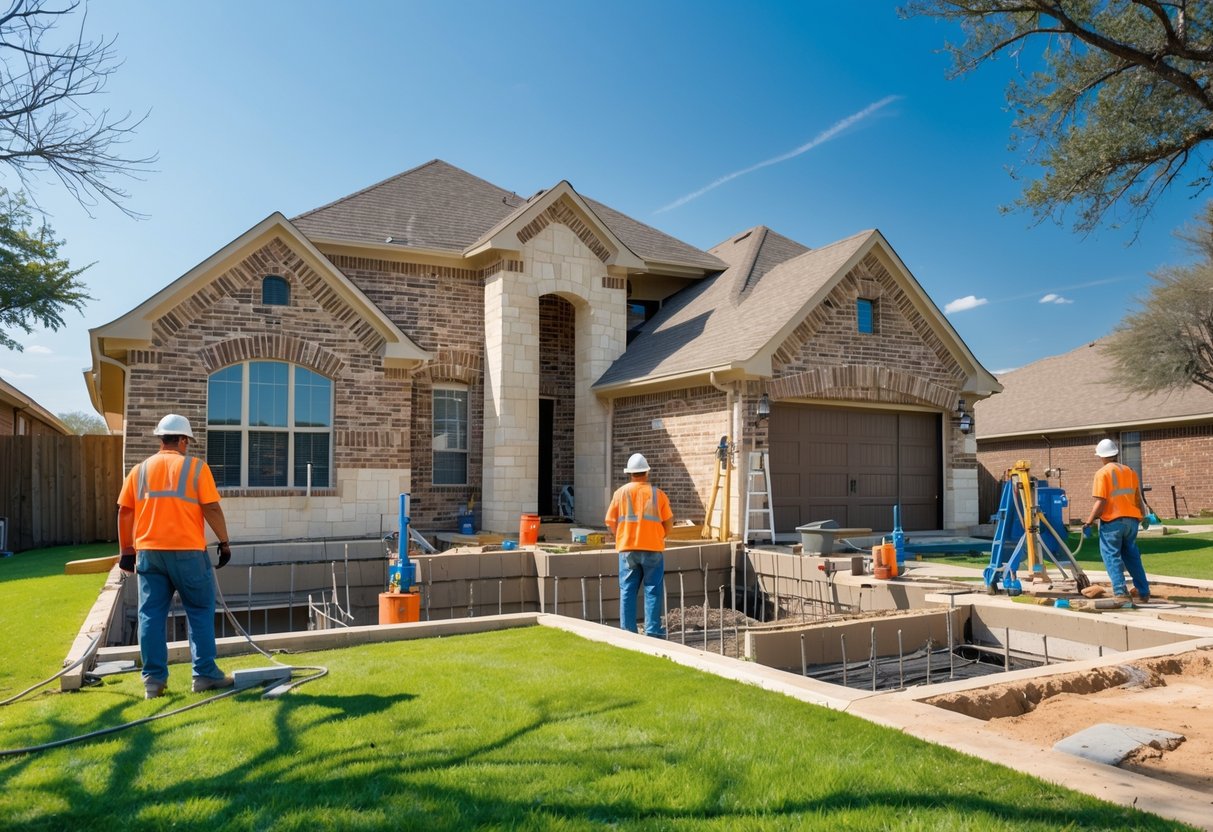
Act now to learn how each method works, what to expect during installation, and how to choose a qualified local contractor so you protect your home’s value and safety.
Key Takeaways
- Choose anchoring methods that reach stable soil under Round Rock’s shifting surface.
- Match the repair type to your foundation and budget for lasting results.
- Inspect, hire a licensed pro, and follow maintenance advice to prevent repeat issues.
Foundation Repair Methods Recommended for Round Rock, TX Homes
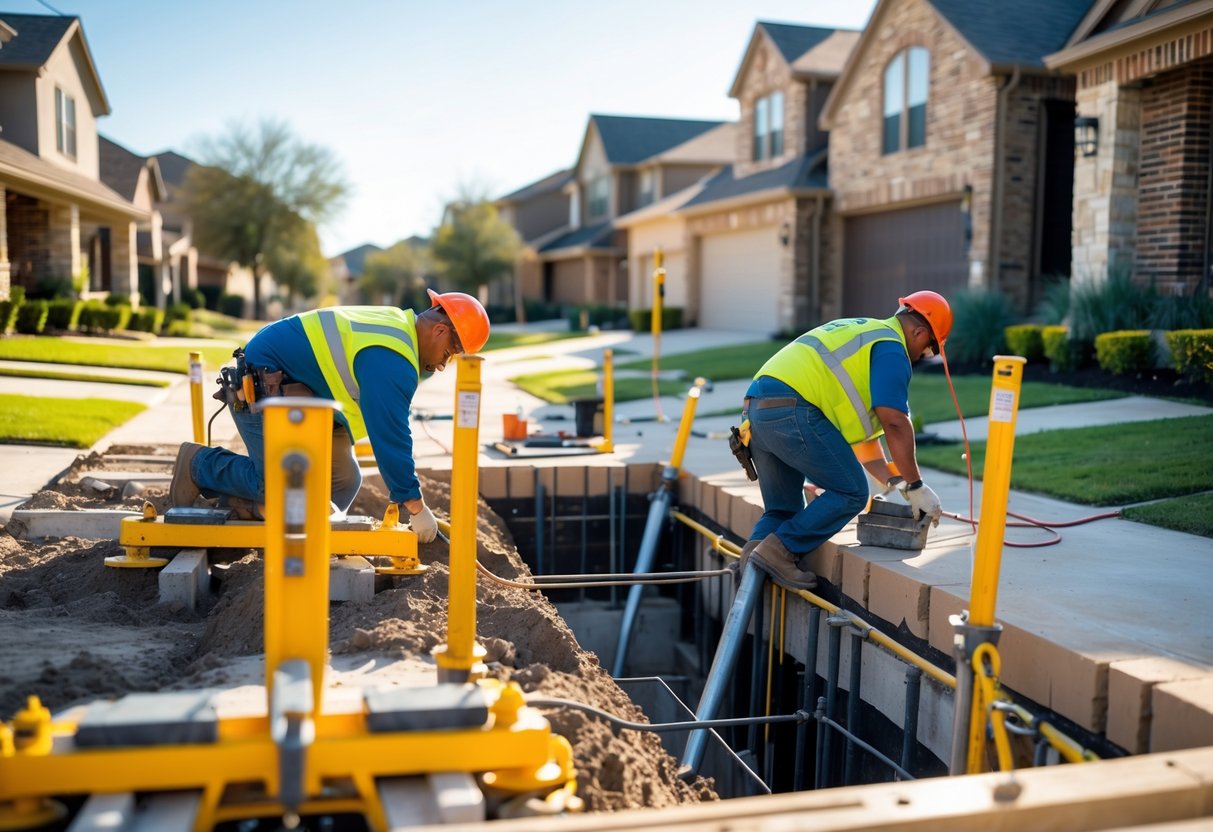
You will learn practical fixes for common problems like shifting clay, sinking slabs, and failing pier-and-beam systems.
The methods below focus on proven options used in Round Rock: soil-focused solutions, slab repair, pier repairs or replacement, and crack stabilization.
Dealing with Expansive Clay Soil
Expansive clay in Round Rock swells when wet and shrinks when dry, which moves footings and causes settlement and foundation cracks.
You should control moisture near your foundation first: keep gutters clear, extend downspouts 4–6 feet, maintain a consistent irrigation schedule, and avoid planting large trees too close.
When soil correction is required, contractors use moisture barriers, engineered drainage trenches, or replace the active clay zone with engineered fill.
For severe movement, underpinning with piers transfers load to stable soil or bedrock.
Options include steel piers, helical piers, and pressed piling.
Each pier type has limits on load capacity and depth, so choose a licensed contractor who tests soils and designs piers for your house load.
Concrete Slab Repair Techniques
If your home has a slab foundation with uneven floors or cracks, several repairs restore level and strength.
Slab jacking (mudjacking) pumps a cement slurry under the slab to lift low areas.
It is cost-effective for small lifts but adds weight to the soil.
Polyurethane foam injection is lighter and cures quickly.
Foam expands to fill voids and lifts slabs with minimal excavation.
It resists water and works well in tight spaces.
For long-term support, underpin slab edges with steel or concrete piers installed through the slab to load-bearing strata below.
Contractors will inspect for underlying soil issues; if expansive clay or deep voids exist, underpinning often outperforms slab-only fixes.
Pier and Beam Foundation Repair Methods
For pier-and-beam homes, you should inspect piers, wooden girders, and crawl space supports for rot, insect damage, or settlement.
Repair options range from shimming and sistering joists to full pier replacement.
Concrete piers and steel piers are common replacements; concrete piers are cast in place while steel piers are driven or pushed to bearing strata.
Helical piers screw into stable soil and work well where vibration must be limited.
Centerbeam or steel pier systems provide concentrated support under load-bearing beams.
During repair, contractors often jack the structure to correct settlement before installing new piers.
Always confirm the pier design accounts for your home’s load, pier spacing, and local soil reports.
Foundation Crack Repair and Stabilization
Small cracks can allow water and pests into your home and lead to wider damage if left untreated.
For non-structural surface cracks, epoxy or polyurethane injections seal and bond concrete to stop leaks.
Epoxy restores structural strength; polyurethane focuses on water sealing and flexibility.
For structural cracks from settlement, underpinning with steel or helical piers stabilizes the foundation while injection repairs the crack.
For large or stair-step cracks, contractors may remove unstable concrete, backfill with engineered soil, and install piers or pressed piling to stop further movement.
Choose methods based on crack pattern, soil tests, and whether you need short-term leak control or long-term stabilization.
Additional Considerations for Lasting Foundation Repairs in Round Rock
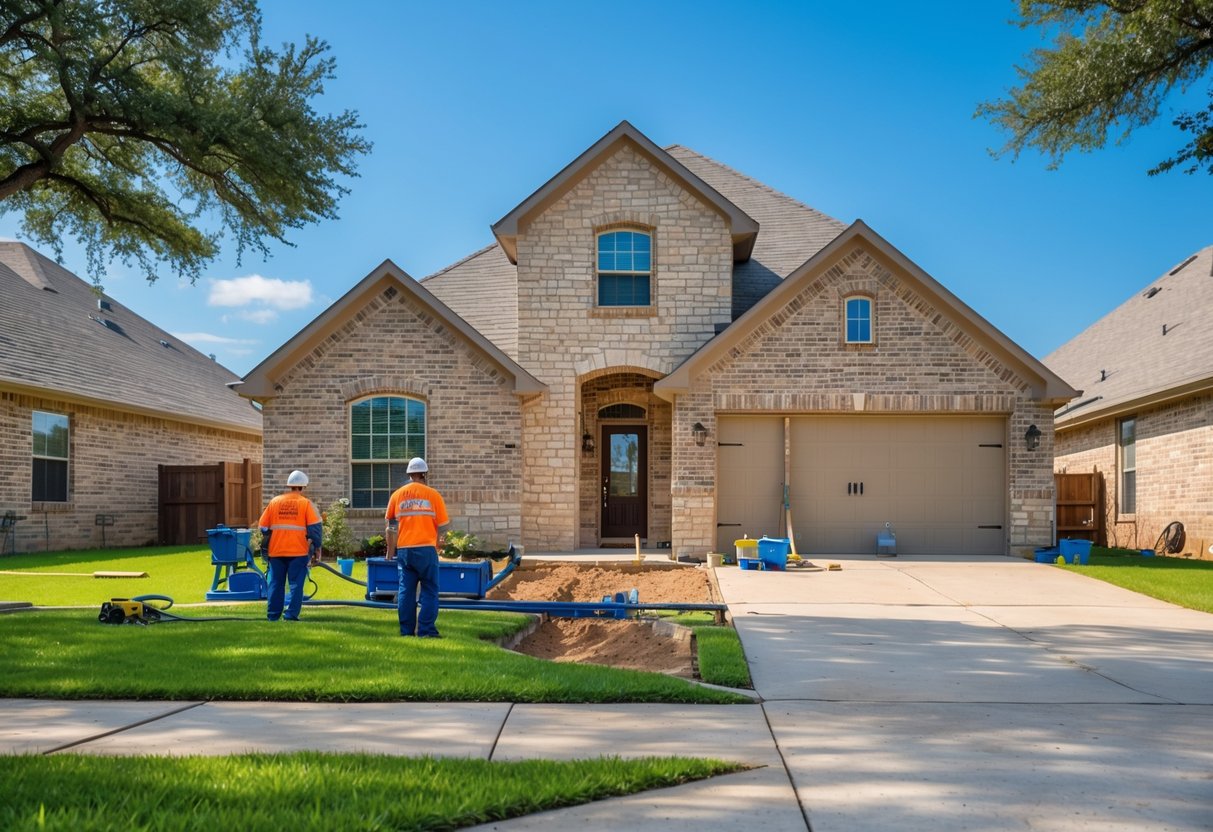
You should focus on controlling water and picking a contractor who inspects, stabilizes, and documents repairs.
Small fixes like improving yard grading or adding a French drain can stop future movement.
A licensed company should provide a written inspection and a clear stabilization plan.
Waterproofing and Drainage Solutions
Keep surface and subsurface water away from your foundation.
Improve yard slope so soil drains away from the house at a 5% grade for at least 5 feet.
Add gutters and downspout extensions that carry water at least 5 feet from the foundation.
Consider installing a French drain or perimeter drain to collect groundwater and direct it to a storm sewer or dry well.
For crawl spaces or basements, add a sump pump with a battery backup if groundwater rise is likely during storms.
Use exterior waterproofing membranes on walls where moisture seeps through.
Inside, a vapor barrier and sealed seams reduce humidity that can damage piers and wooden elements.
Regularly check downspouts, grading, and drain outlets after heavy rain.
Choosing the Right Foundation Repair Company
Choose a company that starts with a full foundation inspection and soil evaluation.
You want written findings, photos, and a recommended stabilization plan that lists piers, epoxy, or slab jacking as options.
Verify state licensing, local references, and an A+ or good BBB rating if available.
Ask about experience with Round Rock soils and typical fixes like pier installation or slab stabilization.
Get a clear warranty in writing that covers materials and labor, plus a maintenance checklist you can follow.
Request multiple bids that show the same scope.
Compare methods, timelines, and cleanup.
Pick the firm that explains risks clearly, offers a permit plan if needed, and gives a stamped repair drawing you can keep with your home records.
Frequently Asked Questions
You’ll find clear answers about repair methods, warning signs, prevention steps, costs, local soil issues, and risks of waiting.
The answers focus on what you can expect in Round Rock and what actions to take.
What are the most effective foundation repair techniques for homes in Central Texas?
For slab foundations, push piers and helical piers are common.
They transfer load to stable deeper soils or bedrock to lift and stabilize settled slabs.
Polyurethane foam injection can fill voids and lift small settled areas.
It works fast and is less invasive, but it suits only certain crack sizes and conditions.
For pier-and-beam or crawl space homes, sistering beams, adding adjustable steel piers, and improving joist supports are typical.
Contractors often combine structural fixes with moisture control.
Concrete underpinning and pressure grouting are used for larger or more complex failures.
Professionals choose methods after a soil and structural assessment.
How can I identify the signs that my home in Round Rock needs foundation repair?
Look for horizontal or stair-step cracks in exterior brick or masonry.
Those often signal differential movement in clay soils.
Check for doors and windows that stick, uneven or sloping floors, and gaps between walls and floors.
These are common interior signs of settlement.
Watch for new or widening cracks in drywall, especially near corners or over doors.
Also note cracks in concrete slabs, driveways, or patios that track to the house.
What steps should homeowners in Round Rock take to prevent foundation damage?
Keep gutters clean and downspouts extended at least 4–6 feet from the foundation.
Direct water away from the house to reduce soil moisture swings.
Maintain consistent soil moisture near the foundation.
Use soaker hoses or irrigation to avoid extreme wet–dry cycles in expansive clay soils.
Avoid planting large trees or shrubs close to the foundation.
Their roots change soil moisture and can cause uneven soil movement.
Schedule periodic inspections, especially after droughts or heavy rains.
Early detection lets you address small issues before they get worse.
What is the estimated cost range for foundation repair in the Round Rock, TX area?
Minor fixes like crack sealing or small foam injections commonly range from a few hundred to a few thousand dollars.
Costs depend on crack size and accessibility.
Pier systems or deeper structural repairs typically run from roughly $3,000 to $15,000 or more.
Large lifts, extensive pier grids, or whole-house stabilization increase the price.
Get at least two written estimates and soil assessments.
Local contractors can give more precise pricing after on-site evaluation.
Are there any region-specific considerations for foundation repair in Round Rock?
Round Rock sits on expansive clay soils that swell when wet and shrink when dry.
This causes frequent seasonal movement and makes moisture control essential.
Rapid growth and older neighborhoods mean a mix of foundation types—slab-on-grade and pier-and-beam—so repair needs vary block by block.
Choose a contractor experienced with local soil behavior.
Seasonal weather swings and irrigation practices in Central Texas affect methods and timing.
Repairs timed around wet or dry periods may improve results.
What are the potential risks of delaying foundation repairs for a home in Round Rock?
Delaying repairs can let cracks widen and settlement worsen. This increases repair scope and cost.
You risk reduced property value and problems passing inspections when selling. Interior damage like warped floors and stuck doors often follows continued movement.
Left unchecked, foundation damage can affect utilities and framing. This can lead to plumbing leaks and higher repair bills.