
Understanding the foundation inspection cost in Georgetown, TX is the first step toward protecting one of your most valuable assets — your home or commercial property. A foundation inspection is a professional assessment of your property’s structural base, identifying signs of settlement, shifting, cracking, or deterioration before they escalate into costly repairs.
Georgetown’s expansive clay soils, karst limestone geology, and dramatic seasonal moisture swings create foundation challenges unlike anywhere else in Central Texas. Local conditions demand inspectors who understand the unique behavior of Blackland Prairie soils and the way Georgetown’s growth — particularly in master-planned communities like Teravista and Wolf Ranch — has introduced a wide variety of construction eras and slab types into the market.
Read moreShow less
At Round Rock Foundation Repair Group, we provide thorough, honest foundation inspections across Georgetown and the surrounding region. Call us today at (512) 220-3502 to schedule your inspection and get clear answers about your foundation’s health.
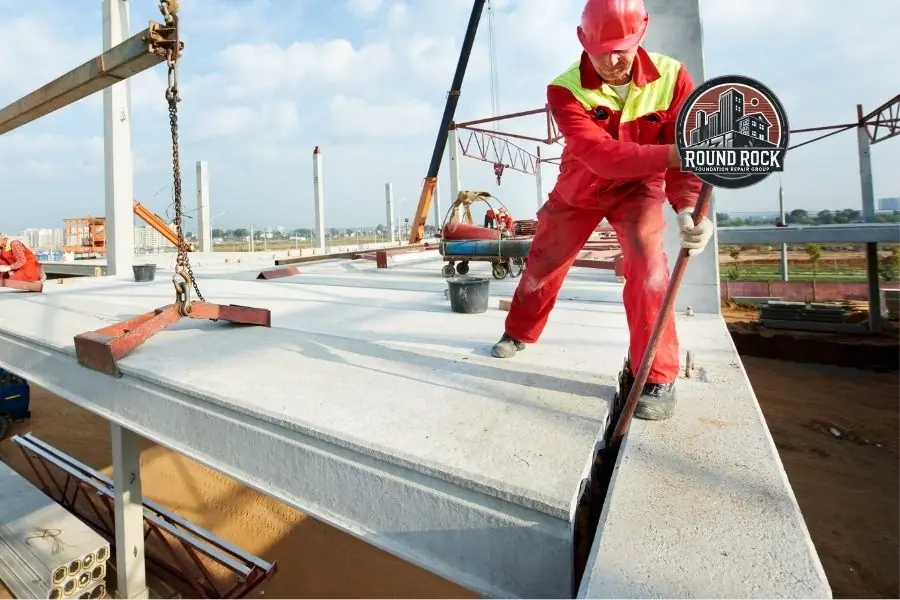
Understanding Foundation Inspection Costs in Georgetown, TX
A foundation inspection is a systematic, professional evaluation of the structural integrity of a building’s foundation. During an inspection, a qualified foundation specialist examines the slab, piers, beams, and surrounding soil conditions to determine whether the foundation is performing as designed or showing signs of distress. The resulting report documents findings, outlines recommended corrective actions, and helps property owners make informed decisions about repair, maintenance, or real estate transactions.
Foundation inspection as a formal discipline grew significantly in Texas during the post-World War II housing boom, when rapid residential construction on expansive clay soils led to widespread slab movement problems across Central Texas cities. By the 1980s and 1990s, as Georgetown began its transition from a small county seat into a fast-growing suburb of Austin, the need for reliable pre-purchase and post-construction inspections became increasingly apparent to homeowners, real estate agents, and lenders alike.
Read moreShow less
Today, Georgetown’s housing stock ranges from historic limestone homes near the downtown Square — some dating back to the 1880s — to brand-new subdivisions built on engineered fills along the San Gabriel River corridor. Each building era and construction type carries its own set of inspection considerations. Older pier-and-beam homes require crawl space evaluation, moisture barrier assessment, and wood rot identification. Post-tension and conventional slab-on-grade homes — the dominant construction type in communities like Forest Creek and Sendero Springs — require different diagnostic tools, including elevation surveys using optical levels or Zip-Level instruments.
Commercial properties in Georgetown, including retail centers along Williams Drive and industrial properties near the Georgetown Municipal Airport, require additional analysis of column footings, grade beams, and loading conditions. Learn more about our Commercial Foundation Repair services to understand how commercial inspections differ from residential ones.
Regardless of property type, a professional foundation inspection provides documentation, peace of mind, and a clear action plan — all at a cost that is a fraction of what deferred foundation repairs ultimately demand.
Why Foundation Inspections Are Critically Needed in Georgetown, TX
Georgetown sits at the intersection of two geological zones that are among the most challenging for foundations in the United States. The eastern portions of the city — including neighborhoods like Teravista, Paloma Lake, and Forest Creek — are underlain by Blackland Prairie clay soils, specifically the Houston and Austin series clays, which have a plasticity index (PI) exceeding 40. These soils expand dramatically when wet and contract when dry, with volumetric changes that can exert uplift pressures exceeding 5,000 pounds per square foot on a slab foundation.
The western portions of Georgetown, including areas near the Georgetown Country Club and Sun City Texas, transition into Edwards Plateau limestone and shallow, rocky soils. While these soils do not shrink and swell like the eastern clays, they present their own challenges: solution cavities, uneven bedrock depth, and thin soil cover that concentrates surface water runoff directly against foundation perimeters.
Read moreShow less
Georgetown’s climate amplifies these geological risks. The city averages approximately 34 inches of rainfall annually, but that rainfall is distributed unevenly — intense spring thunderstorms often deliver 3–5 inches in a single event, followed by hot, dry summers where temperatures regularly exceed 100°F and soil moisture deficits develop rapidly. This wet-dry cycling is the primary driver of foundation movement in the region.
The 2011 Texas drought — one of the most severe on record, with Williamson County recording its driest year since 1895 — caused widespread foundation settlement across Georgetown. Neighborhoods built in the 1990s and early 2000s, including Behrens Ranch and Sendero Springs, experienced significant slab distortion as clay soils shrank beneath foundations that had been sized for typical moisture conditions. Many homeowners in these areas are still managing the long-term effects of that event.
Georgetown’s rapid population growth — the city was ranked the fastest-growing city in the United States in the U.S. Census Bureau’s 2022 estimates — has brought an enormous volume of new construction. Subdivision development in areas like Wolf Ranch, Morningstar, and Parkside at Mayfield Ranch often involves significant cut-and-fill grading operations that create variable soil compaction conditions beneath slabs. New homes built on improperly compacted fill soil are at elevated risk for differential settlement within the first 5–10 years of construction.
Aging infrastructure also plays a role. Georgetown’s older neighborhoods near the downtown Square and the Southwestern University campus contain homes with aging cast-iron or clay-tile sewer and water lines. When these pipes leak beneath a slab, the resulting soil erosion can create voids that cause sudden, localized foundation settlement — a phenomenon known as plumbing-induced foundation failure. Learn more about our Foundation Inspection process and how we identify plumbing-related causes during evaluation.
Free, no-obligation estimates
Talk to Round Rock Foundation Repair Group
Tell us what you need and we’ll take it from there.
Signs You Need a Foundation Inspection in Georgetown
Interior Warning Signs
- Diagonal cracks at door and window corners, particularly in drywall at 45-degree angles
- Doors or windows that stick, won’t latch, or have visibly uneven gaps in their frames
- Floors that feel noticeably sloped, spongy, or uneven when walking across them
- Cracks in tile grout lines, especially in bathrooms and kitchens
- Separation between walls and ceilings, or between walls and baseboards
Exterior Warning Signs
- Horizontal or stair-step cracks in brick veneer, particularly on the front elevation
- Gaps forming between the brick and the soffit, fascia, or garage door frame
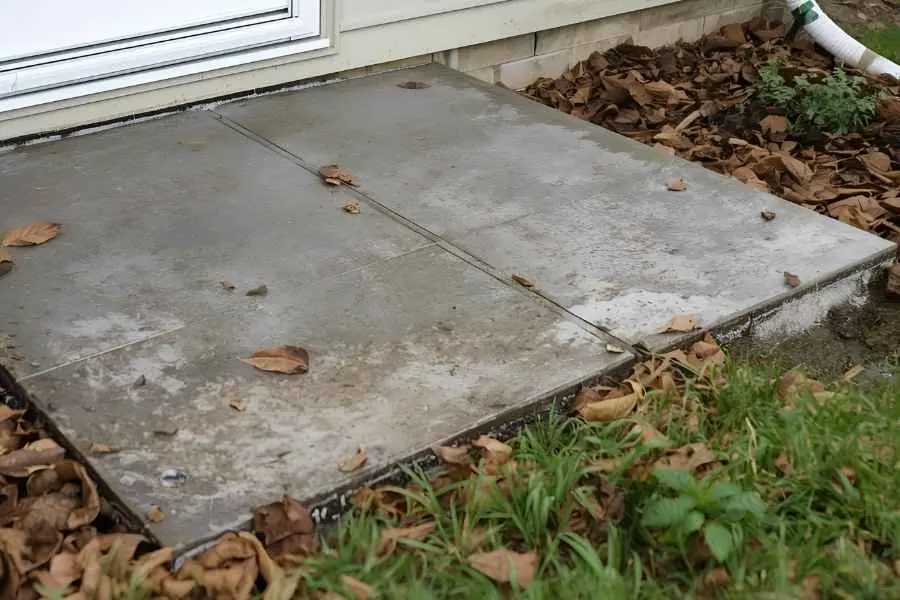
- Visible slope or settlement at the edge of the concrete slab when viewed from the driveway
- Standing water pooling against the foundation after rain events
- Soil pulling away from the foundation perimeter during dry summer months
Urgent Indicators Requiring Immediate Inspection
- Cracks wider than 1/4 inch in the foundation slab or stem wall
- A door or window that has suddenly become inoperable without a recent weather change
- Unexplained increases in your water bill that could indicate a slab plumbing leak
- Visible bowing or bulging in an interior or exterior wall
If you observe any of these symptoms at your Georgetown property, do not wait. Early intervention consistently results in lower repair costs and prevents minor issues from becoming structural emergencies. Explore our Structural Foundation Repair options for next steps after inspection.
Our process
Our Foundation Inspection Process in Georgetown, TX
Round Rock Foundation Repair Group follows a structured, multi-step inspection protocol tailored to Georgetown’s specific soil and construction conditions. Here is what to expect when you schedule an inspection with our team.
- 01
Initial Consultation and Property History Review (15–20 minutes)
Before arriving on site, our team reviews available information about your property — construction year, known repair history, and any permits on file with the City of Georgetown Building and Development Services Department. We also note whether your address f
- 02
Exterior Perimeter Walk (20–30 minutes)
Our inspector systematically walks the full perimeter of the structure, documenting cracks in brick, concrete, or stucco; evaluating grade and drainage patterns; and checking for signs of soil erosion, root intrusion from nearby trees, or inadequate downspout
- 03
Interior Assessment (30–45 minutes)
Inside the home, we examine all walls, ceilings, door frames, and floor surfaces for distortion indicators. We photograph and measure all cracks, noting their orientation, width, and location relative to the floor plan. For pier-and-beam homes, we access the c
- 04
Elevation Survey (20–30 minutes)
Using a precision Zip-Level Pro-2000 instrument — accurate to 1/100th of an inch — we take elevation readings at a grid of points across the slab, typically every 6–8 feet. This produces a topographic map of your slab’s current profile, revealing the location,
- 05
Plumbing Pressure Test Recommendation
If our inspection reveals evidence consistent with plumbing-induced soil erosion, we recommend a hydrostatic plumbing pressure test to rule out active slab leaks before any repair design is finalized.
- 06
Report Preparation and Delivery (24–48 hours)
We compile a written inspection report including photographs, elevation survey data, observed conditions, and recommended corrective actions with estimated cost ranges. Reports meet the documentation standards expected by major Texas mortgage lenders and real
- 07
Consultation and Q&A
Our inspector reviews the report findings with you directly — by phone or in person — ensuring you fully understand the findings and feel confident in your next steps.
Foundation Inspection Methods and Diagnostic Approaches
Optical Level and Zip-Level Elevation Survey
The elevation survey is the cornerstone of modern slab foundation assessment in Central Texas. By mapping actual floor elevations across the entire footprint, we can distinguish between tolerable seasonal movement and progressive structural settlement that requires intervention. This method is particularly valuable in Georgetown’s Blackland Prairie zones where heave (upward movement from swelling clay) can mimic settlement patterns.
Visual Crack Analysis and Classification
Not all cracks indicate structural failure. Our inspectors classify cracks by type (shrinkage, settlement, heave-induced, or shear), width, depth, and activity level. A hairline crack in drywall may simply reflect normal seasonal movement, while a wide, offset crack in a brick mortar joint may indicate ongoing differential movement requiring immediate attention.
Drainage and Grading Evaluation
Proper surface drainage is Georgetown’s first line of defense against foundation movement. We evaluate whether the existing grade directs water away from the foundation at the minimum recommended slope of 6 inches per 10 horizontal feet and whether downspouts are discharging water at a safe distance from the perimeter. Learn about our Crawl Space Repair services that often address drainage-related moisture issues.
Moisture Probe Assessment
For pier-and-beam structures and crawl spaces common in Georgetown’s historic neighborhoods, moisture probe readings help identify areas of chronically elevated moisture that accelerate wood deterioration and soil instability beneath floor systems.
Pre-Purchase Real Estate Inspection Protocol
For home buyers conducting due diligence in Georgetown’s competitive real estate market, we offer an accelerated inspection and report timeline designed to fit within standard option period windows, typically 7–10 days under Texas residential purchase contracts.
Foundation Inspection Cost in Georgetown, TX — What to Expect
The cost of a professional foundation inspection in Georgetown, TX typically ranges from $300 to $750 for a standard single-family residential property, depending on the size, age, and complexity of the structure. Here is a breakdown of typical pricing factors.
Typical Cost Ranges by Property Type
- Standard residential slab (under 2,500 sq ft): $300–$450
- Larger residential slab (2,500–4,000 sq ft): $450–$600
- Pier-and-beam with crawl space access: $400–$600
- Commercial or multi-family property: $600–$1,500+ depending on footprint
- Pre-purchase inspection with expedited report: Add $75–$150 to standard rate
Factors That Affect Inspection Cost in Georgetown
- Property size: Larger footprints require more elevation data points and inspection time.
- Accessibility: Homes with limited crawl space clearance or difficult site conditions require additional time.
- Report complexity: Properties with multiple distress indicators require more detailed documentation.
- Add-on services: If a hydrostatic plumbing test is needed, typical cost is an additional $200–$400.
Read moreShow less
Georgetown-Specific Pricing Context
Georgetown inspection fees are generally consistent with the broader Austin metro market. However, properties in rapidly developing areas like Wolf Ranch and Morningstar — where fill compaction issues are more common — may require more extensive elevation surveys, moving toward the higher end of cost ranges. View our Foundation Patching services for repair options identified during inspection.
Remember: a $400 inspection that identifies a $6,000 repair need is far more cost-effective than discovering a $40,000 structural failure during a home sale or after years of deferred maintenance.
Georgetown Neighborhoods We Serve
Teravista
This large master-planned community in eastern Georgetown, developed primarily between 2004 and 2015, sits squarely on Blackland Prairie clay soils. Homes here are predominantly post-tension slabs that, while designed for expansive soils, still experience edge settlement when perimeter drainage is inadequate. We frequently inspect homes in Teravista for buyers and current owners managing seasonal movement issues.
Sendero Springs and Behrens Ranch
These Round Rock-adjacent neighborhoods along the Georgetown–Round Rock border were built primarily in the late 1990s and early 2000s. Many homes experienced significant settlement during the 2011 drought and have histories of partial pier installations. Pre-purchase inspections here should always include a review of prior repair documentation.
Sun City Texas
This expansive 55+ community in western Georgetown sits on transitional soils between limestone outcrops and thin clay loam. Drainage management is the dominant foundation concern here, and many homes benefit from French drain installations to manage irrigation runoff from the community’s extensive landscaping.
Downtown Georgetown Historic District
Homes within a few blocks of the Georgetown Square often date to the 1880s–1940s and are built on pier-and-beam foundations over limestone rubble. These properties require specialized inspection protocols, including careful assessment of deteriorated wood sills and posts.
View our full service area coverage across Georgetown and surrounding communities.
Foundation Maintenance Tips for Georgetown Homeowners
Preventing foundation problems is almost always less expensive than repairing them. These tips are specifically relevant to Georgetown’s soil and climate conditions.
- Maintain consistent soil moisture year-round. Use a soaker hose system placed 12–18 inches from your foundation perimeter during Georgetown’s dry summer months (typically June through September) to prevent Blackland clay soils from shrinking away from the slab edge.
- Ensure positive drainage away from your foundation. Maintain a minimum slope of 6 inches per 10 feet away from your perimeter on all sides. Re-grade as needed after major rain events.
- Extend downspouts at least 5–6 feet from the foundation. Georgetown’s intense spring storms can deliver large volumes of water in short periods — keeping that water away from your slab is critical.
- Manage large trees near the foundation. Live oaks and cedar elms within 20 feet of your home can extract significant moisture from clay soils. Consider root barriers if trees are close to the perimeter.
- Avoid over-watering landscape beds against the house. Excess moisture against the perimeter is just as damaging as drought conditions — it can cause heave in clay soils.
- Schedule an inspection every 3–5 years as part of routine home maintenance, even if no visible symptoms are present. Explore our Foundation Restoration services for proactive maintenance solutions.
- Address plumbing leaks immediately. A slow slab leak can erode supporting soil over months before visible symptoms appear. Annual plumbing pressure tests are a worthwhile investment for homes over 15 years old.
Why Choose Round Rock Foundation Repair Group for Your Georgetown Foundation Inspection
Round Rock Foundation Repair Group is a locally operated foundation repair and inspection company serving Georgetown and the greater Austin metro area. Our team has deep, hands-on experience with the specific soil conditions, construction types, and seasonal challenges that Georgetown property owners face — from the Blackland Prairie clays of Teravista to the limestone transition soils of Sun City Texas.
We provide honest, unbiased inspections backed by precision Zip-Level elevation surveys and detailed written reports that meet lender and real estate documentation standards. Our inspectors do not use high-pressure sales tactics — our job is to tell you exactly what we find and what it means for your property.
Read moreShow less
We serve residential and commercial clients across Georgetown, Round Rock, Cedar Park, Austin, Pflugerville, Brushy Creek, and surrounding communities. See our Home Foundation Repair services to understand the full scope of solutions available after your inspection.
Call us at (512) 220-3502 or use our online scheduling tool to book your Georgetown foundation inspection today.
FAQ
Frequently Asked Questions — Foundation Inspection Cost in Georgetown, TX
How much does a foundation inspection cost in Georgetown, TX?
Most residential foundation inspections in Georgetown range from $300 to $600, depending on the size and type of your property. Commercial properties and larger homes may range from $600 to $1,500 or more. Contact us at (512) 220-3502 for a specific quote based on your property details.
How long does a foundation inspection take?
A complete residential inspection — including exterior walk, interior assessment, and elevation survey — typically takes 1.5 to 2.5 hours on site. The written inspection report is typically delivered within 24–48 hours of the site visit.
Is a foundation inspection required when buying a home in Georgetown?
It is not legally required, but it is strongly recommended. Georgetown’s expansive clay soils mean that many homes will show some degree of foundation movement over their lifespans. A pre-purchase inspection helps buyers understand the current condition of the foundation, identify any prior repair work, and negotiate repairs or price adjustments with sellers during the option period.
What is the difference between a foundation inspection and a general home inspection?
A general home inspector provides a broad overview of all home systems and is not typically trained or equipped to perform a precision elevation survey or detailed structural assessment of the foundation. A specialist foundation inspection includes quantitative elevation data, soil condition evaluation, and a diagnostic interpretation specific to Georgetown’s Blackland Prairie and limestone geology — information that a general inspection rarely captures in sufficient detail.
My new Georgetown home is only 3 years old. Do I need a foundation inspection?
Yes, in some circumstances. New construction in rapidly developing areas like Wolf Ranch or Morningstar may be built on cut-and-fill sites where soil compaction is not uniform. Differential settlement can develop within the first 3–7 years. If you notice any door or window sticking, tile cracking, or drywall distress, an early inspection can catch problems while they are still minor — and potentially while builder warranty coverage is still active.
Does my homeowners insurance cover foundation inspections or repairs?
Standard Texas homeowners insurance policies typically do not cover foundation movement caused by soil expansion and contraction, which is the most common cause in Georgetown. Some policies cover sudden, accidental damage (such as a plumbing leak causing foundation failure), but coverage for gradual settlement is generally excluded. We recommend reviewing your policy terms and consulting with your insurance agent.
How often should Georgetown homeowners schedule a foundation inspection?
We recommend a professional foundation inspection every 3 to 5 years for most Georgetown homes, or immediately following any significant drought period (such as a summer with less than 20 inches of rainfall), after a major plumbing repair, or whenever observable symptoms appear. Homes in eastern Georgetown’s Blackland Prairie zones may benefit from more frequent monitoring.
Will the inspection report tell me what repairs I need and what they will cost?
Yes. Our inspection reports include a summary of observed conditions, a recommended scope of work if repairs are needed, and a general cost range for those repairs. If repairs are recommended, we can also schedule a follow-up appointment to provide a detailed, itemized repair proposal at no additional charge.
Schedule Your Foundation Inspection in Georgetown, TX Today
Don’t let Georgetown’s challenging soils and weather cycles put your property at risk. Whether you are a homeowner noticing early warning signs, a buyer performing due diligence, or a property manager maintaining a commercial asset, Round Rock Foundation Repair Group is ready to provide the detailed, expert inspection you need.
Our team serves Georgetown, Round Rock, Cedar Park, Austin, Pflugerville, Brushy Creek, and all surrounding communities. We provide honest assessments, precision elevation data, and clear written reports — no high-pressure sales, no unnecessary upselling.
Call us now at (512) 220-3502 to speak with a foundation specialist or to schedule your Georgetown inspection appointment. You can also contact us online to request a callback or submit your property details for a preliminary assessment. Protect your foundation today — before a small problem becomes a major expense.
Get in touch
Find foundation repair help near you
Request a free estimate online or give us a call — our team will follow up quickly.
- Call us(512) 220-3502
- Visit1 Chisholm Trail Rd suite 450 room j, Round Rock, TX 78681
- HoursMon-Sat: 7:00 am – 7:00 pm