Slab foundations can crack, settle, or shift. You need to know the clear repair options so you can protect your home and avoid bigger costs later.
You will learn practical fixes—from polyurethane foam injection and slab jacking to pier systems and simple crack sealing. This helps you spot which method fits your problem and budget.
Choose slab jacking or foam injection for settled slabs. Use pier systems for ongoing soil movement, and crack sealing for minor, non-structural damage.

This post walks you through what each method does and when to call a pro. You’ll also learn what to watch for during inspection and repair so you can make a confident decision for your slab foundation.
Key Takeaways
- Know common repair methods and which problems they solve.
- Recognize signs that need professional intervention.
- Match repair choice to cause and long-term risks.
Slab Foundation Repair Methods Explained

You will read clear, practical fixes for sinking, cracked, or uneven slab foundations. Each method lists when it fits, how installers do it, and what you should expect for results and disruption.
Steel Piers and Push Piers
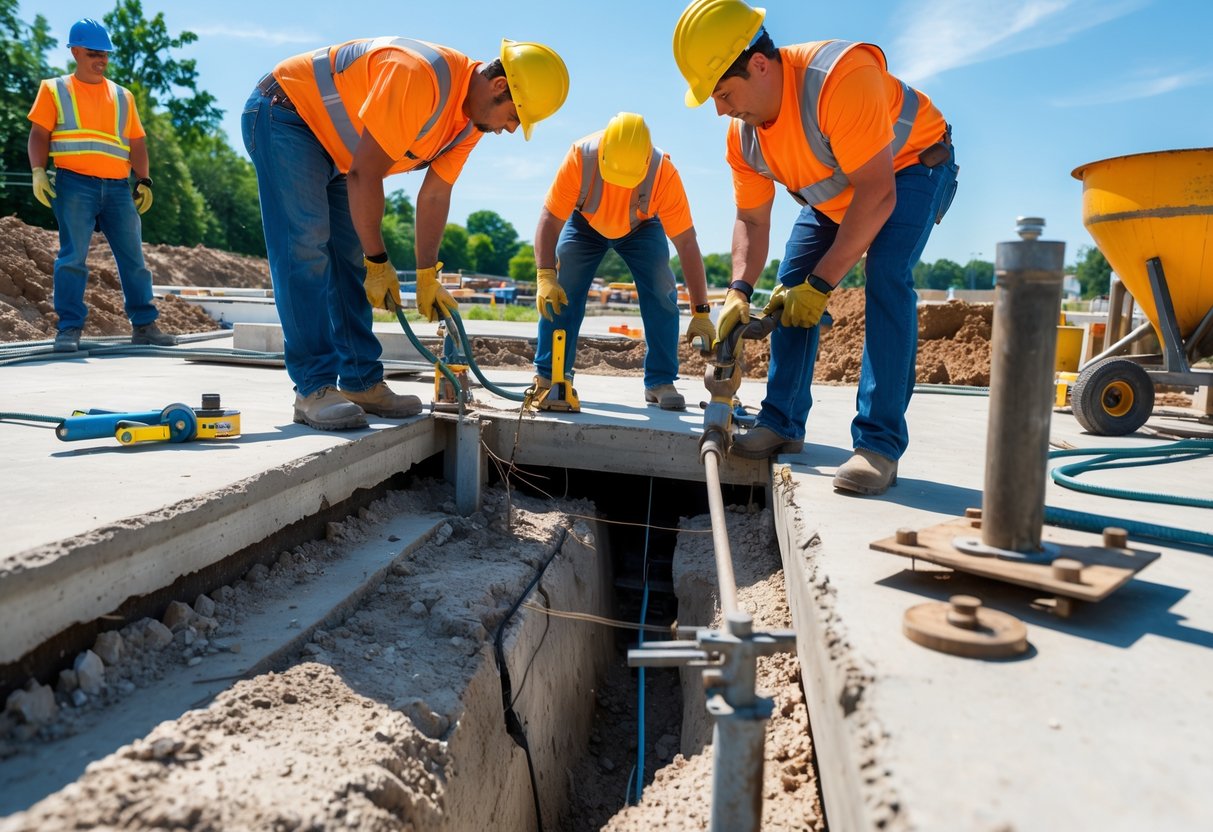
Steel piers, often called push piers, drive steel tubes into stable soil under the footing. Installers excavate small pits at the footing, fit a bracket under the slab, and hydraulically push piers down until they hit load-bearing strata.
They use jacks to lift the settled slab back toward level in measured increments. This method suits heavy loads, large settlements, and soils with deep bearing layers.
It transfers the building weight to stable soil or bedrock. Expect minimal interior disruption and a durable fix, though you will see small exterior excavation and exposed pier tops that are capped and backfilled.
Helical Piers
Helical piers screw into the ground like giant screws. Technicians attach a bracket to the foundation and use torque-limited motors to advance helical shafts until reaching required resistance.
The bracket ties the pier to the footing, stabilizing and often lifting the slab. Helicals work well where soil layers are predictable and access is tight.
They install faster than drilled piers and are good for moderate-to-heavy loads. Corrosion-resistant coatings and proper sizing matter for long-term performance.
They leave small installation pits and provide immediate load transfer. This is useful for both residential and commercial foundation repair.
Concrete Piers: Drilled and Pressed Pilings
Concrete piers use cylindrical cast-in-place concrete shafts drilled beneath the footing or poured into preformed casings. Drilled piers require a drill rig to reach competent soil, then concrete fills the hole and ties to the footing with steel.
Pressed pilings, or driven concrete piles, are less common for slabs but can be used where access and vibration are acceptable. This method suits locations where steel piers aren’t ideal or where local code or soil favors concrete.
It offers a rigid, long-lasting support but can mean heavier equipment, more noise, and larger excavations. Proper reinforcement and footing connection are critical to avoid future movement.
Slab Jacking and Mudjacking
Slab jacking, or mudjacking, pumps a cementitious grout under the sunken slab to lift it. Technicians drill small holes into the concrete and inject a slurry of sand, cement, and water at controlled pressure.
The slurry fills voids and raises the slab back toward level. This option is cost-effective for small to moderate settlement where soil conditions allow void filling.
It restores slab height and can seal under-slab voids. Downsides include added weight to weak soils and possible grout shrinkage over time.
The surface holes are patched, and the area returns to use quickly.
Polyurethane Foam Injection
Polyurethane foam injection pumps expanding, high-density foam beneath the slab through small drilled holes. The foam fills voids and lifts the concrete as technicians inject controlled amounts.
Foam sets fast and resists water intrusion. This method is lighter than mudjacking and expands to fill irregular voids.
It works well when you need quick cure time and minimal water added to soils. Foam is resistant to washout, making it suitable where drainage or water flow has caused voids.
Expect higher material cost but less disruption, small drill holes, and long-lasting stabilization.
Masonry Patches, Epoxy Injection, and Hydraulic Cement
For cracks and small spalls, masonry patches and epoxy injection repair the concrete itself. Epoxy injection bonds crack faces and restores tensile strength.
Hydraulic cement plugs active leaks by expanding as it sets, sealing water paths through slab or footings. Use these techniques when the slab is structurally sound but shows cracking, minor separation, or water intrusion.
Epoxy works best for structural crack repair in dry conditions. Hydraulic cement addresses active leaks quickly.
These are repair-level fixes and may pair with underpinning methods if settlement continues.
Carbon Fiber Straps and Reinforcement
Carbon fiber straps attach to slab edges or wall sections to add tensile strength without heavy excavation. Installers clean the concrete, apply epoxy adhesive, and bond the straps along cracks or tension zones.
Straps resist further widening and can reduce the need for full replacement. This method suits hairline and structural cracks where bending or tensile failure drives damage.
It works well in basements, slabs, and retaining walls and pairs with pier systems for combined fixes. Carbon fiber is thin, strong, and corrosion-resistant, offering a low-profile reinforcement that preserves usable space.
Key Considerations for Successful Slab Foundation Repair
You need to spot the real causes, assess soil and water issues, hire the right specialist, and commit to long-term fixes that prevent recurrence. Focus on observable signs, soil behavior, contractor credentials, and routine maintenance.
Recognizing Foundation Problems and Warning Signs
Look for horizontal or stair-step foundation cracks, long vertical cracks in walls, and gaps where the wall meets the floor. Measure cracks over time; widening or new cracks mean active movement.
Check floors for unevenness, sloping, or areas where the slab feels soft or hollow. Doors and windows that stick or no longer latch on one side point to slab tilt or settling.
Watch for plumbing leaks and multiple cracks near plumbing lines—they often indicate water-related settling. Use a level, crack gauge, or simple tape measure to document changes.
Photograph and date each problem. This record helps you and any inspector decide whether repairs can be localized or need whole-slab stabilization.
Understanding Soil and Drainage Factors
Identify soil type near the slab. Expansive clay soils swell when wet and shrink when dry, causing repeated heave and settlement.
Sandy or loose fill can compact unevenly after construction, causing isolated slab sinks. Check surface and roof drainage.
Poor gutters, downspouts, or grading that directs water toward the house raise hydrostatic pressure and soften soils under the slab. Plumbing leaks under the slab or in crawl spaces also wash away supporting soils and cause sunken concrete slabs.
Consider installing drainage solutions like French drains, extending downspouts, or improving grading away from the foundation. Root barriers and careful landscaping keep large tree roots from disturbing soil.
A soil probe or geotechnical test can confirm conditions before you pick a repair method.
Importance of Professional Inspection and Repair Specialist
Hire a foundation repair specialist or structural engineer for a full inspection when you see multiple cracks, large settlement, or structural symptoms. A qualified inspector will assess crack patterns, measure slab level, and recommend repairs tied to the cause, not just cosmetic fixes.
Ask contractors for license, insurance, references, and examples of similar slab repairs. Get a written scope that lists methods, expected outcomes, and warranty terms.
Beware of contractors who push quick patching without soil or drainage remedies. If repairs involve lifting or underpinning, request structural calculations or engineer approval.
A specialist can also advise on non-structural controls like drainage upgrades to protect the repair long term.
Preventative Measures and Long-Term Maintenance
Keep gutters clean and extend downspouts at least 3–6 feet from the slab. Maintain a consistent moisture level around the foundation—water plants and trees responsibly to avoid drying or over-saturating expansive clay soil.
Inspect your slab and home twice a year and after major rain or drought. Look for new cracks, changing gaps, or shifting doors.
Fix plumbing leaks promptly and monitor any prior repair sites for reappearance of cracks or sinking. Use root barriers for trees within 20–30 feet of the slab and avoid planting large trees near the foundation.
Combine drainage solutions, routine inspections, and timely minor repairs to prevent expensive, recurring foundation problems.
Frequently Asked Questions
You will find clear answers on repair options, typical costs, how to hire a pro, factors that shorten a slab’s life, warning signs to watch for, and how soil types change repair choices. Each answer gives practical steps and typical ranges so you can act with confidence.
What are the most common methods for repairing a concrete slab foundation?
Mudjacking pumps a cement slurry under a settled slab to lift it back to level. It works for moderate settling and is usually less expensive than other lifts.
Polyurethane foam injection uses expanding foam to lift and stabilize slabs. The foam is lighter than grout and cures quickly, which reduces downtime and water intrusion.
Pier systems install steel or concrete piers to support or lift the slab from below. Contractors use piers when settling is deep or ongoing, since piers reach stable soil layers.
Crack repair and sealing fill surface cracks with epoxy or polyurethane to stop water and slow damage. This does not lift the slab but helps prevent further deterioration.
Concrete replacement removes and pours new slab sections when damage is severe or repair won’t restore structural safety. This is the most costly option but gives a long-term fix.
How does the cost of slab foundation repair vary depending on the method used?
Small crack sealing or epoxy fills often cost a few hundred dollars. These are quick fixes for cosmetic or simple leak issues.
Mudjacking typically ranges from $500 to $1,500 for a single slab area, depending on size and access. It uses more material and labor than simple crack repair.
Polyurethane foam lifting usually costs $800 to $2,500 for common residential jobs. Foam costs more per cubic foot but needs less material and cures faster.
Pier systems can run $2,000 to $10,000 or more, depending on pier type, number needed, and house size. Deeper or engineered piers raise the price significantly.
Full slab replacement can cost $5,000 to $30,000+ depending on square footage, demolition, and site prep. Expect the higher end for complex jobs or slab-on-grade homes.
How do I find a reputable foundation repair service in my area?
Check local licensing and insurance first. Confirm the contractor holds the required state or local licenses and carries liability and workers’ comp insurance.
Read reviews and ask for references from recent customers. Look for projects like yours and ask if the contractor handled permits and inspections.
Request a written inspection report, multiple repair options, and a clear warranty. A good contractor will explain why they recommend a method and provide a written scope, timeline, and warranty details.
Get at least three estimates and compare methods, materials, and warranties, not just price. Lower bids can skip important steps or use inferior materials.
What factors can affect the life expectancy of a slab foundation?
Soil moisture changes from poor drainage, broken pipes, or heavy trees can cause repeated movement and shorten slab life. Control water near the foundation to reduce risk.
Soil type matters: expansive clays cause more movement than stable sands. Poor compaction under the slab at construction also reduces longevity.
Construction quality, such as slab thickness, reinforcement, and proper footings, affects durability. Substandard mixes or missing reinforcement lead to earlier failure.
Maintenance matters: keeping gutters clear, grading away from the house, and fixing leaks increases a slab’s service life. Neglect accelerates damage.
Are there any early warning signs that indicate a need for slab foundation repair?
Hairline to widening cracks in walls, floors, or outside near the slab can signal movement. Monitor crack width and direction for changes.
Doors and windows that stick or gap, and sloping or uneven floors, show differential settling. Check multiple rooms to see if movement is localized or widespread.
Interior wall or ceiling cracks that run diagonally from corners often point to foundation shift. Also watch for gaps between trim and walls.
Exterior signs include separated driveways or patios. Cracks near expansion joints can also mirror the slab issues under the house.
How can the different soil types impact slab foundation stability and repair techniques?
Expansive clay shrinks and swells with moisture. This causes heave and settlement cycles.
Piers or deep foundations that reach stable strata often work best in clay.
Sandy soils drain well. However, they can erode or wash away under load if not compacted.
Engineers may recommend improved compaction or shallow geotechnical fixes.
Organic or loose fill compresses under weight. This may lead to uniform settling.
Replacing poor soil with engineered fill or using piers helps create stable support.
High groundwater or saturated soils reduce bearing capacity. These conditions can force flotation or uplift.
Repair plans must include drainage fixes. Often, deeper supports are needed to reach firm soil.