
Foundation settling is the gradual or sudden downward movement of a structure’s base, caused by soil compression, moisture changes, or subsurface instability beneath your property. In Taylor, TX, this problem is especially prevalent due to the region’s expansive Blackland Prairie clay soils, which swell dramatically during wet seasons and shrink during droughts — placing relentless stress on residential and commercial foundations year after year.
At Round Rock Foundation Repair Group, we specialize in diagnosing and permanently resolving foundation settling issues throughout Taylor and the surrounding Central Texas region. Our team understands the unique geological and climatic conditions that make Taylor homes and businesses particularly vulnerable. Whether you’ve noticed a sticking door, a sloping floor, or visible cracks spreading across your walls, we deliver precise inspections and proven repair solutions tailored specifically to Taylor’s soil environment.
If you suspect your foundation is settling, don’t wait. Call us today at (512) 220-3502 for a professional assessment from a team that knows Taylor’s ground — literally.
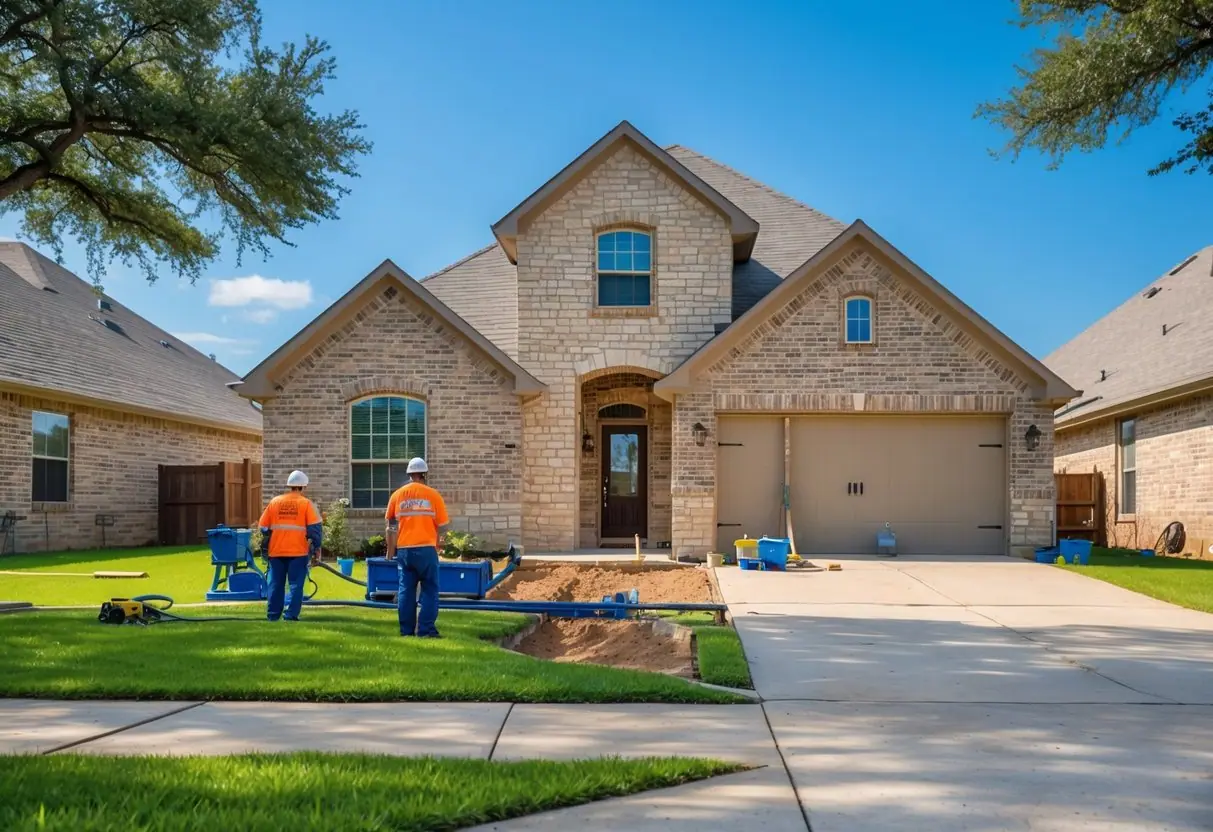
Understanding Foundation Settling in Taylor, TX
Foundation settling refers to the process by which a building’s foundation moves downward from its original position. This can occur uniformly — where the entire structure sinks at the same rate — or differentially, where one portion of the foundation drops faster or deeper than another. Differential settling is far more damaging, because uneven movement creates stress fractures, structural misalignment, and potentially dangerous instability throughout the building.
The phenomenon of foundation settling is not a modern problem. As Taylor, TX developed rapidly through the mid-20th century and again during the post-2000 population boom along the SH-79 and US-79 corridors, builders faced the enduring challenge of constructing stable structures on Central Texas clay. Many homes built between the 1950s and 1980s used slab-on-grade foundations without the benefit of modern geotechnical analysis, leaving them particularly susceptible to long-term settling as soil conditions changed beneath them.
Read moreShow less
In Taylor, the building stock ranges from older pier-and-beam homes in the historic downtown district near Second Street and Murphy Park to newer concrete slab construction in developments like Taylor Crossing and areas along County Road 401. Each foundation type responds differently to settling forces. Pier-and-beam homes may show sagging floors or deteriorating wood supports, while slab foundations tend to crack, heave, or tilt as the clay beneath them contracts and expands.
Settling is not always catastrophic in its early stages, but it is always progressive. A foundation that has dropped a quarter inch this season may drop another half inch next year if the underlying conditions are not corrected. Taylor’s location in Williamson County — a region with some of the highest documented shrink-swell soil activity in Texas — makes proactive foundation management essential for any property owner. Understanding what settling looks like, what causes it locally, and how it can be corrected is the first step toward protecting your investment.
Learn more about how we approach Structural Foundation Repair for both residential and commercial properties across Central Texas.
Why Foundation Settling Is a Critical Problem in Taylor, TX
Drought Cycles and Their Foundation Impact
Central Texas has experienced increasingly intense drought cycles in recent decades. The 2011 Texas drought — one of the worst single-year droughts in state history, with Taylor recording well below 20 inches of annual rainfall — caused widespread foundation damage across Williamson County. Many Taylor homeowners first noticed cracks in their brickwork, sticking doors, and uneven floors following that year’s extreme soil desiccation. The pattern repeated during the 2022 summer drought, when Taylor recorded 47 consecutive days above 100°F and soil moisture levels plummeted, triggering a second wave of foundation settling complaints across the city.
Taylor’s Rapid Growth and Development Pressures
Taylor has experienced explosive growth since Samsung announced its $17 billion semiconductor facility in 2021. New construction along CR-404, the Taylor Crossing subdivision, and industrial corridors near SH-95 has altered local drainage patterns significantly. Increased impervious cover means rainwater that once slowly percolated into the soil now runs off quickly, creating alternating cycles of soil saturation and rapid drying that accelerate foundation movement in established neighborhoods.
Neighborhoods with Elevated Risk
Older sections of Taylor near Main Street and the historic downtown area — where homes date to the early 1900s — face unique settling risks due to aging drainage infrastructure and decades of soil fatigue. The Mustang Creek corridor, which bisects portions of southwest Taylor, creates localized moisture variation as the creek’s water table fluctuates seasonally. Neighborhoods on the eastern side of Taylor near US-79 sit on transitional soils that shift between clay-dominant and sandier profiles, making settling patterns less predictable and harder to detect without professional assessment.
Tree Root Intrusion
Taylor’s mature live oaks, cedar elms, and pecan trees — many lining residential streets in the older parts of the city — draw enormous amounts of moisture from the soil through their root systems. A mature live oak can absorb 50 gallons of water per day, desiccating the soil immediately adjacent to foundations and triggering localized settling along the tree-facing walls of homes throughout Taylor’s established neighborhoods.
These interconnected factors make foundation settling not an occasional problem in Taylor, but a structural reality that virtually every property owner will face at some point during the life of their building.
Free, no-obligation estimates
Talk to Round Rock Foundation Repair Group
Tell us what you need and we’ll take it from there.
Signs You Need Foundation Settling Repair in Taylor, TX
Interior Warning Signs
- Doors and windows that stick, jam, or no longer close flush within their frames
- Diagonal cracks at the corners of door frames and window openings
- Floors that slope, dip, or feel spongy underfoot
- Gaps forming between the floor and baseboards or between the ceiling and crown molding
- Cracks in drywall, especially stair-step patterns near corners
Exterior Warning Signs
- Stair-step cracks in brick veneer or concrete block walls
- Gaps between the chimney and the main structure
- Visible separation between the foundation and the framing above it
- Uneven or cracked concrete around the perimeter of the slab
Crawl Space Warning Signs (Pier-and-Beam Homes)
- Sagging or deteriorating wood beams and floor joists
- Visible moisture damage, mold, or standing water beneath the structure
- Leaning or sunken concrete piers
Urgency Indicators
If you observe multiple signs simultaneously, or if cracks are wider than one-quarter inch, are actively growing, or if doors have become completely inoperable, treat these as urgent warning signs requiring immediate professional inspection. Foundation issues do not self-correct.
Schedule a Foundation Inspection with our Taylor team today.
Our process
Our Foundation Settling Repair Process in Taylor, TX
We follow a structured, transparent repair process designed to account for Taylor’s specific soil conditions and building characteristics. Here’s what to expect when you work with Round Rock Foundation Repair Group:
- 01
Initial Consultation and Site Visit (Day 1)
We begin with a thorough on-site consultation at your Taylor property. Our specialist reviews your concerns, inspects accessible areas of the home or building, and documents visible symptoms. We review the property’s construction history and any prior repairs
- 02
Comprehensive Foundation Inspection (Day 1–2)
Using elevation measurement tools, we map the actual level of your foundation across multiple points. In Taylor homes, we pay particular attention to the perimeter edges where clay soil shrinkage most commonly causes edge drop. For pier-and-beam structures, we
- 03
Soil and Drainage Analysis (Day 2–3)
We assess the drainage patterns around your property, examining slope, downspout discharge, and proximity to trees or creeks. Given Taylor’s Blackland Prairie soils, moisture management is often as important as the repair itself. We identify contributing facto
- 04
Custom Repair Plan and Proposal (Day 3–5)
We deliver a written repair plan with specific methods, materials, pier locations, and expected outcomes. Our proposals include transparent pricing with no hidden fees. We explain every recommendation in plain language.
- 05
Repair Execution (3–7 Days Depending on Scope)
Our crew mobilizes to your Taylor property with appropriate equipment. For pressed concrete pier installation, we work methodically around the perimeter and interior as designed. We maintain daily communication with property owners throughout the repair phase.
- 06
Foundation Leveling and Adjustment
Once piering or underpinning is complete, we carefully lift the settled sections to restore as much of the original grade as possible. This phase requires precision to avoid over-lifting, which can cause new stress cracks.
- 07
Post-Repair Review and Documentation
We provide a final elevation reading, document completed work, and walk you through post-repair care instructions specific to Taylor’s seasonal soil conditions. All work is documented for your records.
Foundation Settling Repair Methods Used in Taylor, TX
Pressed Concrete Piers
The most widely used method in Taylor and Williamson County, pressed concrete piers are driven into the soil until they reach load-bearing strata. This method is highly effective in the Blackland Prairie clay environment because it transfers structural load past the unstable upper soil layers. Typical installations in Taylor reach depths of 10 to 14 feet. Learn more about our Concrete Foundation Repair services.
Steel Push Piers
For heavier commercial structures or cases where soil conditions require reaching deeper stable bedrock, steel push piers are hydraulically driven until they achieve refusal. This method is used in Taylor’s commercial zones and for larger residential properties experiencing significant differential settling of 2 inches or more.
Helical Piers
Helical piers are screwed into the soil using torque, making them ideal for lighter loads or situations where vibration from driven piers could cause collateral damage. They are particularly useful for Taylor pier-and-beam structures and additions or porches attached to main structures.
Slab Grouting and Void Fill
Where voids have formed beneath a concrete slab — common after Taylor’s drought cycles cause soil to pull away from the underside of the foundation — we use pressure grouting to fill those voids and restore uniform support without full piering. This is often used as a complement to pier installation. See our Foundation Patching service for related repairs.
Crawl Space Pier Repair and Replacement
For Taylor’s older pier-and-beam homes, we repair or replace deteriorated wood or concrete block piers with steel-adjustable supports, restoring proper floor elevation and improving the long-term stability of the structure. Details are available on our Crawl Space Repair page.
Foundation Settling Repair Cost in Taylor, TX
Understanding the cost of foundation settling repair helps Taylor property owners plan appropriately and avoid unpleasant surprises. Here is a realistic overview of what you can expect:
Typical Cost Ranges
- Basic foundation inspection: $200–$400 (often credited toward repair if work is performed)
- Minor slab repair with void fill and grouting: $1,500–$4,000
- Pressed concrete pier installation (per pier): $350–$500 per pier; most Taylor homes require 8–20 piers
- Full perimeter piering for average 1,800 sq ft home: $6,000–$14,000
- Steel push pier systems: $1,200–$2,000 per pier for commercial or deep-reach applications
- Pier-and-beam crawl space repair: $3,500–$9,000 depending on scope
- Commercial foundation repair: $15,000–$80,000+ depending on building size and method
Read moreShow less
Factors That Affect Your Taylor Repair Cost
- The number and depth of piers required to reach stable soil
- Accessibility — properties near Mustang Creek or with mature oak trees may require additional excavation
- Foundation type (slab vs. pier-and-beam)
- Severity of differential settling — greater elevation differences require more controlled lifting
- Concurrent repairs needed (plumbing, drainage correction, crack patching)
Taylor-Specific Pricing Considerations
Taylor’s rapid growth since 2021 has increased demand for foundation services, so scheduling early in the season (February–April) often results in faster availability. Older neighborhoods near downtown Taylor may require additional site preparation due to existing underground utilities and aging concrete. We provide free, itemized written estimates with no obligation so you know exactly what you’re paying for before any work begins.
For a precise quote, contact us at (512) 220-3502 or request a Foundation Inspection today.
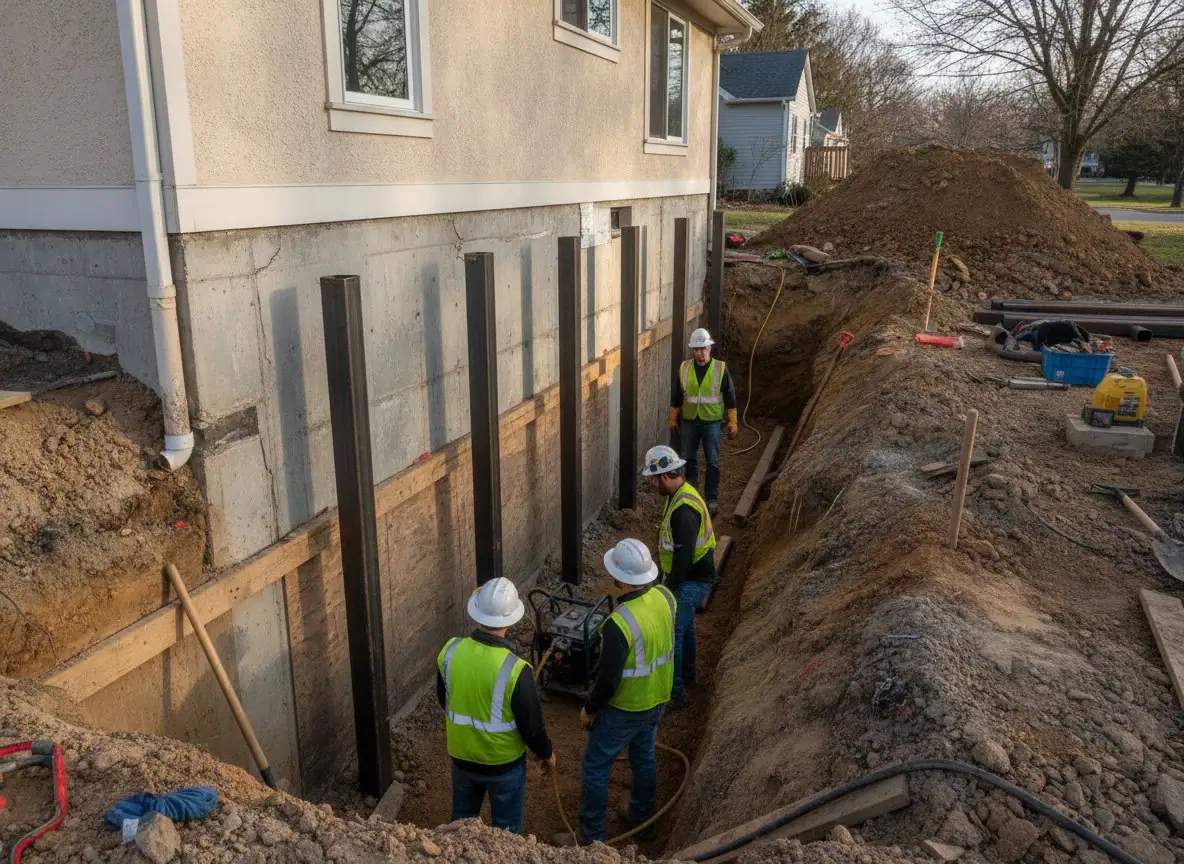
Taylor, TX Neighborhoods We Serve for Foundation Settling Repair
Historic Downtown Taylor
Homes and commercial buildings in the blocks surrounding Main Street and Murphy Park date from the early 1900s through the 1940s, predominantly pier-and-beam construction. These structures face decades of cumulative settling, aging support systems, and vulnerability to moisture from Taylor’s older drainage infrastructure.
Taylor Crossing and SH-79 Corridor
Newer slab-on-grade homes built from the 2000s onward in this rapidly developing area face early-life foundation settling driven by poorly compacted fill soils placed during construction — a common issue in fast-growth developments. Edge drop along the south and west perimeters is especially common.
Mustang Creek Adjacent Properties
Properties within a quarter mile of Mustang Creek experience fluctuating soil moisture levels that create particularly aggressive shrink-swell cycles. Homeowners in this zone often require both foundation piering and perimeter drainage corrections to achieve lasting stability.
Eastern Taylor Near US-79
Transitional soil profiles in east Taylor create unpredictable settling patterns. Our team conducts more detailed elevation mapping in this zone before finalizing pier placement plans.
We also serve Round Rock, Georgetown, Pflugerville, and the greater Austin area.
Foundation Settling Prevention Tips for Taylor, TX Homeowners
While Taylor’s Blackland Prairie soils make some degree of foundation movement nearly inevitable, consistent maintenance significantly reduces the severity and frequency of settling events. Follow these location-specific tips to protect your investment:
- Maintain consistent soil moisture year-round. During Taylor’s summer droughts — particularly July through September — use a soaker hose system placed 12–18 inches from your foundation perimeter 2–3 times per week to prevent extreme soil shrinkage.
- Ensure proper roof drainage. Extend all downspouts at least 6 feet away from the foundation. Water pooling near the slab edge is a leading driver of edge upheaval and erosion in Taylor’s clay soils.
- Control tree placement. Do not plant large trees such as live oaks or pecans within 20–25 feet of your foundation. Existing mature trees near foundations should be monitored closely during dry seasons.
- Maintain positive drainage grade. The soil around your foundation should slope away from the structure at a minimum of 1 inch per foot for the first 6 feet.
- Inspect plumbing annually. In Taylor’s clay soils, even a slow plumbing leak beneath or near the slab can cause significant localized heaving or erosion. Schedule periodic leak detection checks.
- Seal visible cracks promptly. Small cracks allow water infiltration that accelerates settling. Schedule a Foundation Patching service at the first sign of cracking.
- Schedule biennial foundation inspections. Given Taylor’s soil conditions, a professional elevation check every two years allows early intervention before settling becomes severe.
Why Choose Round Rock Foundation Repair Group for Foundation Settling in Taylor, TX
When it comes to foundation settling repair in Taylor, TX, experience with local conditions is not optional — it is essential. Round Rock Foundation Repair Group has built its reputation on deep knowledge of Central Texas geology, Williamson County soil behavior, and the specific demands of Taylor’s diverse building stock.
We serve Taylor as part of our core service territory, meaning our team is familiar with the neighborhoods, soil transitions, drainage challenges, and construction eras that define foundation risk throughout the city. We don’t apply a one-size-fits-all approach; every repair plan is custom-engineered for your specific property and its subsurface conditions.
Our services span the full spectrum of foundation needs, including Structural Foundation Repair, Foundation Restoration, Commercial Foundation Repair, Home Foundation Repair, Crawl Space Repair, and more. We provide transparent written estimates, clear communication throughout every project, and a team that stands behind its work.
Call us at (512) 220-3502 to speak with a Taylor foundation specialist today. We’re ready to help you protect your property from the ground up.
FAQ
Frequently Asked Questions: Foundation Settling in Taylor, TX
How much does foundation settling repair cost in Taylor, TX?
Most residential foundation settling repairs in Taylor range from $4,500 to $14,000 for slab foundations requiring pressed concrete pier installation. Simpler void-fill and patching repairs may cost $1,500–$4,000, while large commercial projects can exceed $80,000. The final cost depends on the number of piers required, soil depth to stable bearing strata, foundation type, and any concurrent drainage corrections needed. We provide free, detailed written estimates for all Taylor properties.
How long does foundation settling repair take in Taylor?
Most residential repairs in Taylor are completed within 3 to 7 business days from start to finish. The inspection and planning phase typically takes 3–5 days, and actual pier installation and leveling is completed in 1–4 days depending on the number of piers and site conditions. We work efficiently to minimize disruption to your home or business.
Is foundation settling common in Taylor, TX?
Yes, foundation settling is extremely common in Taylor due to the Blackland Prairie clay soils that cover most of Williamson County. These Houston Black and Austin clay series soils have among the highest shrink-swell ratings in the United States. The 2011 and 2022 drought years triggered particularly widespread settling events across Taylor and surrounding communities.
Can I stay in my home during foundation repair?
In the vast majority of cases, yes. Foundation pier installation does not require you to vacate your home. Work is performed around the exterior perimeter and, if needed, through small access points in interior floors. Noise and vibration are temporary, and most Taylor homeowners remain in residence throughout the repair process.
Will foundation repair fix my sticking doors and cracks?
Correcting the settling that caused door misalignment and cracks should allow most doors and windows to return to proper function. However, cosmetic crack repairs in drywall or brick are typically not included in foundation repair scopes and are addressed as a separate step after the foundation has been stabilized. We recommend waiting 30–60 days after repair before completing cosmetic fixes to ensure stability.
How do Taylor’s soils affect how deep piers need to go?
In Taylor, pressed concrete piers typically reach depths of 10 to 14 feet before encountering soil with sufficient bearing capacity. In areas with deeper clay profiles — such as near Mustang Creek or in some parts of east Taylor — piers may need to go deeper, or steel push piers may be recommended to reach bedrock or more competent subsoil. Our site assessment determines the appropriate depth for each installation.
What is the difference between foundation settling and foundation heaving?
Foundation settling involves downward movement caused by soil compression, shrinkage, or loss of support. Foundation heaving involves upward movement, typically caused by expansive clay soils absorbing excess moisture and swelling. Both occur in Taylor, TX, and both require professional diagnosis to determine the correct repair strategy. Treating heave with settling methods — or vice versa — can worsen the problem significantly.
Do you serve the new development areas near the Samsung site in Taylor?
Yes. We serve all areas of Taylor, including newly developed corridors along CR-404, SH-95, and the broader Taylor Economic Development Zone. New construction in these areas can experience early settling due to disturbed and filled soils from site grading. We also serve Round Rock, Cedar Park, Georgetown, Pflugerville, and Austin.
Get Foundation Settling Help in Taylor, TX Today
Foundation settling is a serious structural issue that worsens with every season it goes unaddressed. Taylor, TX’s expansive Blackland Prairie soils, combined with increasingly severe drought cycles, mean that your property faces real and ongoing risk. The sooner you act, the lower the cost and the greater the likelihood of a full structural recovery.
Round Rock Foundation Repair Group is ready to inspect your Taylor property, deliver a transparent written repair plan, and execute a solution built for Central Texas conditions. Our team serves Taylor and the entire surrounding region, including Round Rock, Cedar Park, Georgetown, Austin, and Pflugerville.
Call us now at (512) 220-3502 to schedule your foundation inspection. You can also reach us online to request a free estimate. Don’t let settling steal the value and safety of your Taylor property — contact Round Rock Foundation Repair Group today and get your foundation back on solid ground.
Get in touch
Find foundation repair help near you
Request a free estimate online or give us a call — our team will follow up quickly.
- Call us(512) 220-3502
- Visit1 Chisholm Trail Rd suite 450 room j, Round Rock, TX 78681
- HoursMon-Sat: 7:00 am – 7:00 pm